




Can You Have a Great Valentine's Day with Hearing Loss?
Absolutely — with the right planning, communication strategies, and venue choices, hearing loss does not have to limit romantic connection. The key factors are choosing environments with low background noise, communicating clearly about needs in advance, and using hearing aids that reduce the specific listening challenges that noisy social settings create. Many couples find that the extra intentionality required by hearing loss actually deepens the quality of their communication.
[toc]
Hearing loss affects more than 48 million Americans — which means millions of couples navigate it as part of their shared daily life. Valentine's Day, with its crowded restaurants, loud venues, and social expectations, can feel like a particular challenge for couples where one or both partners manage hearing difficulty.
It does not have to be. With practical preparation and honest communication, Valentine's Day becomes an opportunity to prioritize genuine connection over performative romance — and that, research consistently shows, is what makes relationships thrive.
This guide covers how to plan a Valentine's Day that works around hearing loss rather than fighting it, how to communicate clearly with a partner who has hearing difficulty, and how modern hearing technology makes the difference in the specific settings where hearing loss matters most.
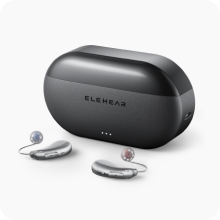
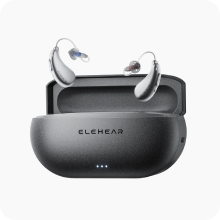
Best AI OTC hearing aids like ELEHEAR Beyond are designed precisely for the social listening challenges that make events like Valentine's Day harder than they need to be.
Understanding What Makes Hearing Loss Harder on Valentine's Day
Most romantic Valentine's Day activities take place in exactly the environments where hearing loss is most challenging: noisy restaurants, crowded bars, busy theaters, and bustling public spaces. Understanding why helps in choosing alternatives that do not require compromising on either romance or communication.
Background Noise Is the Core Problem
Hearing loss — particularly the high-frequency loss most common in adults — does not simply reduce volume. It reduces the clarity of speech relative to background noise. In a quiet room, a person with mild hearing loss may follow conversation almost normally. In a restaurant with music, surrounding conversations, and kitchen noise, the same person may struggle significantly.
This is not weakness or inattention. It is the acoustic reality of sensorineural hearing loss: the signal-to-noise ratio required for clear speech comprehension is higher than for people with normal hearing, and busy restaurants routinely fall below that threshold.
Fatigue Accumulates
The cognitive effort required to follow conversation in difficult listening environments is real and cumulative. A romantic evening that begins with strained hearing in a loud restaurant can leave the person with hearing loss genuinely exhausted by the time the evening reaches its quieter, more intimate moments. Planning the most acoustically challenging activity first — and allowing quieter time afterward — makes the overall evening more enjoyable.
Choosing the Right Valentine's Day Venue
Venue choice is the single most impactful decision for couples navigating hearing loss. The difference between a restaurant with hard floors, high ceilings, and no acoustic treatment and one with soft furnishings, lower ceilings, and quieter design is the difference between a stressful evening and an enjoyable one.
Characteristics of Hearing-Friendly Restaurants
When researching restaurants, look for or ask about:
Soft furnishings — carpeting, upholstered seats, fabric wall coverings, and curtains all absorb sound rather than reflecting it. Hard surfaces (exposed brick, tile floors, concrete walls) create reverberant noise that dramatically increases the difficulty of speech comprehension.
Lower ceilings — high, open ceilings allow noise to accumulate and echo. Lower ceilings with acoustic treatment contain and absorb sound more effectively.
Private or semi-private seating — a booth with high backs, a private dining room, or a table in a corner away from the kitchen, entrance, and bar reduces exposure to competing conversations and service noise.
Quieter service times — early dinner reservations (before 7pm on Valentine's Day) typically offer significantly lower noise levels than peak evening service.
When making a reservation, it is entirely reasonable to call ahead and explain that one of your party has hearing difficulty and ask to be seated in a quieter area. Good restaurants accommodate this request routinely.
Equally Romantic, Quieter Alternatives
Some of the most romantic Valentine's Day options are also the most hearing-friendly:
Dinner at home — complete environmental control, no background noise competition, and the intimacy of a space you have prepared together. A candlelit home-cooked meal is consistently rated among the most appreciated Valentine's gestures — and happens to be ideal for comfortable conversation.
A picnic — outdoor settings with open air and no hard reflective surfaces are acoustically forgiving. Wind is worth considering, but a sheltered spot in a quiet park or garden offers relaxed communication alongside natural surroundings.
Museums, galleries, or botanical gardens — daytime or early evening cultural outings offer quiet, beautiful environments where conversation flows easily. Many museums have café spaces with reasonable acoustics for lunch or afternoon tea.
A cooking class or home cooking together — interactive activities that require cooperation and clear communication build connection specifically through the kind of engaged interaction that hearing loss sometimes disrupts in passive social settings.
Cinema with accessibility features — many theaters now offer open captions, closed captioning devices, or hearing loop systems. Check listings for accessible screenings — they make the cinema experience genuinely enjoyable rather than an exercise in guessing dialogue.
Communication Tips for Partners
Whether you are the person with hearing loss or the partner supporting them, how you communicate around hearing difficulty matters significantly for the quality of the evening.
If Your Partner Has Hearing Loss
Face them when you speak. The brain integrates lip movement and facial expression into speech comprehension — particularly in noisy environments. Speaking while looking away, covering your mouth, or turning your head reduces comprehension significantly even for people with mild hearing loss.
Speak at a natural pace. Slowing down dramatically can distort lip patterns in ways that actually reduce comprehension. A natural, slightly deliberate pace is more helpful than exaggerated slowness.
Rephrase rather than repeat. If something was not understood the first time, using different words rather than repeating identically gives the brain a second chance to recognize the target meaning from different phonetic patterns.
Avoid "never mind" and "it doesn't matter." These responses — however well-intentioned — communicate that the conversation is not worth the effort of being heard. For someone already working hard to follow conversation, this lands as dismissal rather than kindness.
Ask what helps. Hearing loss varies significantly between individuals, and what makes the biggest difference differs too. Asking directly — "Is this level okay? Would you prefer we move somewhere quieter?" — is more useful than guessing.
If You Have Hearing Loss
Advocate for your needs. Choosing a quieter venue, requesting a specific table, or asking to move if the initial location is too loud are all reasonable requests that most partners and most restaurants will accommodate without friction.
Tell your partner what helps. If facing you when speaking makes a difference, say so. If you follow better in certain environments, name them. The more specifically you can describe what helps, the easier it is for your partner to provide it.
Be honest about fatigue. If the listening effort of the first part of the evening has depleted your energy, saying so — rather than trying to maintain performance until exhaustion — allows your partner to adjust and allows you both to move to a quieter setting where the rest of the evening can be more genuinely connected.
Use your hearing aids. Valentine's Day is exactly the kind of socially important evening where the difference hearing aids make is most noticeable. ELEHEAR's VOCCLEAR® AI noise reduction is specifically designed for the restaurant and social gathering settings that make Valentine's Day most acoustically challenging.
How Hearing Aids Make the Difference
The affordable hearing aids from ELEHEAR address the specific listening challenge that makes Valentine's Day harder: speech in noise.
VOCCLEAR® AI noise reduction separates the voice of your companion from the background noise of the restaurant, surrounding conversations, and ambient music. It is the technology that makes the difference between straining to follow a conversation and actually participating in it — the core Valentine's Day experience.
Bluetooth streaming allows phone calls and audio to stream directly into the hearing aids — useful if you are coordinating logistics for the evening or want to share music directly during a quiet moment at home.
Rechargeable batteries with a full day's charge ensure the devices do not run out during the evening — a practical consideration that removes one source of potential anxiety from the date.
Discreet design — ELEHEAR Beyond's receiver-in-canal design is low-profile and modern. The ELEHEAR Delight is an earbud-style ITC device that resembles consumer earbuds. Neither design draws attention in a way that affects social comfort.
For couples where one partner is considering hearing aids but has not yet taken the step, Valentine's Day — with its specific social listening demands — sometimes serves as the occasion that makes the benefit concrete and the decision clear. ELEHEAR's 45-day risk-free trial means the decision carries no financial risk. The best OTC hearing aids 2026 start at $399 and are available without a prescription.
Making the Most of Quiet Moments
The most meaningful parts of Valentine's Day are typically not the venue or the activity — they are the moments of genuine connection: the conversation that goes somewhere real, the shared silence that does not need to be filled, the feeling of being seen and understood.
Hearing loss requires more intentionality to reach those moments in noisy environments. But the intentionality itself — the care taken in venue selection, the patience extended in communication, the effort to hear and be heard — communicates something that no grand gesture does: that the person and the connection are worth the work.
That is, ultimately, what Valentine's Day is for.
Frequently Asked Questions
What is the best type of restaurant for a Valentine's Day date with hearing loss? Look for restaurants with soft furnishings (carpets, upholstered seats, fabric walls), lower ceilings, and booth or corner seating away from kitchens and entrances. Call ahead and request a quiet table — most restaurants accommodate this. Early reservations (before 7pm) typically offer significantly lower noise levels.
How can I support my partner with hearing loss on Valentine's Day without making them feel self-conscious? The most effective approach is practical rather than performative: face them when speaking, choose venues that minimize background noise, and ask directly what helps. Avoid drawing attention to hearing loss in group settings. The goal is to enable natural participation, not to signal awareness of the limitation.
Are hearing aids worth wearing to a restaurant date? Yes — restaurants are exactly the environment where modern AI hearing aids make the most difference. ELEHEAR's VOCCLEAR® noise reduction is specifically designed to separate speech from background noise, making conversation in noisy settings significantly more comfortable and less fatiguing.
What if my partner refuses to wear their hearing aids? Stigma and discomfort with hearing aids remain common. For Valentine's Day, the most useful approach is framing around the benefit to the shared experience — "I want to be able to talk to you properly tonight" — rather than framing it as a hearing health recommendation. The 45-day risk-free trial from ELEHEAR removes the financial barrier to trying current technology for someone who has been resistant based on older device experiences.
Can hearing loss be an advantage in a relationship? Some couples report that navigating hearing loss together has built communication habits — directness, clarity, patience, and checking for understanding — that improve their relationship more broadly. The intentionality required to communicate clearly with a hearing-impaired partner turns out to be good communication practice generally.


