


Is Hearing Loss Associated with Depression in Seniors?
Yes — hearing loss is strongly associated with depression in older adults. A 2019 analysis published in JAMA Otolaryngology found that adults with hearing loss were 47% more likely to experience depression than those with normal hearing. The connection runs through three well-documented pathways: social isolation from communication difficulty, cognitive strain from processing degraded sound, and reduced quality of life from withdrawal from meaningful activities. Treating hearing loss with hearing aids has been shown to reduce depressive symptoms in multiple studies.
[toc]
Hearing loss is the third most common chronic health condition among older adults in the United States, affecting approximately one in three people over 65 and nearly half of those over 75. For decades, its consequences were understood primarily in terms of communication — the practical difficulty of following conversations and participating in daily life.
The research now tells a more complete story. Untreated hearing loss does not just affect how well seniors hear. It affects how they feel, how they think, and how connected they remain to the people and activities that give life meaning. The link between hearing loss and depression is not incidental — it is mechanistic, and understanding it matters for anyone navigating hearing loss themselves or supporting an older family member.
The best AI OTC hearing aids in 2026 offer a directly accessible route to treatment that previous generations of older adults did not have.
How Hearing Loss Leads to Depression: Three Pathways
1. Social Isolation and Withdrawal
Communication is the foundation of social connection. When hearing loss makes conversation effortful — requiring concentration, frequent requests to repeat, and constant management of misunderstandings — social interaction shifts from enjoyable to exhausting.
The rational response, from the perspective of effort management, is to reduce exposure to difficult situations. Group dinners become less frequent. Family gatherings feel overwhelming. Phone calls are avoided. Gradually, the social world contracts.
This contraction is the primary driver of hearing-related depression. Loneliness and social isolation are among the strongest known risk factors for depression at any age — and in older adults, whose social networks are already shrinking due to retirement, bereavement, and reduced mobility, hearing loss accelerates that process significantly.
A large-scale study from the National Council on Aging found that adults with untreated hearing loss were more likely to report sadness, depression, worry, anxiety, and paranoia than those who wore hearing aids.
2. Cognitive Load and Mental Fatigue
The brain does not passively receive sound — it actively constructs meaning from it. When the auditory signal is degraded by hearing loss, the brain compensates by working harder: drawing on context, memory, lip-reading cues, and attention to fill the gaps.
This sustained cognitive effort is measurable and exhausting. Researchers have documented that adults with hearing loss show faster rates of cognitive decline, and that this decline is partly attributable to the diversion of cognitive resources from memory and executive function toward basic auditory processing.
The subjective experience of this load is familiar to many older adults with hearing loss: the mental fatigue after a long conversation, the difficulty concentrating after a social event, the sense of being perpetually a half-step behind in group situations.
Chronic mental fatigue of this kind is a recognized contributor to depressive symptoms — it depletes the psychological reserves needed for engagement, motivation, and emotional regulation.
3. Reduced Quality of Life and Meaning
Hearing loss progressively removes access to experiences that contribute to wellbeing and meaning. Music that once brought pleasure becomes less rich. Grandchildren's conversations become harder to follow. Television and radio — important sources of cognitive stimulation and company for many older adults — require increasing effort or become inaccessible without subtitles.
The cumulative effect is a reduction in the activities and connections that give daily life its texture and purpose. This erosion of quality of life is a direct risk factor for depression — and it is one that hearing aids directly address.
What the Research Shows About Hearing Aids and Depression
The evidence connecting hearing aid use to reduced depression risk is consistent across multiple study designs.
A 2020 study published in the Journal of the American Geriatrics Society found that hearing aid use was associated with significantly lower rates of depression and anxiety in older adults compared to those with untreated hearing loss.
The National Council on Aging's large-scale survey found that hearing aid users reported improvements in mental health, social engagement, and relationships — with family members reporting the same improvements in their relatives who began wearing hearing aids.
Research from the University of Manchester found that hearing aid use was associated with a slower rate of cognitive decline, reduced social isolation, and improved emotional wellbeing — effects that compound over time with consistent use.
The mechanism is straightforward: treating hearing loss reduces the cognitive load, restores social access, and allows older adults to reengage with the activities and relationships that buffer against depression.
The Stigma Factor
One of the most significant barriers to hearing loss treatment in older adults is stigma — the perception that wearing a hearing aid signals aging, cognitive decline, or diminished capability.
This stigma is well-documented and directly contributes to the seven-year average delay between first noticing hearing difficulty and seeking treatment. During those seven years, the social withdrawal, cognitive strain, and quality of life erosion that drive depression are proceeding unchecked.
The arrival of modern OTC hearing aids has changed the calculus here in a meaningful way. The affordable hearing aids from ELEHEAR are designed to be discreet, technologically current, and associated with active, engaged living rather than disability.
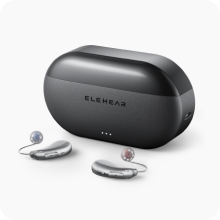
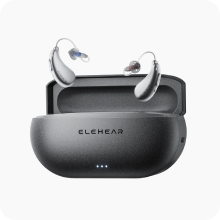
ELEHEAR Beyond's behind-the-ear receiver-in-canal design is small and low-profile. ELEHEAR Delight is an earbud-style ITC device that resembles the wireless earbuds millions of younger adults wear daily — reframing hearing aids as a technology choice rather than a medical device.
ELEHEAR Beyond: Designed for Seniors' Real-World Needs
The best OTC hearing aids 2026 for seniors address the specific listening situations where hearing loss causes the most social and emotional damage: group conversations, family gatherings, phone calls, and TV.
VOCCLEAR® AI noise reduction targets the speech-in-noise problem directly. In the restaurant, at the family dinner table, in the meeting room — ELEHEAR's processing separates voices from background noise so that conversations become followable again without exhausting concentration.
Bluetooth streaming brings phone calls, video calls with family, and TV audio directly into the hearing aids. For older adults who rely on phone contact with family members or find television an important source of company and stimulation, this connectivity is practically significant.
Rechargeable design removes the barrier of small battery management — a practical consideration for seniors with reduced dexterity. Charge overnight, wear all day.
App-based control allows family members to assist with settings remotely if needed, while keeping the user in primary control of their own experience.
ELEHEAR Beyond starts at $399 per pair, is available without a prescription, accepts HSA and FSA payments, and includes a 45-day risk-free trial. A free online hearing test is available at elehear.com.
What Family Members Can Do
Depression associated with hearing loss often looks like personality change from the outside — a previously sociable parent becoming quiet and withdrawn, a partner losing interest in shared activities, a relative who seems disengaged at gatherings.
If you notice these patterns in an older family member, raising the topic of hearing as a possible contributor is a more productive approach than addressing the mood directly. Framing it as a practical matter — "I noticed you seemed to struggle following the conversation at dinner, have you thought about getting your hearing checked?" — avoids the stigma associated with mental health discussions while addressing the root cause.
ELEHEAR's free online hearing test gives family members a low-stakes way to introduce the subject and provide a concrete next step.
Frequently Asked Questions
How common is depression in seniors with hearing loss? Research consistently finds depression rates 40-50% higher in older adults with untreated hearing loss compared to those with normal hearing. The relationship holds across different study populations and methodologies, and is considered one of the strongest modifiable risk factors for late-life depression.
Can treating hearing loss reduce depression? Yes — multiple studies show that hearing aid use is associated with significant reductions in depression and anxiety in older adults. The effect is attributed to restored social participation, reduced cognitive load, and improved quality of life, all of which are mechanisms that directly buffer against depression.
Why do so many seniors wait so long to get hearing aids? The most commonly cited reasons are stigma, cost, and underestimation of the problem. The average person waits seven years between first noticing hearing difficulty and seeking treatment. OTC hearing aids have significantly reduced the cost barrier, and modern device designs have reduced the stigma associated with wearing them.
Are OTC hearing aids appropriate for seniors? Yes, for seniors with mild to moderate hearing loss — which represents the large majority of older adults with hearing difficulty. ELEHEAR Beyond is FDA-cleared for this population and is specifically designed for ease of use, comfort, and daily wear. Seniors with severe or complex hearing loss should consult an audiologist.
What if a senior family member refuses to consider hearing aids? Stigma and denial are common barriers. Framing the conversation around specific situations — "I noticed you struggled at dinner last week" — rather than general assessments of their hearing is more effective. Starting with the free online hearing test at elehear.com provides a low-commitment entry point. The 45-day trial removes the financial risk of trying the devices.


