


The financial landscape for hearing health has undergone a major transformation in 2026. With the maturation of the over-the-counter (OTC) market and the integration of high-end AI in clinical models, the price gap between the two categories has never been more pronounced.
If you are looking to buy hearing aids this year, understanding the "bundled" vs. "unbundled" pricing models is key to finding the best AI OTC hearing aids that fit your budget and lifestyle.

[toc]
1. OTC Hearing Aid Pricing (The "Unbundled" Model)
OTC hearing aids are designed for adults with perceived mild-to-moderate hearing loss. Because these devices are "unbundled"—meaning you pay for the hardware and app support without prepaying for years of clinical visits—the savings are substantial.
-
Entry-Level ($100–$850 per pair): These models provide essential amplification and basic app adjustments.
-
Mid-Range ($850–$1,500 per pair): Includes high-performance features like tinnitus masking, rechargeable batteries, and advanced Bluetooth streaming.
-
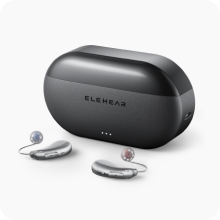
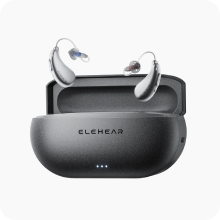
Premium OTC ($1,500–$2,000+ per pair): These devices, such as the ELEHEAR Beyond Pro, offer sophisticated AI noise reduction and hands-free calling that rival traditional clinic models.
According to recent Elehear reviews, choosing a premium OTC device is often the best OTC hearing aids 2026 strategy for those who want high-end tech without the $5,000+ price tag.
2. Traditional Prescription Pricing (The "Bundled" Model)
Prescription hearing aids remain the standard for all degrees of hearing loss, especially severe or profound cases. Their higher price reflects a "bundled" service model where you pre-pay for professional testing, fitting, and ongoing maintenance.
-
Average Cost: A pair of premium prescription devices typically ranges from $3,500 to $7,500+.
-
Technology Tiers: Like cars, the same model is often sold in "Essential" to "Premium" trims, with prices shifting based on the complexity of the AI and noise-reduction algorithms.
-
Retail Exceptions: Large retailers like Costco offer prescription-level devices for $1,399–$2,999, providing a middle ground for those who want in-person care at a lower entry price.
3. 2026 Cost Comparison Table
| Feature | OTC Hearing Aids | Traditional Prescription |
| Typical Price (Pair) | $199 – $2,000 | $3,500 – $7,500+ |
| Professional Care | Self-fit via Smartphone App | In-person Audiologist visits |
| Technology Focus | User-friendly AI & Convenience | Complex Medical-Grade AI |
| Best For | Mild-to-Moderate Loss | All Loss Levels (inc. Severe) |
4. Hidden Costs and Savings
When analyzing the cost, it is vital to look beyond the initial sticker price. Modern AI OTC hearing aids with noise reduction often include remote support from "experts" at no additional cost, potentially saving you hundreds in professional fees.
Furthermore, while traditional insurance coverage remains patchy, many users in 2026 are successfully using FSA/HSA funds or flexible monthly payment plans to make premium technology like the ELEHEAR Beyond more affordable.
Final Verdict
The best value in 2026 is found in the high-end OTC segment. By opting for a device with advanced tinnitus masking and AI speech isolation, you can achieve professional-level results at a third of the traditional cost.


