
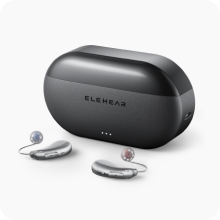
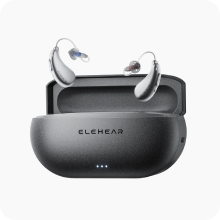


 Sound quality is the only metric that ultimately matters in a hearing aid. You can have the most discreet design, the longest battery, and the most polished app — but if the device does not help you hear clearly in the environments where you actually live, none of it is worth it. This review focuses entirely on how ELEHEAR Delight performs on sound — broken down by environment, backed by HearAdvisor lab data, and contextualized against what real users with mild-to-moderate hearing loss actually need in 2026.
ELEHEAR has established itself as one of the providers of best AI OTC hearing aids in 2026, and Delight is its most design-forward product. But does the sound match the aesthetic? Here is the full picture.
[toc]
How Does ELEHEAR Delight Perform on Speech Clarity in 2026?
ELEHEAR Delight scores 4.4/5 on speech in quiet and 2.3/5 in noise in independent HearAdvisor lab testing — both above OTC category averages. VOCCLEAR AI processes sound in real time, separating speech from background noise and prioritizing conversation frequencies across all listening environments. For mild-to-moderate hearing loss, Delight delivers among the strongest speech clarity scores in the OTC category.
The Testing Standard: HearAdvisor Acoustic Laboratory
Before getting into the numbers, it is worth understanding where the data comes from. HearAdvisor Acoustic Laboratory is the leading independent testing body for OTC hearing aids in the United States. Their methodology uses calibrated acoustic equipment, standardized test conditions, and consistent signal-to-noise environments to generate repeatable, comparable scores across devices.
The five metrics HearAdvisor tests are:
- Speech in Quiet: How clearly the device reproduces speech when there is no background noise
- Speech in Noise: How well the device isolates speech when background noise is present
- Own Voice / Occlusion: How natural the wearer's own voice sounds while using the device
- Music Streaming: Audio quality when streaming music or media via Bluetooth
- Feedback Handling: How effectively the device prevents or eliminates whistling
Each metric is scored on a 0-5 scale. The overall SoundScore is a weighted composite of all five. ELEHEAR Delight earned an A grade with a SoundScore of 4.47.
ELEHEAR Delight Lab Scores: Full Breakdown
| Metric | ELEHEAR Delight | OTC Category Average |
|---|---|---|
| SoundScore Overall | 4.47 — Grade A | ~3.0 |
| Speech in Quiet | 4.4 / 5 | ~3.0 |
| Speech in Noise | 2.3 / 5 | ~1.8 |
| Own Voice / Occlusion | 2.9 / 5 | ~2.3 |
| Music Streaming | 2.9 / 5 | ~2.1 |
| Feedback Handling | 4.0 / 5 | ~3.5 |
Source: HearAdvisor Acoustic Laboratory
Speech in Quiet: 4.4/5 — What This Means in Real Life
A score of 4.4/5 in speech in quiet is exceptional by OTC standards. To put it in context, many budget OTC devices score between 1.5 and 2.5 in this category. A score above 4.0 places Delight among the top tier of all OTC hearing aids tested.
In practical terms, this score corresponds to the following real-environment performance:
One-on-one conversation: Voices come through with natural clarity and detail. Consonants — the sounds most affected by mild-to-moderate hearing loss, particularly S, F, T, and H — are reproduced accurately rather than blurred or dropped.
Small group settings: At a dinner table or in a small meeting room, Delight distinguishes individual speakers clearly. The spatial awareness provided by the ITC (In-The-Canal) placement, combined with VOCCLEAR AI processing, helps orient the listener to the primary speaker.
Phone and video calls: With Bluetooth streaming active, calls come through directly to both ears with consistent clarity. The processing focus on speech frequencies means voices are prioritized over any line noise or ambient room sound picked up by the caller's microphone.
Office environments: In a typical open-plan office with ambient HVAC noise, keyboard sounds, and distant conversation, Delight's speech focus means the person talking to you at your desk comes through clearly without needing to ask them to repeat themselves.
Speech in Noise: 2.3/5 — How Delight Handles the Hard Environments
Speech in noise is universally the most challenging metric for all hearing aids — OTC and prescription alike. A score of 2.3/5 places Delight above the OTC category average of approximately 1.8, which is a meaningful real-world advantage.
How VOCCLEAR AI approaches noise:
Most budget OTC devices use basic amplification — they make everything louder, including background noise. This is why many first-time hearing aid users find the experience overwhelming in restaurants or crowded spaces. ELEHEAR Delight's VOCCLEAR AI engine takes a different approach: it continuously analyzes the acoustic environment, identifies speech frequency patterns, and selectively amplifies those while applying up to 24 dB of noise reduction to background signals.
Restaurant: Background conversation, cutlery, kitchen noise, and music are common in this environment. Delight's noise reduction reduces the overall ambient floor, bringing the person across the table into clearer focus. The experience is not perfect — no hearing aid eliminates noise entirely — but the improvement over unaided hearing is consistent and meaningful.
Outdoor environments: Wind noise is a specific challenge for ITC devices. ELEHEAR Delight's omnidirectional microphone system and AI wind noise management reduce the impact of wind interference during outdoor walks, runs, and activities. Users in light urban noise — traffic, crowd ambience, construction — report that conversation with a companion remains manageable.
Busy social settings: House parties, networking events, and crowded bars represent the most difficult listening environments. Delight's 2.3/5 score reflects above-average performance here, though users with moderate hearing loss will still find these environments more effortful than quiet settings. This is consistent with the limits of current AI processing across all OTC and most prescription devices at this price range.
Own Voice: 2.9/5 — The Occlusion Question
Own voice comfort is often overlooked in hearing aid reviews, but it directly affects whether a person continues to wear a device long term. The occlusion effect — the phenomenon where the wearer's voice sounds hollow, booming, or artificial — is one of the most common reasons new hearing aid users abandon their devices in the first weeks.
Delight scores 2.9/5 on own voice, above the category average of 2.3. The ITC design, combined with the soft ear-wing that distributes contact pressure rather than fully sealing the canal, allows some natural sound transmission alongside the amplified signal. The result is an own-voice experience that most users describe as natural within one to two weeks of adaptation.
During the initial days of wear, some degree of occlusion awareness is normal and expected. This typically diminishes as the brain adapts to the new audio input. By week two for most users, own voice through Delight sounds close to natural.
Music Streaming: 2.9/5 — Functional, Not Audiophile
ELEHEAR Delight scores 2.9/5 on music streaming — slightly above the OTC category average. This score reflects an honest tradeoff in Delight's design philosophy: the VOCCLEAR AI engine is optimized for speech, not music reproduction. The processing algorithms that make speech so clear in quiet environments are specifically tuned to the frequency range of human conversation, which is different from the full range needed for high-fidelity music.
In practical terms: streaming calls, podcasts, and spoken audio through Delight sounds excellent. Music is clear and enjoyable for casual listening — commutes, background music, YouTube content. Audiophiles and music professionals who want true high-fidelity streaming should set the expectation accordingly.
The Bluetooth 5.3 connection is stable and low-latency, with no notable audio lag during call streaming. Switching between Hearing Aid Mode and Streaming Mode is handled within the ELEHEAR app.
Feedback Handling: 4.0/5 — No Whistling in Daily Use
Feedback — the high-pitched whistling that can occur when amplified sound leaks back into the microphone — is one of the most commonly cited complaints about hearing aids. Delight scores 4.0/5 on feedback handling, well above the OTC category average.
ELEHEAR uses DNN (Deep Neural Network) Hybrid Feedback Suppression — a more sophisticated approach than the simple feedback cancellation found in basic OTC devices. The system identifies the acoustic signature of feedback before it fully develops and suppresses it at the processing level, rather than simply cutting overall amplification when whistling starts.
In daily use, this means virtually no whistling during phone calls held close to the ear, no feedback when someone hugs you or you put on a hat, and no squealing during physical activity when the device might shift slightly in the ear canal.
How Delight Compares to Key Competitors on Sound
| Device | Speech Quiet | Speech Noise | Own Voice | Streaming | Feedback |
|---|---|---|---|---|---|
| ELEHEAR Delight | 4.4 | 2.3 | 2.9 | 2.9 | 4.0 |
| AirPods Pro 3 | 3.5 | 2.7 | 1.9 | 4.3 | 5.0 |
| Audien Atom X | 1.50 | 0.30 | 2.30 | 3.30 | 5.0 |
Source: HearAdvisor Acoustic Laboratory
The pattern is clear. Delight leads on the metrics that matter most for hearing loss — speech in quiet and own voice comfort. AirPods Pro 3 leads on music streaming and feedback. Audien Atom X leads only on feedback, with significantly weaker speech performance across the board.
The VOCCLEAR AI Engine: Six Components That Drive Sound Quality
Sound quality in Delight is not produced by a single processing chip — it is the result of six integrated AI components working simultaneously:
1. AI Feedback Control: DNN-based suppression eliminates whistling before it occurs
2. AI Speech Enhancement: Identifies and boosts speech frequency signatures in real time
3. Directional Focus: Prioritizes sound from the direction the wearer is facing
4. Omnidirectional Enhancement: Maintains awareness of environmental sounds while keeping speech primary
5. Noise Reduction: Up to 24 dB of background noise reduction applied dynamically
6. Max Gain: Up to 45 dB of amplification — more headroom than most OTC competitors
Together, these components produce the 4.47 SoundScore that HearAdvisor recorded. The system is not static — it adapts to the listening environment continuously, recalibrating its processing balance as you move between a quiet office, a busy street, and a restaurant.
Personalized Sound: Why the In-App Hearing Test Matters
One critical factor behind Delight's lab performance is that it is a self-fitting device. The ELEHEAR app includes a built-in hearing test that generates a personal audiogram — a profile of your specific hearing loss pattern across frequencies. VOCCLEAR AI then uses this profile to calibrate amplification, prioritizing the exact frequency ranges where your hearing is weakest.
This is why the best OTC hearing aids 2026 consistently outperform preset devices in lab testing. A device calibrated to your audiogram will always outperform one applying generic amplification, regardless of how sophisticated the underlying chip is. For those managing hearing aids for tinnitus, the ELEHEAR app also includes white noise therapy modes that can be layered alongside personalized amplification.
Sound Quality Summary: What You Can Expect Day to Day
- Quiet conversation: Exceptional. 4.4/5 is among the best in the OTC category
- Small meetings and group conversation: Very good. Speaker separation is clear
- Office with ambient noise: Very good. VOCCLEAR AI filters steady background noise effectively
- Restaurant: Good. Above-average noise performance, though demanding environments remain effortful
- Outdoor walking: Good. Wind management is functional, conversation with a companion is manageable
- Phone and video calls (streaming): Very good. Clear, low-latency Bluetooth performance
- Music streaming: Functional. Above-average for an OTC hearing aid, not audiophile-grade
- Own voice: Natural within 1-2 weeks of adaptation
Frequently Asked Questions: ELEHEAR Delight Sound Quality
What is ELEHEAR Delight's speech clarity score?
ELEHEAR Delight scores 4.4/5 in speech in quiet and 2.3/5 in speech in noise in HearAdvisor lab testing, with an overall SoundScore of 4.47 and an A grade. Both scores are above the OTC category average.
Does ELEHEAR Delight work well in noisy restaurants?
Delight performs above the OTC average in noisy environments, scoring 2.3/5 in speech-in-noise testing. VOCCLEAR AI reduces background noise by up to 24 dB and prioritizes speech frequencies. Performance in very loud environments like busy bars remains challenging, as is the case for all hearing aids in this category.
Does ELEHEAR Delight whistle or produce feedback?
Delight scores 4.0/5 on feedback handling — well above the OTC average. DNN Hybrid Feedback Suppression prevents whistling in daily use scenarios including phone calls, hugs, and physical activity. Whistling is not a common complaint among Delight users.
How does ELEHEAR Delight sound quality compare to AirPods Pro 3?
Delight scores 4.4/5 in speech in quiet versus AirPods Pro 3's 3.5/5 — a meaningful advantage for hearing aid use. AirPods Pro 3 scores higher on music streaming (4.3 vs 2.9) and feedback (5.0 vs 4.0). Delight is clearly better for hearing loss. AirPods Pro 3 is better for music and media.
Does ELEHEAR Delight sound quality improve with the hearing test?
Yes. Running the in-app hearing test and allowing VOCCLEAR AI to calibrate to your specific audiogram meaningfully improves performance compared to factory default settings. Personalized fitting is one of the core reasons Delight's lab scores are as strong as they are.
Is ELEHEAR Delight good for music listening?
Delight scores 2.9/5 on music streaming — above the OTC average. Audio quality is clear and enjoyable for casual listening, podcasts, and calls. Users looking for audiophile-grade music reproduction should note that Delight's processing is optimized for speech clarity, not full-range music fidelity.


