




For decades, the only way to treat hearing loss was through a clinical gatekeeper. However, in 2026, the arrival of high-fidelity, self-fitting devices has completely disrupted this model. Consumers are no longer asking if they can skip the clinic, but rather if skipping it actually yields a better result. If you are ready to buy hearing aids today, the choice between "over-the-counter" and "prescription" often comes down to one thing: how much you value personal autonomy versus professional oversight.

[toc]
The Narrowing Tech Gap
The most significant change in 2026 is that the technology inside top-tier OTC devices has nearly caught up to clinical-grade hardware. While prescription aids used to hold the monopoly on sophisticated chips, modern best AI OTC hearing aids now utilize Deep Neural Networks (DNN) to process sound similarly to the human brain.
-
Precision vs. Automation: Prescription aids are manually "fine-tuned" by an audiologist to match your ear's unique fingerprint.
-
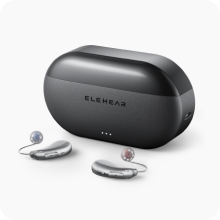
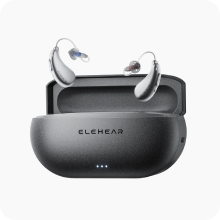
The AI Advantage: Devices like the Elehear Beyond Pro automate this entire process using VOCCLEAR® AI, which identifies speech and noise floors more efficiently than many entry-level prescription models. This automation is a primary reason why Elehear reviews frequently cite it as the best OTC hearing aids 2026 for social clarity.
Cost vs. Value: The Professional Markup
The average pair of prescription hearing aids still costs around $4,000 to $6,000, largely due to "bundled" service fees for clinic visits. For those with mild-to-moderate loss, this "professional markup" often doesn't translate into a better acoustic result. In a quiet one-on-one conversation, a premium OTC device can provide nearly identical clean amplification for roughly $4,000 less than its clinical counterpart.
Who Should Still Choose Prescription?
Despite the rise of OTC, prescription devices remain the "gold standard" for complex cases. You should still see a professional if you experience:
-
Severe or Profound Loss: OTC models are legally capped at 117 dB output for safety and may not provide enough power for significant loss.
-
Medical Red Flags: Sudden hearing changes, dizziness, or fluid drainage require a physician's diagnosis, not just a device.
-
Complicated Profiles: If your hearing loss pattern is highly irregular, clinician-led tuning and custom ear molds are essential for comfort and feedback control.
The 2026 Verdict
Is OTC "better"? If you have stable, mild-to-moderate loss and are tech-savvy enough to use an app, yes. The combination of affordability and high-end AI OTC hearing aids with noise reduction offers a level of empowerment that traditional clinics can't match. Furthermore, for those dealing with persistent ear ringing, finding affordable tinnitus masking in an OTC format has finally made relief accessible to the masses.


