


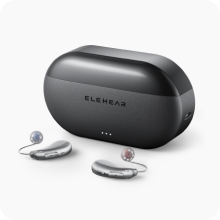
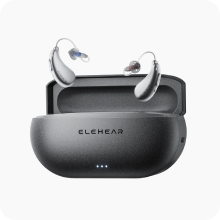


Under the FDA final rule, manufacturers must limit OTC hearing aid output to a maximum of 111 dB SPL (or 117 dB SPL with compression) and ensure the device sits at least 10mm from the eardrum. Additionally, products must include mandatory labeling regarding "red flag" conditions and be restricted to users 18 years and older with perceived mild to moderate hearing loss.

FDA Regulations for OTC Hearing Aids: What Manufacturers Must Follow
The establishment of the Over-the-Counter (OTC) hearing aid category by the FDA in late 2022 marked a historic shift in auditory healthcare. For the first time, adults could access medical-grade technology without a clinical prescription. However, this accessibility did not come at the expense of safety. The FDA created a rigorous framework that manufacturers must follow to differentiate high-quality devices from unregulated amplifiers.
The primary problem before these regulations was a technical gap: consumers often confused Personal Sound Amplification Products (PSAPs) with actual hearing aids. PSAPs are not intended to treat hearing loss and lack the safety limiters required for medical devices. The FDA rule bridges this gap by mandating that any hearing aids sold over-the-counter meet specific electroacoustic and design standards.
Elehear has embraced these standards, ensuring that the Elehear Beyond Pro not only meets but exceeds FDA requirements through the use of VOCCLEAR® AI technology. By adhering to these federal mandates, we ensure that users receive a safe, effective, and professional-grade listening experience.
Technical Performance Standards: Output and Latency
The FDA’s most critical safety mandate concerns the maximum sound pressure level (SPL) a device can produce. This prevents accidental noise-induced hearing damage.
-
General Output Limit: Most devices are capped at 111 dB SPL.
-
Compression-Enabled Limit: For devices like the Beyond Pro that use input-controlled compression, the limit is 117 dB SPL. This allows for a wider dynamic range while still protecting the user’s ears from sudden loud bursts.
Beyond volume, the FDA regulates latency—the time it takes for sound to travel through the device. Manufacturers must ensure latency does not exceed 15 milliseconds. If the delay is too long, the user experiences an echo effect that makes speech harder to understand. By utilizing high-speed AI chips, Elehear keeps latency at a minimum, providing the real-time clarity expected of the best hearing aids.
Design Requirements: The 10mm Rule
Safety isn't just about sound; it’s about physical protection. To prevent injury to the tympanic membrane (eardrum), the FDA requires that the innermost component of an OTC device—typically the earpiece or dome—is designed to remain at least 10mm away from the eardrum.
Furthermore, the materials used for eartips must be "atraumatic," meaning they are made of soft, medical-grade silicone or similar materials that won't irritate the sensitive skin of the ear canal. This focus on ergonomics ensures that best hearing aids for seniors are safe for all-day wear without the risk of physical trauma.
Technical Evidence: Simple vs. Advanced Compliance
FDA compliance manifests in both the physical build and the digital software of the device.
Simple Example: The Volume Control Mandate
The FDA requires all OTC hearing aids to have a user-adjustable volume control. In a simple compliance scenario, a device might have a physical button. In the Elehear Beyond series, this is handled through both on-device buttons and a smartphone app, giving the user precise, granular control over their environment as mandated by law.
Advanced Example: Frequency Response Smoothness
Manufacturers must follow the ANSI/CTA-2051:2017 standard for frequency response. This means the sound output must be "smooth," with no single frequency peak exceeding 12 dB relative to the average. This prevents the "tinny" or "harsh" sounds found in low-quality amplifiers. Our VOCCLEAR® AI ensures this smoothness by constantly balancing the acoustic profile to match the user's specific hearing needs.
Mandatory Labeling and "Red Flags"
FDA regulations extend to the packaging itself. Every OTC hearing aid box must clearly state that the device is only for adults 18+ and is intended for "perceived mild to moderate hearing loss."
Manufacturers must also list "Red Flag" conditions that signal a user should see a doctor instead of using an OTC device, such as:
-
Visible deformity of the ear.
-
Fluid, pus, or blood coming out of the ear.
-
Sudden or rapidly progressing hearing loss within the last 90 days.
-
Active dizziness or vertigo.
Before purchasing, we always recommend that customers take a free online hearing test to confirm their hearing loss falls within the FDA-approved mild-to-moderate range.
Actionable Takeaways for Consumers
-
Check the Label: Ensure the box specifically says "OTC Hearing Aid." If it says "hearing amplifier," it is not an FDA-regulated medical device.
-
Verify Output: Look for mentions of "compression" or "OSPL90" limits in the technical specifications.
-
Confirm Return Policy: The FDA requires manufacturers to state their return policy clearly on the package, providing peace of mind for your investment.
-
Prioritize AI: While basic models meet the "minimum" FDA standards, choosing a device with AI-driven speech isolation provides a significantly better value and experience.
Commitment to Safety and Innovation
The FDA regulations have successfully cleaned up the market, removing dangerous or ineffective products and paving the way for high-tech solutions. At Elehear, we view these regulations as the foundation upon which we build our innovation. By combining strict federal safety standards with our cutting-edge VOCCLEAR® AI, we offer a product that is not just compliant, but transformative.
Explore how the Beyond series sets the standard for modern, FDA-compliant hearing technology.


