


Quick Answer
AI noise reduction in modern hearing aids works by analyzing sound in real time, identifying speech versus background noise, and selectively reducing unwanted noise while preserving speech clarity. Using machine learning, multi-channel signal processing, and acoustic pattern recognition, AI-powered hearing aids adapt automatically to changing environments, making conversations clearer and reducing listening fatigue—especially in noisy settings.
[toc]
Why Noise Reduction Is the Biggest Challenge in Hearing Care
For most people with hearing loss, volume is not the problem—clarity is. Background noise interferes with speech understanding, especially in restaurants, group conversations, and public spaces. Traditional hearing aids struggled because they amplified everything. Modern hearing aids solve this problem using AI-driven noise reduction, which is based on well-established principles of acoustics, signal processing, and auditory neuroscience.
How the Human Brain Handles Noise (Clinical Context)
In normal hearing, the brain automatically separates speech from noise.
What Changes With Hearing Loss
-
Reduced ability to filter background noise
-
Poor speech discrimination
-
Increased cognitive effort
-
Faster mental fatigue
Modern hearing aids aim to support the brain, not replace it, by recreating this filtering process digitally.
The Core Science Behind AI Noise Reduction
1. Sound Capture and Digital Signal Processing (DSP)
Everything begins with microphones capturing incoming sound.
What Happens Next
-
Sound is converted into digital data
-
The signal is divided into multiple frequency channels
-
Each channel is analyzed independently
This multi-channel processing allows precise control over different parts of the sound spectrum.
2. Speech vs Noise Classification (Machine Learning)
AI hearing aids use trained algorithms to recognize speech patterns.
How AI Identifies Speech
Speech has distinct characteristics:
-
Predictable rhythms
-
Frequency patterns
-
Temporal structure
AI models are trained on thousands of hours of real-world audio to recognize these features and distinguish them from noise such as traffic, crowd chatter, or wind.
3. Real-Time Environmental Analysis
Modern AI hearing aids continuously scan the listening environment.
AI Detects:
-
Quiet conversations
-
Group discussions
-
Restaurant noise
-
Outdoor sounds
-
Sudden loud events
This happens multiple times per second, allowing instant adaptation.
4. Selective Noise Reduction at the Channel Level
Once speech and noise are identified, AI adjusts amplification differently across channels.
What This Means Practically
-
Speech frequencies are preserved or enhanced
-
Noise-dominant frequencies are reduced
-
Transitions happen smoothly to avoid distortion
This selective approach is far more effective than global volume reduction.
5. Directional Microphone Control
AI works together with directional microphones.
Scientific Role of Directionality
-
Focuses on sound coming from the front
-
Reduces sound from sides and behind
-
Improves signal-to-noise ratio
This mimics how human ears and the brain naturally focus on a speaker.
Why AI Noise Reduction Feels More Natural
Traditional Noise Reduction (Limitations)
Older systems used fixed rules:
-
Reduce steady noise
-
Lower overall gain
This often caused speech to sound unnatural or “cut out.”
AI-Driven Noise Reduction (Modern Approach)
AI systems adapt dynamically.
Key Advantages
-
Context-aware decisions
-
Continuous adjustment
-
Minimal speech distortion
-
Reduced “pumping” or artifacts
The result is clearer speech without removing important environmental cues.
Clinical Benefit: Reduced Listening Fatigue
Listening fatigue is a well-documented effect of hearing loss.
Why AI Helps
-
Less effort required to follow speech
-
Reduced cognitive load
-
Improved concentration
-
Longer comfortable listening time
From a clinical perspective, this is one of the most important benefits of AI noise reduction.
Why Noise Reduction Alone Is Not Enough
Noise reduction must work alongside other systems.
Effective AI Hearing Aids Combine:
-
Multi-channel sound processing
-
Speech enhancement
-
Directional microphones
-
Automatic gain control
-
Feedback suppression
AI coordinates all of these simultaneously.
OTC Hearing Aids and AI Noise Reduction (2026 Standards)
Previously, advanced noise reduction was limited to prescription hearing aids. In 2026, premium OTC hearing aids meet professional performance expectations.
Professional Criteria for Effective AI Noise Reduction:
-
Real-time adaptation
-
Speech-focused processing
-
Safe amplification levels
-
Consistent performance across environments
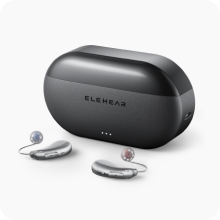
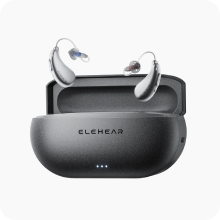
How ELEHEAR Implements AI Noise Reduction
ELEHEAR hearing aids are built around evidence-based signal processing principles.
ELEHEAR’s AI Noise Reduction System Includes:
-
Multi-channel frequency analysis
-
AI-based speech classification
-
Automatic environmental detection
-
Directional microphone coordination
-
Smooth, real-time adaptation
This design aligns with professional guidelines for speech-in-noise improvement in adults with mild to moderate hearing loss.
Does AI Completely Eliminate Noise?
No—and it shouldn’t.
Clinical Reality
Complete noise removal would sound unnatural and disorienting. Effective AI noise reduction reduces irrelevant noise while preserving environmental awareness, which is critical for safety and comfort.
Who Benefits Most From AI Noise Reduction?
Clinically Ideal Users:
-
Adults with mild to moderate hearing loss
-
People struggling in noisy environments
-
Socially active individuals
-
Professionals and remote workers
-
Seniors experiencing listening fatigue
Final Thoughts (Scientific Summary)
AI noise reduction in modern hearing aids is grounded in acoustics, machine learning, and auditory science. By analyzing sound in real time, identifying speech patterns, and selectively reducing noise across frequency channels, AI helps restore clarity—not just volume. This technology significantly improves speech understanding, reduces listening fatigue, and supports natural communication in complex environments. In 2026, AI-driven noise reduction is no longer optional—it is a foundational requirement for effective hearing aids. Choosing a modern, AI-based device like ELEHEAR allows eligible users to benefit from scientifically validated noise management and a more comfortable, confident listening experience.


