


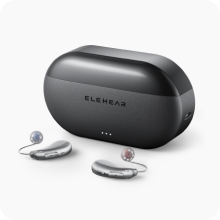
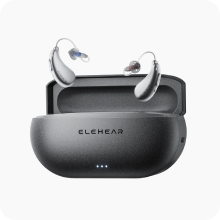


What Are OTC Hearing Aids?
OTC (over-the-counter) hearing aids are FDA-regulated devices that adults with mild to moderate hearing loss can purchase directly — without a prescription, audiologist appointment, or clinic visit. Introduced as a formal FDA category in 2022, OTC hearing aids have made professional-grade hearing technology accessible at a fraction of traditional prescription prices, with leading AI-powered options starting under $500 per pair.
[toc]
More than 48 million Americans live with hearing loss. Until 2022, nearly all of them faced the same barrier: getting hearing aids meant booking an audiologist, completing a formal evaluation, and paying an average of $4,700 for a pair of prescription devices — before insurance considerations.
The FDA's creation of the OTC hearing aid category changed that permanently. Today, adults with mild to moderate hearing loss can access the best AI OTC hearing aids directly, set them up at home in under thirty minutes, and customize every setting through a smartphone app.
This guide explains exactly how OTC hearing aids work, who they are designed for, and what separates a strong OTC device from a basic amplifier.
Why the FDA Created the OTC Category
For decades, the hearing aid market was dominated by a clinic-based model that tied device access to professional services. The device and the fitting were bundled together, making it impossible to purchase one without the other. This structure kept prices high and access limited.
The Over-the-Counter Hearing Aid Act, signed into law in 2017 and implemented by the FDA in August 2022, established a new regulatory category specifically for adults with mild to moderate hearing loss. The legislation recognized that this population — the vast majority of people with hearing loss — does not require clinical intervention to benefit from hearing amplification.
The practical result: hearing aids can now be sold directly to consumers through online retailers, pharmacies, and manufacturer websites, with prices that reflect the technology rather than the clinical overhead.
How OTC Hearing Aids Work
Modern OTC hearing aids are sophisticated digital devices, not simple amplifiers. Understanding how they work explains why the performance gap between OTC and prescription devices has narrowed dramatically.
Digital Sound Processing
Every incoming sound is captured by the device's microphone, converted to a digital signal, and processed by an onboard chip before being delivered to the ear. This processing adjusts frequency levels in real time — amplifying the frequencies where your hearing loss is concentrated while leaving others unchanged.
The result is targeted amplification rather than simply making everything louder — the defining difference between a medical-grade hearing aid and a basic personal sound amplifier.
AI-Powered Noise Reduction
The most significant advancement in OTC hearing aids over the past five years has been the integration of artificial intelligence into sound processing. AI-powered devices like ELEHEAR Beyond use machine learning algorithms to distinguish speech from background noise in real time.
ELEHEAR's proprietary VOCCLEAR® technology continuously analyzes the surrounding sound environment, identifies speech signals, and suppresses competing noise — allowing users to follow conversations in restaurants, busy streets, and group settings where basic amplification would simply make everything louder and harder to follow.
App-Based Self-Fitting
OTC hearing aids are configured through smartphone apps rather than audiologist programming software. Users input their hearing profile — either from an online hearing test or an existing audiogram — and the app uses that data to configure the device's amplification pattern.
From there, users can adjust volume, switch between environment presets, fine-tune bass and treble, and control noise reduction strength — all without a clinic visit.
Who OTC Hearing Aids Are Designed For
The FDA's OTC category has a defined target user: adults 18 and older with perceived mild to moderate hearing loss.
You are likely a good candidate for OTC hearing aids if you:
- Frequently ask people to repeat themselves
- Have difficulty following conversations in noisy environments like restaurants
- Turn up the TV or phone volume more than others around you
- Hear well in quiet one-on-one settings but struggle in groups
- Have not had a hearing test in years but notice gradual changes
You should consult an audiologist before purchasing OTC hearing aids if you:
- Have sudden or rapidly worsening hearing loss
- Experience pain, discharge, or blockage in the ear
- Have significant asymmetry between your two ears
- Have been diagnosed with severe or profound hearing loss
- Experience dizziness or balance issues alongside hearing difficulty
OTC devices including ELEHEAR Beyond are appropriate for the first group. The second group warrants clinical evaluation before self-treating.
OTC Hearing Aids vs. Prescription: What Is the Real Difference in 2026?
This is the question most buyers ask first — and the honest answer has changed significantly in recent years.
Technology
High-end OTC devices now use the same core digital signal processing architecture as prescription devices. The difference is in the depth of customization available and, in some cases, the number of processing channels. For the large majority of listening situations experienced by people with mild to moderate loss, the practical performance difference is minimal.
Fitting Process
Prescription aids are programmed by an audiologist using detailed measurement data. OTC aids use hearing test data entered by the user. For mild to moderate loss, app-based fitting produces results that are comparable for most users in most environments.
Cost
The gap here is dramatic. Prescription aids average $4,700 per pair. The affordable hearing aids in ELEHEAR's OTC lineup start at $399 — with the full-featured Beyond Pro available for users who want maximum AI performance.
Ongoing Support
This was historically a weakness of OTC devices. Today, brands like ELEHEAR provide customer support, remote troubleshooting, and firmware updates — matching or exceeding the support experience of many clinic-based purchases.
ELEHEAR's OTC Lineup: What Each Device Is Built For
ELEHEAR offers three OTC devices targeting different users within the mild to moderate hearing loss population.
ELEHEAR Beyond — $399/pair The entry point into AI-powered OTC hearing aids. VOCCLEAR® noise reduction, Bluetooth audio streaming, rechargeable batteries, and app-based customization. The right choice for first-time users and everyday listening environments.
ELEHEAR Beyond Pro — $599/pair The premium OTC option. Enhanced AI processing delivers superior performance in complex, noisy environments. The best OTC hearing aids 2026 for users who spend significant time in demanding listening situations — restaurants, meetings, travel, outdoor settings.
ELEHEAR Delight An ITC (in-the-canal) earbud-style design for users who prioritize discretion and modern aesthetics. Same AI-powered performance in a form factor that sits inside the ear canal rather than behind it.
All three devices are available without a prescription. ELEHEAR accepts HSA and FSA payments, and a free online hearing test is available at elehear.com.
What to Look For When Buying OTC Hearing Aids
Not all OTC devices are equal. The market now includes everything from sophisticated AI-powered devices to basic amplifiers sold under misleading marketing. Here is what matters.
AI noise reduction — The single most important feature for real-world usability. Without it, amplification in noisy environments makes things worse, not better. Look for proprietary noise reduction technology with specific performance claims.
Rechargeable batteries — Disposable battery hearing aids create ongoing cost and inconvenience. Rechargeable is the standard for quality OTC devices in 2026.
Bluetooth streaming — Direct audio streaming from smartphones and TVs transforms the hearing aid experience. Look for direct Bluetooth connectivity, not just remote control via Bluetooth.
App quality — The app is your interface with the device. A well-designed app with clear controls, hearing profile integration, and environment presets is a strong signal of overall product quality.
Trial period — Quality OTC brands offer a risk-free trial. ELEHEAR offers 45 days. Be cautious of brands with no return window.
Regulatory status — Confirm the device is registered as an FDA Class II hearing aid, not a Personal Sound Amplification Product (PSAP). PSAPs do not meet the same regulatory standards.


