



I Spent $249 on AirPods Pro 3 So You Don’t Have To

August 6th, 2026 | 11:14AM CST

You've seen the headlines. Apple turned AirPods Pro into an FDA-authorized hearing aid with a software update, and for $249 it sounds like the smartest way to skip prescription hearing aids entirely.
I ran it for a month so you don't have to.
Spoiler: it works fine as a Control Center toggle. It does not work as a hearing solution you can wear all day, forget about, and rely on when it matters.
Here's what nobody tells you about turning a pair of earbuds into a hearing device.
Over 50,000+ ELEHEAR Users Nationwide
The Update Nightmare
Apple promised "a simple software update."
Reality? An iOS update, a five-minute in-app hearing test that isn't a real audiological exam, a setting buried three menus deep, and a fit that loosens every time I turned my head in a noisy room — before I even knew if it was helping.
The Difference Nobody Talks About: AirPods Vs. A Real Hearing Aid
AirPods Pro's "Hearing Aid" mode made headlines: FDA-authorized, clinically tested, built into earbuds you probably already own.
Sounds like a hearing aid showed up for $249. Except it's the same earbuds Apple already sold you for podcasts and gym playlists, now asked to double as a device tuned for speech clarity in a noisy room.
It's like asking your car's cupholder to also be a blender. Technically it holds the cup. It's not designed for the job.
I ran it for a month before I understood the difference between a feature and a device.
The “Latest Software” That’s Already Outdated

Month one: "Update to iOS 18 to unlock Hearing Aid mode."
Month eight: new iPhone launches, and last year's "revolutionary" feature quietly becomes the baseline everyone expects.
Month fourteen: still fumbling through Control Center trying to remember which toggle turns on amplification, because it was never built to be the main event.
A dedicated OTC hearing aid updates through its own app — new tuning, better noise handling, pushed straight to the device. It doesn't care what phone is in your pocket or when Apple decides to move on.
When “Customer Support” Means a $99 Battery Swap

Eighteen months in, my AirPods Pro stopped holding a charge past lunch.
Apple's answer? A battery service that's really just paying for replacement units, because the batteries aren't user-serviceable.
No hearing profile adjustment. No professional fine-tuning. Just a support article and a mail-in box.
The dedicated hearing device's support? A real audiologist, remotely, who actually looks at how you're hearing — not just whether the battery still charges.
The Real Cost: Why You Stop Wearing Them
Here's what actually gets you: one AirPod dies mid-conversation because it wasn't in the case long enough, and suddenly you're hearing half a sentence at a time. You start avoiding restaurants and reunions, not because you don't want to be there, but because "what?" gets exhausting to say out loud.
Your partner starts talking directly at your "good ear." You nod along in group settings and hope nobody asks you a direct question. Within a few months, the AirPods case lives in a drawer next to the charger you swore you'd use.
But then everything changed when I stopped treating a pair of earbuds like a hearing solution and looked at what was actually built to be one.
The Math Nobody Shows You
AirPods route: $249 for AirPods Pro + AppleCare+ (~$29/year, if you want the battery covered) + a battery service around $99 once the case can't keep up (usually 18-24 months in) + a fit that was designed for music, not all-day amplification = you're past $329 within two years, and you still don't have a hearing profile built by a professional.
Purpose-built route: $329 flat for a device designed for exactly this — secure all-day fit, AI noise separation tuned for speech, remote audiologist support included, a 45-day risk-free trial, and a 1-year warranty. No AppleCare add-on, no mail-in battery service, no guessing which Control Center toggle does what.
How To Tell A Feature Apart From A Device
Ask whether it's a standalone FDA-registered hearing device, or a software feature bolted onto earbuds built for music. Those are two different products wearing the same shape.
Check the fit. Earbuds designed to survive a run are loose by design — they're meant to come out easily. A device meant to be worn all day needs a secure, ergonomic fit that won't loosen every time you turn your head.
Look past the return window headline. A 14-day window means the company is betting you won't get around to returning it. A 45-day trial means they're confident you'll keep it.
Ask if support means a real audiologist or a support article and a chatbot. Read the one-star reviews before the five-stars — that's where the actual experience lives.
My Personal Choice
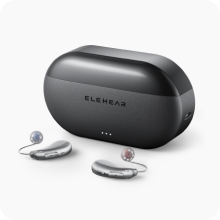
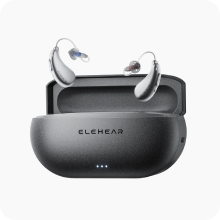
Full transparency: after a month of relying on AirPods Pro's Hearing Aid mode, I went looking for something actually built for the job — and ELEHEAR Delight kept coming up, not in ads, but in the same forums where people compare hearing tech honestly.
Here's why people mention it: it looks and feels like a modern earbud — nobody clocks it as a hearing device — but it's tuned for the one thing AirPods aren't: understanding speech in a noisy room.
The unsexy reasons matter more than the flashy ones:
- Fit that's built to stay: contoured, ergonomic wings designed for all-day wear, not a loose fit designed to fall out during a jog.
- App control that replaces a support ticket: adjust your hearing profile, switch environments, fine-tune from your phone — no waiting for a firmware update tied to your next iPhone.
- Remote audiologist support that's actually a person: real professional tuning, not a help-center search bar.
- A trial that matches the confidence: a 45-day risk-free trial, full refund, no questions asked — compare that to returning a pair of AirPods after the box has been opened.
- Up to 13.5 hours per charge, plus two extra charges from the case — battery life that isn't quietly shrinking every software update.
Not the cheapest thing I could've bought. But the first one that actually solved the problem instead of just wearing the shape of a solution.
Conclusion
The cheapest option on the shelf isn't the one with the lowest sticker price. It's the one that's still doing the job a year from now, without a battery service appointment or a Control Center toggle hunt in between.
Your conversations are worth building around a device that was made for them.
The real question isn't whether $249 earbuds are cheaper upfront — it's whether "cheaper upfront" still holds up once you've paid for AppleCare, a battery service, and six more months of asking people to repeat themselves.
Spec Bullets
- AI-powered noise separation — tuned for speech clarity, not music playback
- App-controlled hearing profiles with personalized adjustments (iOS + Android)
- Secure, ergonomic all-day fit — earbud-style design, no visible "hearing aid" look
- Bluetooth streaming for calls and media built in
- Remote audiologist support — real professional tuning, no clinic visit required
- Up to 13.5 hours per charge, plus 2 additional charges from the case
- FDA-registered OTC hearing device — no prescription required
- Rated best OTC hearing earbuds of 2026 by HearAdvisor
- 45-Day Risk-free Trial with hassle-free returns
- 1-year warranty included


ELEHEAR Delight's Special Offer (While Supplies Last)
Right now, ELEHEAR Delight is offering:
- ✅45-Day Risk-free Trial (full refund, no questions asked)
- ✅Remote audiologist support — included, not an add-on
- ✅Secure all-day earbud-style fit — nobody has to know it's a hearing device
- ✅Klarna installments available
- ✅Ships fast — no clinic appointment required

Featured
Recommended


- Purpose-built for hearing clarity, not bolted on as a software feature
- Secure all-day fit and up to 100 hours of use with the charging case
- Real remote audiologist support, not a chatbot or a Genius Bar appointment


