




What Should You Expect When You Get Hearing Aids for the First Time?
Getting hearing aids for the first time means a short adjustment period of one to two weeks as your brain relearns how to process sound at its full range. Most new users notice immediate improvement in speech clarity, followed by gradual adaptation to environmental sounds. With OTC hearing aids like ELEHEAR Beyond, the process is guided by a free online hearing test and a smartphone app — no audiologist appointment required.
[toc]
Getting hearing aids is one of the most meaningful health decisions an adult with hearing loss can make. Research consistently shows that treating hearing loss improves cognitive function, reduces social isolation, and lowers fall risk. Yet the majority of people who need hearing aids wait an average of seven years before getting them — often because they do not know what the experience involves.
This guide walks you through exactly what to expect: before your hearing aids arrive, during the first days of wearing them, and in the weeks that follow. If you are considering best AI OTC hearing aids from ELEHEAR, this is your complete first-timer's guide.
Step 1: Taking the Hearing Test
The starting point for any hearing aid journey is understanding your hearing profile. With traditional prescription hearing aids, this means an in-person audiological evaluation. With OTC hearing aids in 2026, it starts at home.
ELEHEAR offers a free online hearing test at elehear.com. The test takes approximately ten minutes and produces a hearing profile that identifies which frequencies you have difficulty with and at what volume levels. This information is used to configure your hearing aids through the ELEHEAR app.
What to expect: The test involves listening to tones at different pitches and volumes and indicating which you can hear. It is simple, non-invasive, and produces a visual audiogram you can refer to later.
For users with more complex hearing needs, consulting an audiologist before purchasing is always appropriate. OTC hearing aids including ELEHEAR Beyond are designed for adults with mild to moderate hearing loss.
Step 2: Choosing Your Device
Once you understand your hearing profile, the next step is choosing the right device. ELEHEAR offers three options designed for different users and use cases.
ELEHEAR Beyond — Starting at $399 per pair. The entry point into AI-powered OTC hearing aids. Designed for everyday use with VOCCLEAR® noise reduction, Bluetooth streaming, and rechargeable batteries. The right choice for first-time users who want capable, straightforward technology.
ELEHEAR Beyond Pro — The premium option. Enhanced AI processing, superior sound performance in complex listening environments, and advanced app customization. Recommended for users who spend significant time in noisy settings or want the closest experience to premium prescription devices. The best OTC hearing aids 2026 for performance-focused buyers.
ELEHEAR Delight — Earbud-style ITC design for users who prioritize discretion and modern aesthetics alongside hearing performance.
What to expect: Choosing between models comes down to your lifestyle and listening environment. If you are primarily in quiet home settings and one-on-one conversations, Beyond is excellent. If you regularly navigate restaurants, meetings, or outdoor environments with variable noise, Beyond Pro is worth the upgrade.
Step 3: Setting Up Your Hearing Aids
When your ELEHEAR hearing aids arrive, setup takes less than thirty minutes. Here is the sequence:
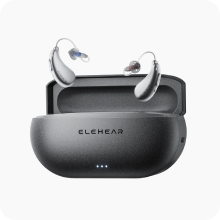
Charge the devices. Place both hearing aids in the charging case for a full charge before first use. A complete charge takes approximately two hours and provides a full day of wear.
Download the ELEHEAR app. Available for iOS and Android. The app is the control center for your hearing aids — volume, environment modes, EQ settings, and firmware updates all run through it.
Pair via Bluetooth. Open the app and follow the pairing instructions. The process is the same as connecting any Bluetooth device to a smartphone.
Enter your hearing profile. Input the results from your hearing test. The app uses this data to configure your hearing aids to your specific hearing loss pattern.
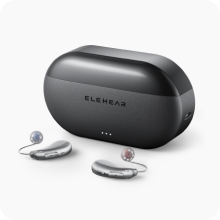
Insert the hearing aids. ELEHEAR Beyond uses a behind-the-ear receiver-in-canal design. The device sits behind the ear with a thin wire running to a dome that sits in the ear canal. The right sizing of the dome — ELEHEAR includes multiple sizes — is important for both comfort and sound quality.
What to expect: First-time insertion feels unfamiliar. Most users need two or three attempts before it feels natural. Within a few days, putting in hearing aids becomes automatic.
Step 4: The First Hours — What You Will Hear
This is the part that surprises most first-time users. When you put on well-fitted hearing aids for the first time, the world sounds different — and initially, that can feel overwhelming.
Sounds you have not heard clearly in years suddenly return at full volume. Your own voice sounds different. Background sounds — the hum of appliances, traffic, wind — may feel louder than expected. Some users describe the experience as "too much" in the first few hours.
This is normal. Your auditory cortex has been compensating for hearing loss, often for years. It needs time to recalibrate to full sound input. Most audiologists and hearing specialists refer to this as the "acclimatization period."
What to expect in the first 24-48 hours:
- Speech clarity improves immediately and noticeably
- Environmental sounds may feel louder than they should
- Your own voice sounds different — often described as "hollow" or "like talking in a barrel"
- Some mild ear canal awareness or pressure from the dome insert
All of these sensations diminish significantly within the first one to two weeks as your brain adapts.
Practical tip: Start in a quiet environment. Wear your hearing aids for a few hours the first day, building up to full-day wear by the end of the first week. Do not start your first day in a crowded restaurant.
Step 5: Using the ELEHEAR App to Fine-Tune
The ELEHEAR app is what separates a good modern OTC hearing aid experience from the frustrating analog devices of the past. Rather than returning to a clinic every time a setting needs adjustment, you control everything from your phone.
Volume control — Adjust independently for left and right ears directly from the app home screen.
Environment modes — Switch between preset listening profiles optimized for different situations: quiet conversation, outdoor environments, restaurant settings, and TV listening.
EQ adjustment — Fine-tune bass, mid, and treble to match your hearing profile and personal preference. If speech still sounds muffled after the initial setup, increasing mid-range frequencies typically addresses this.
Noise reduction strength — Adjust the aggressiveness of VOCCLEAR® noise reduction. Higher settings in loud environments, lower settings in quiet spaces for a more natural sound.
What to expect: Most users make several adjustments in the first two weeks before settling on their preferred settings. This is part of the process. The goal is a configuration that feels transparent — where you are aware of improved hearing but not of the devices themselves.
Step 6: The First Two Weeks
The adjustment timeline for new hearing aid users follows a consistent pattern.
Days 1-3: Heightened awareness of the devices. Environmental sounds feel loud. Your own voice sounds unfamiliar. Speech clarity is noticeably improved.
Days 4-7: The brain begins adapting. Environmental sounds normalize. Own voice phenomenon reduces. Wearing time increases comfortably to most of the day.
Days 8-14: Most users feel the hearing aids are natural. Settings feel dialed in. The acclimatization period is essentially complete for most users.
After two weeks: The devices become part of daily life. Most users report that they notice their hearing aids most when they take them out — the contrast between aided and unaided hearing becomes clear.
For users experiencing persistent discomfort, feedback (whistling), or sound quality issues after two weeks, ELEHEAR's customer support team can assist with troubleshooting remotely.
Caring for Your ELEHEAR Hearing Aids
Proper care extends device life and maintains sound quality. The routine is simple.
Daily: Wipe the devices with a dry, soft cloth before placing them in the charging case each night. Check the dome for earwax buildup — the primary cause of reduced sound quality over time.
Weekly: Replace the dome if there is visible wax accumulation. ELEHEAR includes replacement domes, and additional domes are available through the accessories page.
Monthly: Check the wax guard in the receiver. Replace if blocked. Blocked wax guards are the most common cause of "my hearing aid stopped working" calls — and the easiest fix.
Storage: Always store in the charging case when not in use. Avoid leaving in direct sunlight or in humid environments like bathrooms.
The affordable hearing aids in ELEHEAR's range are built for daily wear — water-resistant and durable for active lifestyles.
What If the Hearing Aids Do Not Feel Right?
ELEHEAR offers a 45-day risk-free trial. If the devices are not the right fit — whether due to comfort, sound quality, or performance in your specific listening environments — you can return them within that window.
In practice, most issues that arise in the first two weeks are resolved through app adjustments rather than returns. The most common early issues and their solutions:
Feedback/whistling: Usually caused by an improperly fitted dome. Try the next dome size up or reposition the device.
Own voice sounds hollow: Normal in the first week. Reduces naturally with acclimatization. Can also be reduced by slightly lowering low-frequency amplification in the app.
Not enough volume: Increase gain in the app. If still insufficient, check the wax guard.
Background noise too prominent: Increase noise reduction strength in the app. Switch to a more sheltered environment preset.


