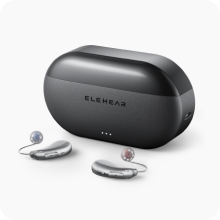
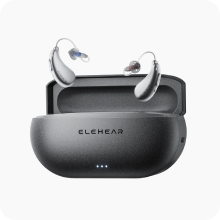
If you've recently started researching hearing aids, you've probably hit the same wall: a bewildering range of options, costs that vary by thousands of dollars, and conflicting advice about what you actually need. The most fundamental question in all of it is this - do you need a prescription hearing aid, or is an OTC model the right choice? Choosing wisely in 2026 can mean the difference between paying $400 and paying $5,000 for technology that performs at a comparable level. This guide cuts through the confusion and lays out exactly what separates these two categories - so you can make a confident, informed decision. If you're looking for
the best hearing aids without the clinic markup, read on.
[toc]
What Is the Difference Between OTC and Prescription Hearing Aids?
OTC hearing aids are available without a medical exam and are designed for adults with mild to moderate hearing loss. Prescription hearing aids require an audiologist fitting and cost significantly more. In 2026, OTC models like ELEHEAR offer comparable AI-powered technology at a fraction of the price - without sacrificing sound quality.
How Prescription Hearing Aids Work - And What They Cost in 2026
Prescription hearing aids are medical devices dispensed by a licensed audiologist or hearing instrument specialist. The process typically looks like this:
-
Step 1: A full audiological evaluation (usually $200–$350, sometimes not covered by insurance)
-
Step 2: A diagnosis and recommendation for specific devices based on your audiogram
-
Step 3: Selection of hearing aids - often from a limited range the clinic carries
-
Step 4: A fitting appointment, typically 1–2 weeks after selection
-
Step 5: Follow-up appointments for adjustments, often over several weeks
The result is a highly customized device programmed specifically to your audiogram. For those with moderate-to-severe or severe hearing loss, this level of precision can be genuinely necessary. The downside? The cost.
In 2026, prescription hearing aids from leading brands typically range from $3,000 to $7,000 per pair - and that's before factoring in the cost of the audiological evaluation. Most health insurance plans in the US do not cover hearing aids, and while some Medicare Advantage plans offer partial coverage, out-of-pocket costs remain high for the majority of patients.
There's also the time investment. Between scheduling, evaluation, fitting, and follow-ups, the prescription pathway can take four to six weeks from decision to fully functional hearing aids. For people in the early stages of hearing loss, that friction is a significant barrier.
How OTC Hearing Aids Work - And Who They're Best For
The FDA's 2022 ruling that created the OTC hearing aid category was a watershed moment for consumer hearing healthcare. For the first time, adults with mild to moderate hearing loss could purchase clinically appropriate hearing aids directly - without a prescription, without a clinic visit, and without the associated markup.
OTC hearing aids are designed to be self-fitting. Rather than having an audiologist program the device to a clinical audiogram, users adjust their hearing aids through a companion smartphone app, guided by built-in hearing profiles or an at-home hearing test. Devices ship directly to your door, typically within 2–5 business days.
In 2026, the technology gap between OTC and prescription has narrowed significantly. The most advanced OTC devices - including ELEHEAR's lineup - now offer:
-
Proprietary AI noise reduction and speech isolation technology
-
Bluetooth streaming directly from smartphones and TVs
-
App-based personalization with multiple environment programs
-
Tinnitus masking features
-
Rechargeable batteries with all-day wear capability
-
Discreet, modern designs comparable to premium prescription models
OTC hearing aids are FDA-regulated and clinically appropriate for adults 18 and over with perceived mild to moderate hearing loss. They are not recommended for children, or for adults with severe-to-profound loss, sudden hearing loss, or hearing loss with medical complications - those cases warrant a professional evaluation.
For everyone else - the estimated 30 million American adults with untreated mild-to-moderate hearing loss -
earbud-style hearing aids and other modern OTC designs offer a genuinely compelling alternative to the prescription pathway.
OTC vs Prescription Hearing Aids: Side-by-Side Comparison (2026)
Use this table to quickly compare the two categories across the factors that matter most to first-time buyers in 2026:
|
Category
|
Prescription Hearing Aids
|
ELEHEAR OTC Hearing Aids
|
|
Average Cost
|
$3,000 – $7,000/pair
|
From $399/pair
|
|
Requires Prescription?
|
Yes - audiologist required
|
No - buy direct online
|
|
Fitting Process
|
Multiple in-clinic visits
|
Self-fit via app at home
|
|
Technology Level
|
Advanced (varies by brand)
|
AI-powered (VOCCLEAR®)
|
|
Noise Reduction
|
Yes (varies)
|
Yes - ELEHEAR AI-powered
|
|
Bluetooth Streaming
|
Available in premium tiers
|
Included as standard
|
|
Tinnitus Support
|
Available (with audiologist)
|
Built-in masking mode
|
|
HSA / FSA Eligible
|
Yes
|
Yes
|
|
Insurance Coverage
|
Partial (varies by plan)
|
Not typically covered
|
|
Customization
|
Full audiological programming
|
App-based self-customization
|
|
Best For
|
Moderate-severe hearing loss
|
Mild-moderate hearing loss
|
|
Wait Time
|
Weeks (clinic schedule)
|
Days (ships directly)
|
Explore ELEHEAR's full OTC lineup - starting from $399, HSA/FSA accepted.
Why AI Technology Is Closing the Gap Between OTC and Prescription in 2026
Five years ago, the performance difference between OTC and prescription hearing aids was substantial. OTC devices were essentially amplifiers - they made everything louder, including background noise. Prescription devices had access to advanced digital signal processing that OTC simply couldn't match.
2026 is a different story. The introduction of AI-driven sound processing has fundamentally changed the OTC category. The key innovation is machine learning-based noise separation: instead of simply amplifying all sound, modern AI hearing aids like those in the ELEHEAR lineup analyze incoming audio in real time, identify speech frequencies, and selectively amplify them while suppressing competing noise.
ELEHEAR's proprietary VOCCLEAR® technology is a direct example of this shift. Rather than a one-size-fits-all amplification curve, VOCCLEAR® uses AI to distinguish speech from environmental noise and prioritize clarity even in challenging listening environments - restaurants, crowded rooms, outdoor settings - that previously required prescription-level hardware.
The result is that for the large majority of people with mild to moderate hearing loss, the
best OTC hearing aids 2026 - like the ELEHEAR Beyond Pro - now deliver outcomes that are functionally comparable to prescription devices at a dramatically lower cost. For first-time buyers, this represents a genuine shift in what's possible without setting foot in a clinic.
Which Type of Hearing Aid Is Right for You in 2026?
Here's a practical framework for deciding between OTC and prescription:
Choose OTC if:
-
You have mild to moderate hearing loss (difficulty following conversations in noise, turning up TV volume, missing higher-pitched sounds)
-
You are an adult (18+) without a recent sudden or rapid change in hearing
-
You want to avoid the cost and time investment of the clinical pathway
-
You're comfortable with app-based self-fitting and customization
-
Budget is a consideration - you want professional-grade technology at an accessible price
Choose Prescription if:
-
You have moderate-to-severe or profound hearing loss
-
You've experienced sudden hearing loss (see a doctor immediately)
-
Your hearing loss is accompanied by ear pain, drainage, or other medical symptoms
-
You require maximum customization and ongoing clinical support
-
A child or teenager in the household needs hearing assistance
Still unsure where your hearing falls? ELEHEAR's free online hearing test can help you establish a baseline in under 5 minutes - no appointment required. If your results suggest mild to moderate loss, OTC is a strong and well-validated starting point.
The
affordable hearing aids in the ELEHEAR Beyond range start at just $439/pair for those entering the OTC market for the first time. For users who want the most advanced AI-powered performance available outside the prescription category, the Beyond Pro at $599/pair offers the full VOCCLEAR® experience with premium sound processing and extended battery life.
FAQs: OTC vs Prescription Hearing Aids
Are OTC hearing aids as good as prescription hearing aids?
For adults with mild to moderate hearing loss, the performance gap in 2026 is far smaller than it was even three years ago. OTC hearing aids powered by AI - like the ELEHEAR Beyond Pro - deliver genuine speech clarity enhancement, noise reduction, and personalization that matches or closely rivals prescription devices in everyday listening situations. For severe hearing loss, prescription devices with full audiological programming remain the superior choice.
Do OTC hearing aids require a hearing test?
Not a clinical one. Most modern OTC hearing aids, including ELEHEAR's, include an in-app hearing profile setup guided by a brief self-administered hearing check. This allows the device to be customized to your hearing profile without requiring a formal audiogram. ELEHEAR also offers a free online hearing test on its website to help new users understand their baseline before purchasing.
Can I use HSA or FSA funds to buy OTC hearing aids?
Yes. OTC hearing aids are HSA and FSA eligible, which can significantly reduce the effective out-of-pocket cost. ELEHEAR accepts HSA and FSA payments directly, making it straightforward to use pre-tax dollars for your purchase.
What happens if OTC hearing aids aren't enough for my hearing loss?
If you try OTC hearing aids and find they're not providing enough amplification or clarity, that's valuable information - it likely indicates your hearing loss is in the moderate-severe range and a full audiological evaluation is the appropriate next step. ELEHEAR's customer support can help you interpret your experience and guide your next decision.
How long do OTC hearing aids last?
Quality OTC hearing aids typically last 3–5 years with proper care, which is comparable to the lifespan of prescription devices. ELEHEAR's hearing aids come with a manufacturer warranty and ongoing support. Regular cleaning and proper storage extend device life significantly.
Is ELEHEAR FDA-cleared?
Yes. ELEHEAR hearing aids are FDA-registered OTC hearing aids, meeting the regulatory requirements established for the OTC category. They are designed and tested to meet the performance and safety standards required for hearing aids sold directly to consumers in the United States.
The Smart Choice for Most Adults in 2026
The prescription vs OTC debate used to have a clearer answer. In 2026, for anyone with mild to moderate hearing loss, the calculus has fundamentally changed. OTC hearing aids - especially those powered by genuine AI technology like ELEHEAR's VOCCLEAR® platform - now deliver results that simply weren't available outside a clinic just a few years ago.
You don't need to spend $5,000 and wait six weeks for a fitting appointment to start hearing better. You need a well-engineered device, a good fitting process, and the right technology for your level of hearing loss. ELEHEAR was built to deliver all three - starting at $399.
Ready to explore ELEHEAR's OTC lineup? Find your match - HSA/FSA accepted, free shipping included.