




 Walk into any coffee shop, office, or gym in 2026 and you'll see people with small, round devices sitting in their ears. Some are listening to music. Some are on a call. And some — more than you'd guess — are managing hearing loss. The difference is impossible to tell. That's exactly the point.
Hearing aids that look like wireless earbuds represent the most significant design shift the hearing aid industry has seen in decades. For millions of people who have been quietly struggling with hearing loss while refusing to wear a device that advertises it, this shift changes everything. This guide covers how the category works, what to look for, and why the ELEHEAR Delight is the standard-setter in 2026.
[toc]
What Hearing Aids Look Like Wireless Earbuds in 2026?
The best hearing aids that look like wireless earbuds in 2026 are ITC devices with no behind-the-ear component, Bluetooth streaming, and AI-powered sound processing. From the outside, they are indistinguishable from consumer earbuds. The ELEHEAR Delight leads this category — a fully OTC ITC hearing aid with VOCCLEAR® AI at $299.
Why the Earbud Look Has Become the New Standard in Hearing Aid Design
The wireless earbud didn't just change how people listen to music — it changed the visual vocabulary of what it means to have something in your ear. Before AirPods and their competitors normalized the look, a small device sitting in someone's ear canal was immediately read as a hearing aid. Today, it reads as technology. That cultural shift has created an opening that the best hearing aid brands are finally moving through.
The timing aligns with two other significant developments. First, the FDA's 2022 ruling that opened the over-the-counter hearing aid market brought a new generation of direct-to-consumer brands into the category — brands that weren't carrying fifty years of design legacy and were free to build devices that looked more like consumer electronics than clinical equipment. Second, the miniaturization of AI processing chips made it possible to put genuinely capable sound processing into a form factor small enough to sit entirely inside the ear canal.
The result is a category of earbud style hearing aids that achieves something that seemed impossible even five years ago: devices that look indistinguishable from the wireless earbuds millions of people wear every day, while delivering real, AI-powered hearing support for mild-to-moderate hearing loss. The stigma that kept generations of people from seeking help hasn't been reduced — it's been architecturally eliminated.
What Separates a Real Earbud-Style Hearing Aid From a Basic Amplifier
Not everything marketed as an OTC hearing aid earbud design deserves the label. The consumer market is full of basic sound amplifiers dressed up in earbud packaging — and understanding the difference matters before you spend a dollar.
AI-Powered Sound Processing vs. Basic Amplification
A hearing aid and a sound amplifier are not the same thing. A basic amplifier makes everything louder — background noise, speech, ambient sound, all of it together. In a quiet room, this can feel helpful. In any real-world environment — a restaurant, an office, a busy street — it makes things worse, not better.
A genuine hearing aid that looks like earbuds uses AI-powered processing to analyze the acoustic environment in real time, separating speech from noise and amplifying what matters while suppressing what doesn't. This is not a minor distinction. It's the difference between a useful device and an expensive frustration.
ITC Placement vs. Earbud-Style Casing on a BTE Device
Some brands achieve the earbud aesthetic by designing a consumer-looking ear tip — but the actual electronics still sit in a casing behind the ear. This is cosmetic improvement, not a genuine form factor change. A true earbud that looks like a hearing aid — or more accurately, a hearing aid that looks like an earbud — places the entire device inside or at the entrance of the ear canal with no external component whatsoever.
Bluetooth Streaming vs. No Connectivity
Bluetooth earbuds that look like hearing aids need to actually function as Bluetooth devices. Streaming calls, music, and media directly from a smartphone is a baseline expectation in 2026 — not a premium feature. Any earbud-style hearing aid that doesn't offer Bluetooth connectivity isn't a modern device.
App Control vs. Physical Buttons
Adjusting a device by pressing a tiny button sitting inside your ear canal is both awkward and visible. Genuine earbuds that are also hearing aids in 2026 are controlled entirely through a companion app — volume, sound profiles, and listening environments all managed from your smartphone, invisibly and instantly.
The Best Hearing Aids That Look Like Earbuds in 2026 — Compared
| Feature | ELEHEAR Delight | Generic OTC Amplifier | Traditional BTE Hearing Aid |
|---|---|---|---|
| Form Factor | ITC — In-The-Canal | Earbud casing, BTE electronics | BTE — Behind-The-Ear |
| Behind-Ear Component | No | Yes | Yes |
| Earbud Appearance | Yes | Partial | No |
| AI Noise Reduction | Yes — VOCCLEAR® | No | Varies |
| Bluetooth Streaming | Yes | Rarely | Limited |
| App Control | Yes | No | Limited |
| OTC Available | Yes | Yes | No — Rx required |
| Secure Active Fit | Yes — Ear-Wings | No | No |
| HSA/FSA Eligible | Yes | No | Yes |
| Price | $299 | $30–$150 | $1,500–$4,000+ |
The table illustrates a problem that runs through the earbud-style hearing aid category: the majority of options either look the part without performing it, or perform without achieving genuine visual discretion. The ELEHEAR Delight is the option that delivers on both simultaneously — genuine ITC placement, genuine AI performance, genuine Bluetooth connectivity, and a price point that makes it accessible without compromise.
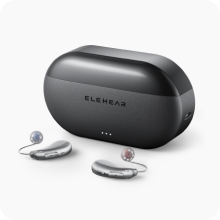
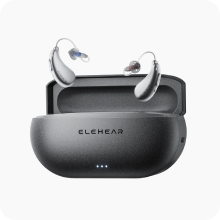
ELEHEAR Delight — The ITC Hearing Aid Built to Look Like a Wireless Earbud
The ELEHEAR Delight is not a traditional hearing aid that borrowed design elements from consumer earbuds. It was built from the start to inhabit the same visual category as wireless earbuds — and to deliver hearing performance worthy of that design ambition.
As a true ITC hearing aid, the Delight sits inside the ear canal with no behind-the-ear component. The entire device — AI processor, Bluetooth radio, battery, microphone — is contained within a compact unit that from the outside is essentially invisible at conversational distance and reads as a modern earbud up close. In any real-world setting, it passes without a second glance.
What the ELEHEAR Delight delivers beneath that form factor:
- VOCCLEAR® AI Processing — ELEHEAR's proprietary speech clarity engine continuously analyzes the acoustic environment, filtering background noise and enhancing voice in real time so conversations stay clear regardless of where you are
- ITC Form Factor — Entire device sits inside the ear canal; no external components, no behind-the-ear hardware, no visible indication of a hearing aid at conversational distance
- Ergonomic Ear-Wings — Secure mechanical fit for active use that keeps the device locked in place during movement without adding any visible external hardware
- Bluetooth Connectivity — Direct streaming from smartphone or any paired device for calls, music, podcasts, and media
- App-Controlled Sound Profiles — Full sound customization managed from your phone; no physical adjustments, no visible interactions
- OTC Accessible — No prescription, no audiologist visit, available directly at elehear.com
- HSA/FSA Eligible — Purchasable with pre-tax health spending funds, reducing the effective out-of-pocket cost
- Priced at $299 — The most capable earbud-style ITC hearing aid on the OTC market at the most accessible price point
For users who have been waiting for a hearing aid that looks like AirPods 2026 — not in marketing language but in actual real-world appearance — the ELEHEAR Delight is the answer that has arrived.
Shop the ELEHEAR Delight — AI Hearing That Looks Like an Earbud
How to Choose the Right Earbud-Style Hearing Aid for Your Lifestyle
With the category growing rapidly, knowing what to prioritize makes the difference between a device you wear every day and one you abandon after a week. Here's a practical framework:
Confirm the Form Factor Is Genuinely ITC
Ask one question before anything else: is the entire device inside the ear canal, or is there a component behind the ear? If any part of the device sits on or behind the outer ear, it is not a genuine earbud-style hearing aid regardless of how the ear tip is designed. Look for ITC specifically — not "earbud-inspired" or "earbud-style casing."
Verify AI Processing — Not Just Amplification
Check whether the device uses AI-powered noise reduction or basic amplification. The distinction will be stated clearly by brands that have genuine AI processing — because it's a significant differentiator worth marketing. If a product description doesn't mention AI or intelligent noise reduction, assume it's amplification only.
Check Bluetooth Spec
Bluetooth 5.0 or higher is the standard in 2026 for stable, low-latency audio streaming. Devices running older Bluetooth versions may experience connection drops, audio lag on calls, or reduced battery life from maintaining the connection. The ELEHEAR Delight meets the 2026 standard for reliable Bluetooth performance.
Assess the Fit Mechanism
A device that shifts or falls out during normal activity is a device you'll stop wearing. Look for ITC hearing aids with documented secure-fit mechanisms — contoured ear tips, multiple tip size options, or ear wings that provide mechanical stabilization inside or at the entrance of the canal. The ELEHEAR Delight's ear-wing design is specifically engineered for active wear.
Confirm OTC Eligibility for Your Degree of Hearing Loss
OTC hearing aids are designed for mild-to-moderate hearing loss. If you haven't had a hearing assessment recently, ELEHEAR offers a free online hearing test at elehear.com that takes a few minutes and gives you a clear baseline before you purchase. For users whose loss falls outside the mild-to-moderate range, a professional evaluation is the appropriate next step.
Use HSA or FSA If Available
OTC hearing aids qualify for HSA and FSA spending — a fact that many buyers don't realize until after they've paid out of pocket. ELEHEAR accepts both, which means the $299 ELEHEAR Delight can be purchased with pre-tax dollars, effectively reducing the real cost for anyone with a health spending account.
Frequently Asked Questions
What hearing aids look like wireless earbuds in 2026?
The best options are ITC hearing aids with no behind-the-ear component that sit entirely inside the ear canal. The ELEHEAR Delight is the leading OTC example — genuine ITC placement, VOCCLEAR® AI processing, Bluetooth streaming, and app control at $299.
Are hearing aids that look like AirPods actually effective?
Yes, when they're equipped with genuine AI sound processing. The key distinction is between AI-powered noise reduction and basic amplification. The ELEHEAR Delight's VOCCLEAR® technology delivers real speech clarity and environment-adaptive noise filtering — not just increased volume — making it genuinely effective for mild-to-moderate hearing loss.
What is the difference between an earbud hearing aid and a regular hearing aid?
A traditional hearing aid typically uses a BTE form factor with visible external components. An earbud-style hearing aid — specifically an ITC device like the ELEHEAR Delight — places the entire device inside the ear canal with no behind-the-ear hardware, making it visually indistinguishable from a consumer wireless earbud.
Can I stream music through hearing aids that look like earbuds?
Yes. Bluetooth-enabled earbud-style hearing aids like the ELEHEAR Delight connect directly to your smartphone and support full audio streaming — music, calls, podcasts, and media — alongside their hearing amplification function.
Do I need a prescription to buy earbud-style hearing aids?
No. OTC hearing aids, including the ELEHEAR Delight, are available without a prescription for adults with mild-to-moderate hearing loss following the FDA's 2022 ruling. They can be purchased directly at elehear.com and are eligible for HSA and FSA payments.


