




Have family members started telling you that you are speaking loudly even though your voice sounds normal to you? Hearing loss can sometimes change the feedback you use to judge your own volume, so a gradual increase may be easier for other people to notice first. Speaking loudly alone does not confirm a hearing problem. The pattern matters, especially when it appears alongside other changes in everyday listening.
Can Hearing Loss Change How Loudly You Speak?
Yes, hearing loss can affect how loudly some people speak.
Your voice is something you produce and something you hear at the same time. As you talk, part of the information your brain uses to control volume comes from hearing your own voice.
If that feedback becomes less complete, the volume that feels normal to you may no longer match what people around you hear. You may gradually use more vocal effort without making a conscious decision to speak louder.
Research on adults with acquired hearing loss has found changes in several aspects of voice production, although the effect varies considerably from person to person. A systematic review of voice changes associated with hearing loss describes auditory feedback as an important part of regulating vocal production.
This is why a family member may notice the change before you do. To you, the conversation can still feel completely normal.
How You Normally Monitor the Volume of Your Own Voice
Most people do not consciously decide how many decibels to use during a conversation. Your voice adjusts continuously.
When you speak, you receive several kinds of feedback. You hear your voice through the air around you, while vibrations through your head also contribute to how your own voice sounds. At the same time, you feel the physical effort involved in speaking.
Your brain combines those cues and makes small corrections.
For example, you naturally tend to:
- Speak more softly when someone is sitting close to you
- Increase your volume when the room gets noisier
- Lower your voice again when you move somewhere quiet
- Adjust when another person says they cannot hear you
This process usually happens without much thought.
Hearing also helps provide a reference point. You hear yourself relative to the other person, the room, and surrounding sounds. When that feedback becomes less clear, it can be harder to judge whether you are speaking too loudly or softly.

Why You May Not Notice That Your Voice Has Grown Louder
Gradual changes are difficult to notice because there is rarely a single day when your voice suddenly feels different.
Imagine your preferred television volume increasing one step every few months. You may adapt to each small change, while someone who visits occasionally notices the difference immediately.
Voice volume can work in a similar way.
You may also be responding to other people. If their voices seem softer, you may unconsciously raise your own voice to match what feels like the appropriate level for the conversation.
Background noise adds another layer. Everyone tends to speak louder in a noisy restaurant, a crowded room, or a moving car. The difference is that hearing difficulty can make it harder to judge when you have raised your voice enough or when it is time to lower it again.
This helps explain comments such as:
- “Why are you shouting? I’m right here.”
- “You’re talking much louder lately.”
- “You don’t have to raise your voice.”
- “Everyone else in the room can hear you.”
One comment means very little. Repeated comments across quiet environments are more useful to notice.
Is Speaking Too Loud Always a Sign of Hearing Loss?
No. Speaking loudly has many possible explanations.
Some people naturally have stronger voices. Others speak louder when excited, when addressing a group, or because they grew up in a household where everyone talked over one another.
The listening environment matters too. A loud café, road noise, music, kitchen appliances, or several simultaneous conversations can make anyone increase their vocal volume. In very noisy surroundings, raising your voice is a normal response.
Other possibilities include habit, speaking style, distance from the listener, or difficulty judging how sound carries through a room.
That is why speaking loudly should be treated as one clue rather than a hearing loss symptom that confirms anything by itself.
A more useful question is whether your normal speaking volume has changed. If people who know you well repeatedly notice that you are louder than before, especially in quiet settings, look for other listening changes at the same time.
What Other Everyday Signs Should You Look For?
The early signs of hearing loss in adults often appear as small changes in routine before someone thinks of them as hearing problems.
Pay attention if speaking more loudly occurs alongside patterns such as:
- Frequently asking people to repeat themselves
- Feeling that people mumble
- Increasing television or radio volume
- Finding restaurants and group conversations increasingly difficult
- Missing parts of phone conversations
- Having more difficulty with softer or higher-pitched voices
- Feeling unusually tired after trying to follow conversations
- Depending more on faces or lip movements to follow speech
The NIDCD information on age-related hearing loss similarly describes difficulty understanding speech, trouble in noisy places, and needing others to speak more loudly as common communication difficulties.

If you are wondering how to tell if you have hearing loss, look for combinations rather than one isolated behavior. Family observations can be useful because people around you may notice changes in television volume, missed questions, or speaking volume that have become normal to you.
You can also compare these patterns with a broader checklist of common signs of hearing loss and consider a hearing screening if several changes are becoming regular.
Can Hearing Support Help You Monitor Conversations More Naturally?
Appropriate hearing support can give you better access to the voices and surrounding sounds that help provide context during a conversation.
That matters because your own speaking volume is judged relative to everything else you hear. When another person's voice, room sound, and your own voice are easier to monitor together, you have more information for deciding how loudly you need to speak.
Better access to surrounding voices and room sound can give you a more complete reference for judging your own volume. You may find it easier to notice that the person beside you is already easy to hear, that a room has become quieter, or that you no longer need as much vocal effort to keep the conversation going.
Settings still matter. Sound that is unnecessarily loud or poorly balanced does not automatically create better feedback. Comfortable amplification and personalization are more useful than simply increasing overall volume.
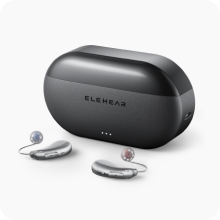
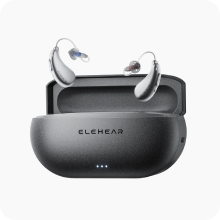
For people using ELEHEAR hearing aids, app-based adjustments and available remote fine-tuning can help adapt the listening experience to everyday situations such as quiet conversations, family gatherings, or busier social settings.

If family members still regularly comment on your voice after you begin using hearing support, include that detail when reviewing your settings. “My family says I still speak too loudly in quiet rooms” is more useful feedback than simply saying the sound does not feel right.
Pay Attention to Patterns Other People Notice
A louder speaking voice can be one of those everyday changes that is easier for family or friends to hear than for you to recognize. It does not prove hearing loss, but it is worth noticing when it appears with repeated requests, higher TV volume, or increasing difficulty following conversations. If several patterns sound familiar, a hearing screening can give you a clearer picture of what has changed and what kind of support may help.
Common Questions About Hearing Loss
Q1. Why Do I Feel Like I Am Speaking Normally When Others Say I Am Loud?
Your perception of your own voice depends partly on auditory feedback. If that feedback changes, the volume that feels normal to you may differ from what people around you hear. Room noise and speaking habits can also affect this judgment.
Q2. Can Mild Hearing Loss Affect How Loudly You Talk?
It can in some people. Even a gradual change in hearing may alter part of the feedback used to monitor speech, although voice changes vary widely and are not present in everyone with mild hearing loss.
Q3. Why Do I Speak Louder in Restaurants Than at Home?
That is a normal response to background noise. People naturally increase their voice when the surrounding sound becomes louder. The more useful clue is whether you continue speaking unusually loudly after moving into a quieter environment.
Q4. Is Family Feedback Useful for Spotting Hearing Loss Symptoms?
Yes. Family members may notice gradual changes such as higher television volume, frequent repetition, missed comments, or a louder speaking voice before those changes feel unusual to you. Look for repeated patterns rather than relying on one observation.


