


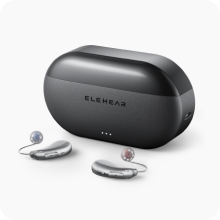
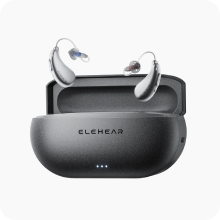


Why can a voice sound loud but still be difficult to follow? Some people miss crisp speech details, while others notice that deep voices, bass notes, or low warning sounds feel weaker. These differences matter because high-frequency hearing loss and low-frequency hearing loss require different types of support. Frequency balance, ear dome fit, app controls, and professional fine-tuning can improve clarity without simply making every sound louder.
What Does High-Frequency Hearing Loss Sound Like in Daily Life?
High-frequency hearing loss makes higher-pitched sounds harder to detect or distinguish. A person may still hear that someone is speaking but miss the details that separate one word from another.
Common examples include:
- Consonants such as “s,” “f,” “th,” “t,” and “k”
- Higher voices, especially from farther away
- Birds, timers, electronic alerts, and appliance signals
- Speech coming from another room
- Conversation when several voices compete
This type of hearing loss often creates the feeling of “I can hear people talking, but I cannot understand every word.” Vowels account for much of the volume in speech, while many consonants provide the detail needed to distinguish similar words.
Background noise makes the problem more noticeable. In complex listening environments such as restaurants, meetings, and family gatherings, the brain needs to separate speech from nearby voices and environmental sounds. Missing high-frequency cues makes that task harder, even when the speaker seems loud enough.
What Does Low-Frequency Hearing Loss Sound Like?
Low-frequency hearing loss affects deeper sounds and lower-frequency energy in speech. Higher pitches may remain easy to hear, so sound can feel uneven rather than uniformly quiet.
Possible signs of low-frequency hearing loss include:
- Deep voices sounding weaker or farther away
- Vowels losing fullness
- Bass notes and lower musical instruments becoming less noticeable
- Engine hum, road rumble, thunder, or appliance sounds becoming harder to detect
- Low warning tones blending into the environment
Lower frequencies contribute weight, rhythm, and body to sound. A person may hear crisp consonants but feel that speech sounds thin or lacks balance. Background noise with strong low-frequency energy can also mask speech information that is already difficult to access.
These experiences cannot confirm low-frequency hearing loss on their own. Earwax, congestion, middle-ear pressure, room acoustics, and audio equipment can also create similar effects. A hearing evaluation is needed to identify the actual frequency pattern.
What Is the Difference between High-Frequency and Low-Frequency Hearing Loss?
High-frequency and low-frequency hearing loss can both make conversations harder, but they affect different parts of sound. The comparison below shows why the same hearing aid settings may not work equally well for both patterns.
|
Comparison |
High-Frequency Hearing Loss |
Low-Frequency Hearing Loss |
|
Sounds most affected |
Higher-pitched sounds and fine speech details |
Deeper sounds and lower-pitched parts of speech |
|
Common speech difficulty |
Voices may sound loud enough, but consonants remain unclear |
Speech may sound thin, distant, or lacking fullness |
|
Everyday sounds that may be missed |
Birds, timers, electronic alerts, and higher voices |
Bass notes, deep voices, engine hums, and low warning tones |
|
Typical listening complaint |
“I can hear people talking, but I miss certain words.” |
“I can hear sharp sounds, but voices do not sound full or balanced.” |
|
General hearing aid focus |
Support speech detail without making sharper sounds uncomfortable |
Strengthen lower-frequency sound without making the wearer’s own voice feel overly full |
|
Ear dome consideration |
A more open fit may preserve natural low-frequency hearing when appropriate |
A more closed fit may help retain amplified low-frequency sound when appropriate |
These are general patterns rather than fixed rules. The degree and shape of hearing loss may differ between ears, and some people have changes across both frequency ranges. An audiogram and real-world listening feedback help determine which settings and ear dome fit are most suitable.
How Does an Audiogram Show Change Across Different Frequencies?
An audiogram separates pitch from loudness. Low pitches appear on the left, while high pitches appear on the right. Softer hearing levels sit near the top, and louder levels appear lower on the chart.
The table shows the basic difference between common high-frequency and low-frequency patterns. Actual audiograms may be flatter, steeper, mixed, or different between the two ears.
|
Comparison Point |
High-Frequency Pattern |
Low-Frequency Pattern |
|
Area most affected |
Right side of the audiogram |
Left side of the audiogram |
|
Common line shape |
Thresholds slope downward toward higher frequencies |
Thresholds rise toward higher frequencies |
|
Common speech effect |
Consonants and word details may be harder to distinguish |
Vowels, deep voices, and sound fullness may weaken |
|
Daily examples |
Birds, alerts, higher voices, speech in noise |
Bass notes, engine hum, deep voices, low tones |
The ASHA explanation of audiograms explains how frequency, hearing level, and each ear’s results appear on the chart. It also shows why hearing may be stronger in one frequency range than another.
The table provides a starting point, not a complete diagnosis. Speech testing, ear examination, listening history, and daily communication needs add important context. Two people with similar audiograms may still prefer different settings.

How Can Hearing Aid Settings and Ear Domes Affect Different Frequencies?
Hearing aid settings control how much support is applied across the frequency range. Ear domes affect how amplified sound remains in the ear canal and how natural sound enters it. Both should be considered together.
When low-frequency hearing remains normal, a more open fitting may help preserve access to natural lower-pitched sounds. When appropriate for the audiogram and fit, a more open ear dome can allow natural lower-pitched sounds to enter while the hearing aid supports higher-frequency detail. The result also depends on the audiogram, ear shape, feedback control, and required amplification.
When comparing hearing aids for low-frequency hearing loss, sealing becomes more important. A more closed ear dome may retain amplified low-frequency sound, but it can also change how a person’s own voice feels. The goal is not the tightest seal, but a secure and comfortable fit that supports the intended frequencies.
The fit or settings may need review when:
- Speech improves, but the person’s own voice sounds unusually full
- Low sounds remain weak at a comfortable volume
- Higher sounds become too sharp
- The device whistles, moves, or feels unstable
- The sound in one ear sounds noticeably different from the other
Fit and hearing aid settings should be reviewed together because either can affect the result. Reviewing both can prevent unnecessary volume increases.
How Can In-app Controls and Professional Fine-Tuning Support Personalization?
Self-adjustment and professional support serve different purposes. In-app controls help with practical daily changes, while professional fine-tuning can respond more closely to hearing information and repeated listening feedback.
Start With Self-Adjustment
The ELEHEAR app provides volume adjustment, frequency fine-tuning, and personalized profiles. These controls allow settings to be adapted for conversation, television, outdoor listening, and music without treating every environment the same.
Make one change at a time, then check speech clarity and comfort across multiple listening environments.
In-app controls can personalize device settings, but they do not determine the medical cause of a hearing change. A recent hearing evaluation, including an audiogram, shows which frequencies are affected and can help guide frequency-specific adjustments.
Add Professional Fine-Tuning When Needed
For people who prefer more individualized high-frequency or low-frequency adjustment, ElePro Plus offers paid remote audiologist fine-tuning. The audiologist can use hearing information and descriptions of everyday listening difficulties to refine device settings.
Make sure to give specific feedback during the session. Examples include consonants remaining unclear in group conversations, deep voices sounding weak, or the person’s own voice feeling too full. Clear examples provide a better basis for adjustment than saying the sound simply feels wrong. ElePro Plus supports device personalization, but it does not replace a medical evaluation when hearing changes are sudden, one-sided, or accompanied by other concerning symptoms.

When Do Frequency-Specific Changes Require Professional Assessment?
A hearing test is appropriate when hearing difficulty repeatedly affects conversations, media consumption, alerts, or daily activities. Professional assessment is especially important when the change is new, uneven between ears, or progressing quickly.
Seek professional care instead of choosing a device on your own if your hearing changes suddenly, becomes much worse in one ear, or if you experience ear pain, ear drainage, or severe dizziness.
The NIDCD information on sudden hearing loss explains that sudden sensorineural changes can develop at once or over several days. Delaying assessment may reduce the effectiveness of treatment when treatment is appropriate.
A professional evaluation may include pure-tone testing, speech testing, ear examination, and middle-ear testing. The results help identify the frequency pattern, degree of change, and whether OTC hearing support fits the situation.
Match the Settings to the Hearing Pattern
Do not judge hearing support by volume alone. Start with a hearing test, record which sounds and situations remain difficult, and use those findings to guide frequency balance, ear dome fit, and follow-up support. Explore current ELEHEAR hearing aids, use in-app controls for practical adjustments, and consider ElePro Plus when paid remote professional fine-tuning would add value.
FAQs
Q1. Is High-Frequency Hearing Loss More Common Than Low-Frequency Hearing Loss?
High-frequency hearing loss is more common, especially with aging and long-term noise exposure. Low-frequency patterns occur less often and may involve different outer-ear, middle-ear, or inner-ear factors.
Q2. Can Frequency-Specific Hearing Loss Affect Phone Conversations?
Yes. Phone speakers and call compression may not reproduce every speech frequency equally, which can make certain voices or consonants harder to follow. Call clarity also depends on the phone, connection, speaker, and hearing aid settings.
Q3. Do Hearing Aid Apps Change Hearing or Only Device Settings?
Hearing aid apps change how compatible devices process and deliver sound. They do not change the underlying hearing thresholds shown on an audiogram.
Q4. How Often Should Hearing Aid Settings Be Rechecked?
Settings should be reviewed when hearing changes, comfort decreases, or familiar listening situations become harder. A repeat hearing test can show whether the audiogram changed or whether the device needs additional fine-tuning.


