


 Hearing loss is one of the most widespread health conditions in the United States, yet it remains undertreated on a massive scale. Millions of Americans who could benefit from hearing aids still go without them — often because of cost, stigma, or lack of awareness about how far the technology has come.
This comprehensive guide compiles the most current hearing loss statistics and hearing aid adoption data for 2026, drawing on research from the National Institute on Deafness and Other Communication Disorders (NIDCD), the World Health Organization (WHO), Johns Hopkins University, and industry reports. For readers who want to act on the data, today's OTC market makes it easier than ever to buy hearing aids online with AI features and remote audiologist support.
[toc]
Quick Overview: Hearing Loss and Hearing Aid Use in 2026
- Approximately 48 million Americans experience some degree of hearing loss
- About 28.8 million US adults could benefit from hearing aids
- Only 1 in 4 adults who need hearing aids actually use them
- The average person waits 7–10 years after noticing hearing difficulty before seeking treatment
- The OTC hearing aid market has grown significantly since FDA regulations took effect in 2022
- AI-powered hearing aids and earbud-style designs are accelerating adoption, particularly among younger adults
How Many Americans Have Hearing Loss?
Overall Prevalence
Hearing loss affects a significant portion of the US population across all age groups:
- 48 million Americans (roughly 14.7% of the population) report some degree of hearing difficulty, according to estimates based on NIDCD data
- Approximately 15% of American adults (aged 18 and older) report some trouble hearing
- Hearing loss is the third most common chronic physical condition in the United States, more prevalent than diabetes or cancer
- About 2–3 out of every 1,000 children in the US are born with a detectable level of hearing loss in one or both ears
Hearing Loss by Age Group
Age remains the strongest predictor of hearing loss. Here's how prevalence breaks down:
| Age Group | Estimated Prevalence |
|---|---|
| 20–39 years | ~6% report some hearing difficulty |
| 40–59 years | ~15% report some hearing difficulty |
| 60–69 years | ~25% experience significant hearing loss |
| 70–79 years | ~40% experience significant hearing loss |
| 80+ years | ~65–80% experience significant hearing loss |
The data is clear: hearing loss accelerates sharply after age 60, but it's by no means exclusive to older adults. Noise exposure from headphones, concerts, power tools, and occupational hazards is contributing to earlier onset in younger populations.
Hearing Loss by Severity
Not all hearing loss is the same. The distribution by severity helps explain why so many people go untreated:
- Mild hearing loss — Difficulty hearing soft sounds and following conversation in noisy environments. This is the most common level and the one most frequently left untreated.
- Moderate hearing loss — Difficulty hearing normal conversational speech, even in quiet settings. At this level, hearing aids provide substantial benefit.
- Severe hearing loss — Can only hear loud sounds without amplification. Hearing aids are essential for daily functioning.
- Profound hearing loss — Unable to hear most sounds without powerful amplification or cochlear implants.
An estimated 60–65% of hearing-impaired Americans fall into the mild-to-moderate range — the exact population that OTC hearing aids are designed to serve.
How Many People Wear Hearing Aids in the US?
Adoption Rates
Despite the high prevalence of hearing loss, hearing aid adoption remains surprisingly low:
- Of the approximately 28.8 million US adults who could benefit from hearing aids, only about 25–30% currently use them
- Among adults aged 70 and older with hearing loss that could benefit from hearing aids, fewer than 30% have ever used them, according to NIDCD estimates
- For adults aged 20–69, the number drops to approximately 16% who have ever used hearing aids
- The US hearing aid market ships roughly 4.5–5 million units annually, covering both new users and replacements
The Treatment Gap
The gap between need and treatment is one of the most significant issues in hearing healthcare:
- Approximately 20–22 million Americans who need hearing aids don't use them
- The average delay between first noticing hearing difficulty and seeking treatment is 7–10 years
- During that delay, untreated hearing loss is associated with increased risk of cognitive decline, social isolation, depression, and falls
Why People Don't Get Hearing Aids
Research consistently identifies the same barriers:
- Cost — Prescription hearing aids carry a significant investment, with limited insurance coverage. This is the single largest barrier to adoption.
- Stigma — Many people associate hearing aids with aging and resist wearing visible devices
- Perceived mild severity — People with mild hearing loss often believe their hearing "isn't bad enough" for hearing aids
- Lack of awareness — Many don't know about OTC options, modern designs, or that AI-powered hearing aids exist at accessible price points
- Inconvenience — Traditional hearing aids require audiologist visits for fitting, adjustment, and maintenance
Hearing Aid Market Statistics in 2026
Market Growth
The hearing aid industry has experienced significant growth, driven largely by the OTC category:
- The global hearing aid market is projected to reach approximately $12–14 billion by 2027, growing at a compound annual rate of 6–8%
- The US represents the largest single market, accounting for roughly 35–40% of global hearing aid revenue
- The OTC hearing aid segment has been the fastest-growing category since FDA regulations opened the market in 2022
- Online direct-to-consumer sales have become a major channel, reducing dependency on audiologist-only distribution
The OTC Impact
The FDA's 2022 decision to create a regulated OTC hearing aid category has reshaped the market:
- OTC hearing aids are now available for adults with perceived mild-to-moderate hearing loss without a prescription
- OTC hearing aids are dramatically more accessible than prescription devices
- Consumer awareness of OTC hearing aids has increased substantially, with industry surveys suggesting that over 60% of adults with hearing concerns are now aware of the OTC option
- AI-powered OTC hearing aids — like those from ELEHEAR — are closing the performance gap with prescription devices
Hearing Loss and Cognitive Health
One of the most important findings in hearing research over the past decade is the connection between untreated hearing loss and cognitive decline:
- A landmark Johns Hopkins study found that mild hearing loss doubles the risk of dementia, moderate loss triples it, and severe loss increases risk fivefold
- The Lancet Commission on Dementia identified hearing loss as the single largest modifiable risk factor for dementia, accounting for approximately 8% of cases
- Research published in The Lancet in 2023 showed that hearing aid use was associated with a 48% reduction in cognitive decline over three years in at-risk older adults
- Untreated hearing loss is associated with an estimated 30–40% faster rate of cognitive decline compared to those with normal hearing
These findings have elevated hearing loss treatment from a quality-of-life issue to a critical public health priority.
Hearing Loss Statistics by Demographics
Gender
- Men are approximately twice as likely as women to experience hearing loss
- This gap is partly attributed to higher rates of occupational noise exposure in male-dominated industries
Race and Ethnicity
- Non-Hispanic white adults report higher rates of hearing loss than non-Hispanic Black and Hispanic adults
- However, racial and ethnic minorities face greater barriers to hearing healthcare access and have lower hearing aid adoption rates
Income and Education
- Adults with lower household income are less likely to use hearing aids, even when hearing loss is present
- The cost barrier disproportionately affects lower-income populations, making affordable OTC options particularly impactful for health equity
Occupation
Certain occupations carry significantly higher risk:
- Military personnel and veterans (hearing loss is the most common service-connected disability)
- Construction workers
- Manufacturing and factory workers
- Musicians and entertainment industry workers
- Agricultural workers
Global Hearing Loss Data
The US numbers reflect a worldwide challenge:
- The WHO estimates that over 1.5 billion people globally live with some degree of hearing loss
- By 2050, the WHO projects that number could reach 2.5 billion, with 700 million requiring rehabilitation services
- Globally, the unmet need for hearing aids is estimated at 80% — meaning 4 out of 5 people who need hearing aids don't have them
- Low- and middle-income countries face the most severe access gaps
How OTC Hearing Aids Are Changing the Statistics
The emergence of affordable, AI-powered OTC hearing aids is directly addressing the largest barriers to adoption:
Breaking the Cost Barrier
OTC hearing aids bring the entry investment level dramatically below the prescription tier. When combined with HSA/FSA eligibility, the effective out-of-pocket cost drops even further. For users who experience ringing or buzzing alongside hearing loss, AI-powered hearing aids for tinnitus like the ELEHEAR Beyond combine hearing enhancement and tinnitus management in a single device.
Reducing Stigma
Modern earbud-style designs — like the ELEHEAR Delight — look indistinguishable from consumer wireless earbuds. This matters enormously for the millions of people who have avoided hearing aids because of how traditional devices look. The Delight's ITC design with ear-wings for secure fit offers hearing assistance that's virtually invisible.
Eliminating Convenience Barriers
- No audiologist appointment required for purchase or fitting
- Self-fit through a smartphone app with guided hearing assessments
- Remote audiologist support (like ELEHEAR's ElePro service) for users who want professional guidance
- Direct shipping to the home with no wait time
- 45-day risk-free trials that remove purchase anxiety
Closing the Technology Gap
AI-powered hearing aids like the ELEHEAR lineup use advanced algorithms to:
- Separate speech from background noise in real time
- Adapt to different listening environments automatically
- Provide Bluetooth streaming for calls, meetings, and media
- Offer tinnitus relief sound therapy
- Allow granular customization through companion apps
According to Elehear Beyond Pro reviews, features once exclusive to premium prescription devices are now available in OTC AI hearing aids.
Key Hearing Loss Trends to Watch in 2026 and Beyond
Several trends are shaping the future of hearing healthcare:
- Younger adoption — Adults in their 40s and 50s are seeking hearing solutions earlier, partly driven by awareness campaigns and discreet OTC designs
- AI advancement — Sound processing AI continues to improve, with each generation delivering measurably better speech clarity in noise
- Integration with health ecosystems — Hearing aids are increasingly functioning as health monitoring devices, tracking activity and even fall detection
- Insurance expansion — More insurance plans and Medicare Advantage programs are beginning to cover OTC hearing aids
- Telehealth audiology — Remote audiologist services are making professional support accessible without geographic limitations
- Workplace accommodation — Remote work has increased demand for hearing aids optimized for video calls and digital meetings
What These Statistics Mean for You
If you're among the millions of Americans experiencing hearing difficulty, the data points to a clear conclusion: treating hearing loss early leads to better outcomes for cognitive health, social connection, emotional well-being, and overall quality of life. And the barriers that once made treatment difficult — high cost, clinic dependency, visible devices — are falling away.
AI-powered OTC hearing aids make it possible to start hearing better today without a prescription, without the prescription-tier investment, and without wearing something that announces your hearing loss to the world.
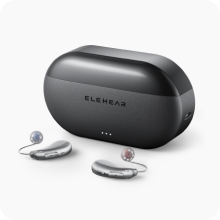
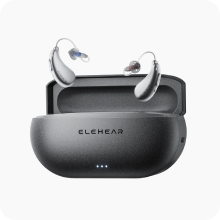
The ELEHEAR Delight offers an accessible entry point with its discreet earbud design and AI sound processing. The Beyond adds Bluetooth and tinnitus support. And the Beyond Pro delivers the most advanced OTC hearing aid experience available, complete with VOCCLEAR 2.0 AI and remote audiologist care.
All three are FDA registered, HSA/FSA eligible, and backed by a 45-day risk-free trial, 1-year warranty, and free shipping. Over 50,000 users — and awards from Forbes, Fast Company, CES, HearAdvisor, and Red Dot — confirm that accessible hearing technology has arrived.
Visit ELEHEAR.com to find the right hearing aid for your needs and start your risk-free trial.
All ELEHEAR hearing aids are FDA registered, HSA/FSA eligible, and include free shipping, a 45-day risk-free trial, and a 1-year warranty.


