


One of the most common questions first-time hearing aid buyers ask is simple: can you actually wear these things all day? It is a fair concern. A device that sits in or around your ear for 12 to 16 hours needs to be genuinely comfortable — not just tolerable for an hour. The good news is that modern hearing aids, and especially well-fitted AI-powered OTC devices, are designed with full-day wearability as a baseline expectation.
This guide covers everything you need to know about all-day hearing aid wear in 2026: what is normal, what is not, how to build up wear time correctly, what causes discomfort, and which hearing aids are built for the kind of extended comfort that makes daily life genuinely better. ELEHEAR produces some of the best AI OTC hearing aids in 2026 with all-day wear specifically in mind, and we will explain exactly what to look for.
Can You Wear Hearing Aids All Day in 2026?
Yes — modern hearing aids are designed for all-day wear of 12 to 16 hours. First-time users should build up gradually over two to three weeks, starting with four to six hours per day. Mild discomfort in the first days is normal as the brain adjusts to amplified sound. With the right fit and AI sound processing, all-day wear becomes natural and unconscious within two to four weeks.
What Audiologists Recommend for Daily Wear Time
The audiological consensus in 2026 is that consistent, extended wear is not just acceptable — it is actively beneficial for outcomes. Here is why.
The brain requires time and repetition to learn how to process amplified sound efficiently. This process, called auditory acclimatization, happens faster and more completely when hearing aids are worn consistently throughout the day. Users who wear their devices for only a few hours and then remove them consistently report slower improvement and less overall satisfaction compared to those who commit to full-day wear from early on.
The recommended daily wear schedule for new users:
- Week 1: Four to six hours per day in familiar, quiet environments
- Week 2: Six to ten hours per day, including some social settings
- Week 3 onward: Full waking day wear, including noisy environments and outdoor activities
The goal by week three to four is that the hearing aids feel natural — not something you consciously notice, but simply part of how you experience the world. Most users who commit to this gradual schedule report reaching that point within a month.
What Is Normal in the First Days and Weeks
Understanding what to expect prevents unnecessary alarm during the adjustment period. Several experiences that feel unusual at first are completely normal:
Your own voice sounds different. When you first wear hearing aids, your voice may sound louder, more resonant, or slightly hollow. This is the occlusion effect — the device partially seals the ear canal, changing how bone-conducted sound reaches your ear. It typically diminishes significantly within one to two weeks as the brain recalibrates. Well-designed devices, including ELEHEAR Delight, score above OTC category averages on own voice comfort specifically to minimize this experience.
Background sounds seem overwhelming. Sounds you had stopped noticing — refrigerator hum, keyboard clicks, air conditioning — become audible again. This is not malfunction. It is your hearing system re-engaging with the full sound environment. The brain filters these sounds back into the background within days to weeks.
Mental fatigue at the end of the day. Listening fatigue is real and well-documented. When the brain has been working harder than usual to process a richer sound environment, cognitive tiredness by evening is normal. This fades consistently as auditory acclimatization progresses.
Mild ear canal awareness. Feeling a new presence in your ear in the first days is normal. If it progresses to pain, soreness, or skin irritation, this signals a fit issue that needs addressing — not something to push through.
What Can Cause Discomfort During All-Day Wear
Not all discomfort is part of normal adjustment. Understanding the difference between acclimatization and a genuine fit or performance problem saves weeks of unnecessary struggle.
Wrong dome size. Every hearing aid comes with multiple dome sizes. Using a dome that is too large creates pressure inside the canal. Too small, and the device shifts constantly. Getting the dome size right — usually a 15-minute process of trying each included size — is the single most impactful step for daily comfort.
Incorrect insertion technique. Particularly relevant for ITC (In-The-Canal) devices like ELEHEAR Delight, incorrect insertion puts the device in an orientation that creates pressure against canal walls. ELEHEAR's insertion guide — pull the earlobe down, insert at a slight angle, then rock backward to seat the ear-wing — distributes contact evenly and eliminates pressure points.
Feedback and whistling. Persistent whistling is not something to tolerate through all-day wear. It indicates either a fit issue (device not fully seated) or a feedback suppression problem. Modern devices including ELEHEAR Delight use DNN Hybrid Feedback Suppression to eliminate this — if whistling persists, re-seating the device or adjusting the dome size resolves it in nearly all cases.
Sound processing mismatch. A device not calibrated to your specific hearing loss will amplify frequencies you do not need amplified, creating listening fatigue faster and making all-day wear more effortful. This is one of the core reasons personalized self-fitting devices consistently outperform preset devices in long-term wear comfort. The in-app hearing test in the ELEHEAR app generates a personalized sound profile calibrated to your audiogram — reducing unnecessary amplification and making all-day wear significantly less fatiguing.
Physical device weight or bulk. Heavier, bulkier devices create cumulative discomfort over long wear periods. Modern OTC hearing aids are engineered for minimal weight — ELEHEAR Delight's ITC form factor sits partially inside the canal with no behind-the-ear components, eliminating the weight leverage that can make BTE devices uncomfortable over long periods.
The Difference Between Form Factors for All-Day Comfort
Different hearing aid designs handle all-day wear differently. Here is an honest comparison:
| Form Factor | All-Day Comfort | Glasses Compatibility | Active Use | Discretion |
|---|---|---|---|---|
| ITC (In-The-Canal) | Excellent — no BTE component | Full — nothing behind ear | Excellent — ear-wing anchor | Maximum |
| RIC (Receiver-in-Canal) | Very good | Partial — thin wire behind ear | Good | Good |
| BTE (Behind-the-Ear) | Good | Limited — competes with frame | Moderate | Moderate |
| IIC (Invisible-in-Canal) | Good when fitted well | Full | Moderate | Maximum |
For users who wear glasses, work in active environments, or spend extended time outdoors, the ITC form factor has a meaningful all-day comfort advantage. There is no behind-the-ear component to accumulate heat, compete with glasses frames, or shift during head movement. ELEHEAR Delight's soft ear-wing distributes the contact pressure of all-day ITC wear across a broader surface area, which is the specific design choice that makes 13+ hours genuinely comfortable rather than merely tolerable.
Battery Life and All-Day Wear: What You Need
All-day wear requires all-day battery. A device that dies at 3pm is not a hearing solution — it is an inconvenience. In 2026, the minimum acceptable battery life for a serious all-day hearing aid is 12 hours per charge. Anything below that requires either midday charging or accepting that you will be without hearing support during the latter part of the day.
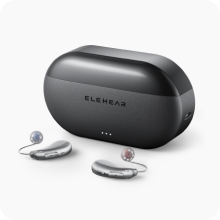
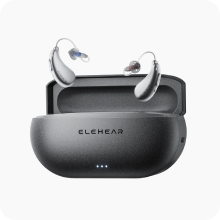
ELEHEAR Delight delivers up to 13.5 hours per charge — engineered specifically to cover a full waking day from morning alarm to evening wind-down, including Bluetooth streaming. The portable charging case provides two additional full charges for travel and extended days. For buyers considering the best OTC hearing aids 2026 in a RIC form factor, ELEHEAR Beyond Pro also provides a full day's battery life with case backup.
Midday charging, if needed, is straightforward with case-based charging: ten minutes in the case typically provides one to two hours of additional use for most modern devices.
Should You Wear Hearing Aids While Sleeping?
The clear consensus is no. Hearing aids should be removed before sleep for three reasons.
First, the ear canal needs time without occlusion. Extended continuous occlusion of the ear canal can contribute to moisture buildup and increased cerumen (earwax) production over time. Eight hours of open-canal rest per night is generally considered optimal for ear health.
Second, battery health is preserved by overnight charging rather than overnight wear. Keeping devices in the charging case overnight ensures a full battery every morning and extends long-term battery lifespan.
Third, feedback during sleep — caused by the pillow pressing against the ear — is disruptive and unnecessary. There is simply no benefit to wearing hearing aids during sleep for the vast majority of users.
The practical rhythm that works best for most users is: devices in at morning routine, devices in the case at bedtime. This creates a consistent 12-16 hour wear pattern that supports both auditory acclimatization and device longevity.
Hearing Aid Fatigue: When It Is Normal and When It Is Not
Listening fatigue — mental tiredness associated with extended hearing aid use — is one of the most commonly reported experiences among new users and one of the least discussed in product marketing.
Normal listening fatigue: mild mental tiredness in the evening during weeks one and two of use. This is the brain working harder in a richer acoustic environment than it has processed in some time. It resolves consistently as acclimatization progresses.
Not normal: persistent headaches, ear pain, constant ringing that was not present before wearing the device, or significant worsening of hearing after removal. These warrant either a fit adjustment or, if they persist, a consultation with a hearing care professional.
For users managing tinnitus alongside hearing loss, note that consistent hearing aid wear is actually one of the most evidence-supported non-pharmaceutical strategies for reducing tinnitus perception. By providing the auditory system with consistent input, hearing aids reduce the contrast that makes tinnitus more noticeable in quiet environments. ELEHEAR devices include dedicated tinnitus therapy modes — the hearing aids for tinnitus functionality in the ELEHEAR Beyond and the white noise therapy in ELEHEAR Delight support both hearing improvement and tinnitus symptom management simultaneously.
Tips for Building All-Day Wear Habits Successfully
These are the practical steps that make the difference between users who abandon their hearing aids within six months and those who wear them confidently for years:
Start in comfortable environments. Begin your wear time at home, in quiet or familiar settings. Do not begin in a busy restaurant or crowded event. Give the brain a manageable introduction to amplified sound.
Add one new challenging environment per week. Quiet conversation first, then one-on-one in a coffee shop, then a small group dinner, then a busy social event. Graduated exposure produces faster and more durable acclimatization than immediate full immersion.
Run the in-app hearing test before your first full day. On personalized self-fitting devices, the hearing test calibration makes all-day wear significantly more comfortable from day one by eliminating unnecessary amplification of frequencies you hear well. Skip this step and you are wearing a generic preset device even on a personalized platform.
Keep a brief daily log in weeks one and two. Note what environments caused fatigue or discomfort. This information is directly useful for remote professional fitting sessions — ELEHEAR's hearing care experts can use this feedback to fine-tune your device remotely, accelerating the path to comfortable all-day wear.
Clean devices every evening before charging. Earwax accumulation on the dome or receiver is the most common cause of progressive sound quality degradation and one of the most common causes of feedback during extended wear. A 60-second cleaning routine at the end of each day maintains consistent performance.
ELEHEAR Delight: Engineered for All-Day Wear
Every design decision in ELEHEAR Delight reflects the goal of all-day wearability. The ITC form factor eliminates behind-the-ear weight and heat accumulation. The soft ear-wing distributes contact pressure across the full wear period rather than concentrating it at a single point. The 13.5-hour battery covers waking hours completely. VOCCLEAR AI personalization reduces listening fatigue by amplifying exactly what your hearing profile requires — nothing more, nothing less. The IP67 rating means workouts, outdoor walks, and light rain do not interrupt your wear schedule.
For buyers who want a device that disappears into daily life within a few weeks — heard when you need to hear, unfelt when you do not — ELEHEAR Delight is designed from the ground up to deliver that experience.
FAQ: Wearing Hearing Aids All Day in 2026
How many hours a day should you wear hearing aids?
Audiologists recommend working up to 12-16 hours of daily wear — essentially your full waking day. New users should start at four to six hours per day in the first week and increase gradually over two to three weeks. Consistent wear accelerates auditory acclimatization and produces better long-term hearing outcomes.
Is it bad to wear hearing aids all day?
No — modern hearing aids are designed for all-day use. Wearing them consistently throughout the day is recommended by audiologists to support auditory acclimatization. The only exception is sleep: devices should be removed at bedtime to allow the ear canal to rest and to charge overnight.
Why do hearing aids cause fatigue?
Listening fatigue in new users is caused by the brain working harder to process a richer sound environment than it has recently experienced. This is a normal part of adjustment and diminishes consistently as acclimatization progresses. Poorly fitted or non-personalized devices cause more fatigue because they amplify sounds unnecessarily — personalized AI fitting significantly reduces this effect.
How do I make my hearing aids more comfortable for all-day wear?
The most impactful steps are: ensure the correct dome size is fitted, use the in-app hearing test to personalize your sound profile, learn the correct insertion technique for your device style, clean devices daily, and build up wear time gradually rather than starting with a full day. Remote professional fitting sessions can fine-tune the sound profile to further reduce listening fatigue.
Can you wear hearing aids during exercise?
Yes, provided your device has an appropriate water and dust resistance rating. ELEHEAR Delight is IP67-rated, making it suitable for workouts, outdoor runs, and light rain. Devices without a published IP rating may not withstand heavy perspiration over extended exercise sessions.
What happens if you wear hearing aids too long in the early adjustment period? Wearing devices significantly longer than recommended in the first week can intensify listening fatigue and increase the chance of abandoning the adaptation process. The gradual schedule — four to six hours in week one, extending to full-day by week three — is designed to make adjustment sustainable rather than overwhelming.
Why does my own voice sound strange with hearing aids?
The occlusion effect — where the ear canal is partially sealed by the device — changes how bone-conducted sound from your own voice reaches your ear, making it sound louder or more resonant than normal. This typically diminishes significantly within one to two weeks as the brain adjusts. Devices scoring above category average on own voice comfort, like ELEHEAR Delight, reduce this effect from the first day of wear.
Should you wear hearing aids in both ears if you have loss in both?
Yes. Bilateral fitting — wearing a hearing aid in each ear — is the standard recommendation when hearing loss is present in both ears. It supports spatial hearing, improves speech understanding in noise, and provides a more natural, balanced listening experience than a single-ear device.


