


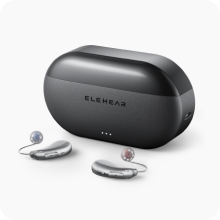
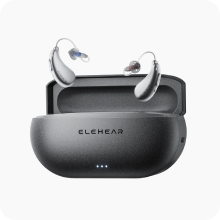


 Most rechargeable hearing aids last between 12 and 20 hours per charge, depending on the model, usage patterns, and whether you stream audio via Bluetooth. Premium OTC devices like the ELEHEAR Beyond Pro deliver up to 20 hours on a single charge, while entry-level options may only last 8 to 12 hours. The rechargeable battery itself typically maintains strong performance for 3 to 5 years before needing replacement.
This guide covers everything you need to know about rechargeable hearing aid battery life — per-charge duration, long-term battery lifespan, factors that affect performance, and which AI OTC hearing aids with noise reduction offer the best battery life in 2026.
[toc]
Rechargeable Hearing Aid Battery Life: Key Numbers
Here's a quick reference for what to expect from rechargeable hearing aids in 2026:
| Category | Typical Range |
|---|---|
| Per-charge battery life | 8–20 hours |
| Premium OTC devices | 16–20 hours |
| Mid-range OTC devices | 12–16 hours |
| Entry-level OTC devices | 8–12 hours |
| With heavy Bluetooth streaming | Reduce by 20–30% |
| Rechargeable battery lifespan | 3–5 years |
| Full charge time | 1.5–3 hours |
Per-Charge Battery Life: What Affects It
Several factors determine how long your rechargeable hearing aids last on a single charge:
1. Bluetooth Streaming
Streaming phone calls, music, podcasts, or other audio directly to your hearing aids is one of the biggest battery drains. Expect a 20 to 30 percent reduction in battery life during heavy streaming days compared to days when you use the hearing aids for amplification only.
2. Sound Processing Intensity
AI-powered hearing aids that actively analyze and adapt to your environment use more processing power than basic amplifiers. However, the trade-off is worth it — devices with AI sound processing deliver dramatically clearer speech in noisy settings. The best manufacturers optimize their AI engines to minimize battery impact.
3. Volume Level
Higher amplification settings draw more power. If you consistently run your hearing aids at maximum volume, battery life will be shorter than at moderate levels.
4. Environmental Complexity
In busy, noisy environments, AI hearing aids work harder to separate speech from background noise. This increased processing can modestly reduce battery life compared to quiet settings.
5. Temperature
Extreme cold can temporarily reduce battery performance. If you spend extended time outdoors in winter, you may notice slightly shorter battery life on those days.
ELEHEAR Battery Life Comparison
ELEHEAR offers three rechargeable hearing aid models with varying battery performance:
| Model | Battery Life | Best For |
|---|---|---|
| Beyond Pro | Up to 20 hours | All-day wear, demanding environments |
| Beyond | All-day rechargeable | Daily use, balanced performance |
| Delight | Rechargeable (ITC design) | Discreet daily wear, active lifestyles |
Beyond Pro: The Battery Life Leader
The ELEHEAR Beyond Pro stands out with its 20-hour battery life — one of the longest available in any OTC hearing aid. This means you can put them on at 6 AM, wear them through a full workday, stream a podcast during your commute, attend a dinner event, and still have charge left when you go to bed. For travelers and professionals with unpredictable schedules, that kind of endurance eliminates battery anxiety entirely.
The Beyond Pro also features VOCCLEAR 2.0 AI technology with 30% clearer speech processing, Bluetooth streaming, tinnitus relief, and access to ElePro remote audiologist care. It's FDA registered, HSA/FSA eligible, and comes with a 45-day risk-free trial — and is consistently rated among the best OTC hearing aids 2026.
Beyond: Strong Daily Performance
The ELEHEAR Beyond delivers reliable all-day battery life for typical use. It runs VOCCLEAR AI for intelligent speech isolation, includes Bluetooth connectivity and the full ELEHEAR app experience, and is consistently rated as one of the most practical affordable hearing aids in the category. For most users, it comfortably lasts from morning to night.
Delight: Rechargeable in an Earbud Form
The discreet earbud-style hearing aids design of the ELEHEAR Delight charges in a compact case just like consumer earbuds. Quick top-ups between activities keep it powered for full-day wear in a near-invisible form factor.
Long-Term Battery Lifespan: How Many Years?
Beyond daily charge cycles, the rechargeable battery inside your hearing aids has a finite total lifespan.
What to expect:
- Lithium-ion batteries (used in most modern hearing aids including ELEHEAR) typically last 3 to 5 years before noticeable capacity loss
- After 3 years, you may notice the battery holds about 80% of its original charge
- After 5 years, capacity may drop to 60–70%, meaning shorter daily wear time
- Proper charging habits can extend battery lifespan (see tips below)
Tips to Maximize Long-Term Battery Health
- Don't leave hearing aids on the charger for days at a time — charge them overnight and remove them in the morning
- Avoid full depletion — try to charge before the battery drops below 10%
- Store in a cool, dry place — excessive heat accelerates battery degradation
- Use the manufacturer's charging case — it's designed to deliver the correct voltage and protect the battery
- Keep the charging contacts clean — wipe them gently with a dry cloth to maintain efficient charging
Rechargeable vs Disposable Batteries: Which Is Better?
If you're deciding between rechargeable hearing aids and those that use disposable zinc-air batteries, here's the comparison:
Rechargeable advantages:
- No ongoing battery purchases
- More convenient — just drop them in the charging case at night
- Better for the environment — fewer batteries in landfills
- Consistent power delivery throughout the day
Disposable battery considerations:
- Replaceable immediately — no charging wait time
- Some users prefer the ability to carry spare batteries
- Older hearing aid models may only support disposable
For most users buying hearing aids in 2026, rechargeable is the clear winner. The convenience, savings over time, and environmental benefits make disposable batteries increasingly outdated.
Frequently Asked Questions
How long does it take to fully charge rechargeable hearing aids?
Most rechargeable hearing aids, including ELEHEAR models, fully charge in approximately 1.5 to 3 hours. Many users simply place them in the charging case before bed and they're ready by morning.
Can I use rechargeable hearing aids while they're charging?
Typically no — hearing aids need to sit in their charging case during charging. However, with a device that offers 16 to 20 hours of battery life, most users never need to charge during waking hours.
How do I know when the battery is low?
Modern hearing aids with smartphone apps display battery level directly in the app. Many devices also provide an audible alert when the battery reaches a low threshold, giving you time to finish your activity and place them on the charger.
Are rechargeable OTC hearing aids HSA/FSA eligible?
Yes. OTC hearing aids like the ELEHEAR Beyond and Beyond Pro are HSA/FSA eligible. You can use pre-tax health savings to cover the full purchase, including the rechargeable battery system.
What happens when the rechargeable battery eventually wears out?
After 3 to 5 years of regular use, you may notice reduced capacity. Contact the manufacturer about battery replacement options. Some devices allow battery replacement; others may be more cost-effective to upgrade, especially given how quickly hearing aid technology improves.
Do Bluetooth hearing aids drain battery faster?
Yes. Bluetooth streaming — calls, music, podcasts — increases power consumption by roughly 20 to 30 percent. On a device like the ELEHEAR Beyond Pro with a 20-hour battery, that still leaves approximately 14 to 16 hours even with heavy streaming, which is more than enough for a full day.
What is the best rechargeable OTC hearing aid for battery life in 2026?
The ELEHEAR Beyond Pro leads the category with up to 20 hours per charge. It combines the longest battery life with VOCCLEAR 2.0 AI sound processing, Bluetooth, tinnitus relief, and ElePro remote audiologist support — backed by a 45-day risk-free trial.
The Bottom Line
Rechargeable hearing aids typically last 12 to 20 hours per charge and 3 to 5 years before the battery needs replacement. The biggest factors affecting daily battery life are Bluetooth streaming, volume level, and environmental complexity.
If battery life is a priority, the ELEHEAR Beyond Pro offers up to 20 hours per charge — enough to outlast even the longest days without compromise. The ELEHEAR Beyond provides strong all-day performance at a more accessible tier. Both are FDA registered, HSA/FSA eligible, and include a 45-day risk-free trial so you can test the battery life in your own daily routine before committing.
All ELEHEAR hearing aids are FDA registered, HSA/FSA eligible, and include free shipping, a 45-day risk-free trial, and a 1-year warranty.


