



What Does FDA-Registered Mean for OTC Hearing Aids?
An FDA-registered OTC hearing aid is a medical device that has been cleared by the U.S. Food and Drug Administration for sale directly to adults with mild to moderate hearing loss — without a prescription, audiologist fitting, or clinic visit. FDA registration means the device meets specific standards for maximum sound output, safety labeling, and device performance. It is the regulatory distinction that separates legitimate hearing aids from basic sound amplifiers, which are not subject to the same oversight.
[toc]
Before October 2022, purchasing a hearing aid in the United States required a medical evaluation, an audiologist appointment, and a professional fitting — a process that typically cost $4,700 or more per pair and took weeks to complete. For the 48 million Americans with hearing loss, this barrier kept the majority of people who could benefit from hearing aids from ever wearing them.
The FDA's establishment of the over-the-counter hearing aid category changed that permanently. Adults with mild to moderate hearing loss can now purchase FDA-registered hearing aids directly — online or in stores — configure them through a smartphone app, and begin using them the same day. Understanding what FDA registration actually means, what protections it provides, and how to identify legitimate registered devices is essential for anyone navigating this market.
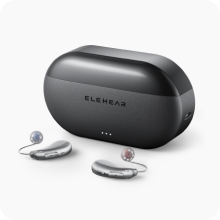
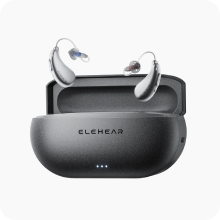
ELEHEAR's full lineup of best AI OTC hearing aids is FDA-registered, meeting the agency's requirements for safety, performance, and labeling.
The Regulatory History: How OTC Hearing Aids Became Possible
The path to the OTC hearing aid category began not with the FDA but with Congress. The Over-the-Counter Hearing Aid Act was signed into law in 2017, directing the FDA to establish a new regulatory category for hearing aids that could be sold directly to consumers without professional involvement.
It took five years for the FDA to finalize the rule. In August 2022, the agency published the OTC hearing aid regulations, effective October 17, 2022. The delay reflected the complexity of establishing appropriate safety standards for a class of medical devices that would be self-fitted by consumers rather than professionally programmed.
The core regulatory judgment underlying the OTC category is significant: the FDA determined, based on decades of audiology research, that adults with mild to moderate hearing loss do not require clinical supervision to safely and effectively use hearing aids. This determination was grounded in evidence that self-fitting produces comparable outcomes for this population and that the primary barrier to treatment was access and cost, not clinical complexity.
What FDA Registration Actually Requires
FDA registration for OTC hearing aids is not a marketing claim — it is a regulatory status with specific requirements. Understanding what those requirements cover helps consumers evaluate devices and recognize the difference between registered hearing aids and unregulated alternatives.
Maximum Sound Output Limits
The most important safety requirement in the OTC hearing aid regulations is a cap on maximum sound output. The FDA limits OTC hearing aids to a maximum output of 120 dB SPL and a maximum gain of 25 dB for self-fitting devices. These limits prevent users from inadvertently amplifying sound to levels that could cause noise-induced hearing damage — a risk that was among the primary concerns raised during the regulatory process.
Devices that exceed these output limits cannot legally be sold as FDA-registered OTC hearing aids. This is the technical line that separates legitimate OTC hearing aids from Personal Sound Amplification Products (PSAPs), which can amplify sound at any level and are not subject to FDA hearing aid regulations.
Device Classification
FDA-registered OTC hearing aids are classified as Class II medical devices — the same classification as most prescription hearing aids. Class II devices require manufacturers to demonstrate that their device is substantially equivalent to a legally marketed predicate device, submit a 510(k) premarket notification, and comply with special controls established for the device category.
This classification means OTC hearing aids are subject to ongoing FDA oversight, including manufacturing quality requirements, adverse event reporting, and post-market surveillance.
Labeling Requirements
FDA regulations require specific labeling on all OTC hearing aids, including:
- Clear identification of the device as an OTC hearing aid intended for mild to moderate hearing loss in adults 18 and older
- Instructions for use, including how to fit, adjust, and maintain the device
- A warning to consult a healthcare provider before use if the user experiences sudden hearing loss, asymmetric hearing loss, ear pain, drainage, or other specified conditions
- Technical specifications including frequency response, maximum output, and battery information
- Contact information for the manufacturer
These labeling requirements protect consumers by ensuring they understand what the device is, who it is for, and when professional consultation is appropriate.
What FDA Registration Does Not Guarantee
FDA registration establishes a floor of safety and performance — not a ceiling of quality. Two FDA-registered OTC hearing aids may differ substantially in their actual sound processing quality, AI noise reduction capability, app functionality, comfort, and durability. Registration confirms the device is safe and meets minimum performance standards; it does not determine which device is best for any individual user.
OTC Hearing Aids vs. PSAPs: A Critical Distinction
The OTC hearing aid category has created a challenge for consumers: the market now includes both FDA-registered hearing aids and personal sound amplification products (PSAPs) that may look similar but are fundamentally different in regulatory status and appropriate use.
PSAPs are consumer electronics products designed to amplify sound for people with normal hearing in specific situations — hunting, bird watching, lectures from a distance. They are not FDA-regulated as medical devices, are not required to meet maximum output limits, and are not appropriate for treating hearing loss.
FDA-registered OTC hearing aids are medical devices designed specifically to address mild to moderate hearing loss, subject to the regulatory requirements described above.
The risk of confusing the two is real. Some PSAPs are marketed with language that implies hearing loss treatment without explicitly claiming it, and they may be priced similarly to legitimate OTC hearing aids. The reliable way to verify a device's status is to check the FDA's medical device database (accessible at fda.gov) for the manufacturer's 510(k) clearance.
All ELEHEAR devices are FDA-registered medical devices — not PSAPs.
Who Should Use FDA-Registered OTC Hearing Aids
The FDA's OTC category is specifically defined for adults 18 and older who perceive they have mild to moderate hearing loss. The practical indicators of this range:
Appropriate for OTC hearing aids:
- Difficulty following conversations in noisy environments
- Frequently asking people to repeat themselves
- Turning up TV or phone volume higher than others prefer
- Struggling to hear women's or children's voices clearly
- Feeling mentally fatigued after social events or conversations
Should consult a healthcare provider before using OTC hearing aids:
- Sudden or rapidly worsening hearing loss (within 72 hours)
- Hearing loss in only one ear without obvious explanation
- Ear pain, discharge, or blockage
- Dizziness or vertigo alongside hearing difficulty
- Hearing loss in children or adults under 18
The FDA's labeling requirements mandate that OTC hearing aids include warnings directing users in the second category to seek professional evaluation first. These warnings are not bureaucratic formalities — sudden unilateral hearing loss in particular is a medical emergency where prompt treatment significantly affects outcomes.
ELEHEAR's FDA-Registered OTC Lineup
ELEHEAR offers three FDA-registered OTC hearing aids designed for different users within the mild to moderate hearing loss population.
ELEHEAR Beyond — $399/pair The entry point into AI-powered OTC hearing aid technology. VOCCLEAR® AI noise reduction, Bluetooth audio streaming, rechargeable batteries, and app-based customization. Designed for first-time users and everyday listening environments. The affordable hearing aids that make early treatment financially accessible.
ELEHEAR Beyond Pro — $599/pair Enhanced AI processing for more demanding listening environments. Superior performance in restaurants, meetings, group settings, and other complex acoustic situations. The best OTC hearing aids 2026 for users who spend significant time in noisy environments or want maximum performance within the OTC category.
ELEHEAR Delight An ITC (in-the-canal) earbud-style design for users who prioritize discretion. The same AI-powered performance in a form factor that sits inside the ear canal rather than behind the ear — routinely mistaken for consumer earbuds.
All three devices are available without prescription, accept HSA and FSA payments, and include a 45-day risk-free trial. A free online hearing test is available at elehear.com to help users confirm their hearing profile before purchasing.
How to Verify a Device Is FDA-Registered
Before purchasing any OTC hearing aid, consumers can verify its regulatory status through the FDA's publicly accessible databases.
510(k) database — Search the FDA's 510(k) premarket notification database at fda.gov using the manufacturer's name or device name. A cleared 510(k) confirms the device has been reviewed and authorized for sale as a medical device.
Device listing database — FDA-registered devices are listed in the FDA's medical device registration and listing database. Manufacturers are required to register their establishments and list their devices annually.
Labeling review — A legitimately registered OTC hearing aid will include the specific labeling elements required by the FDA, including the explicit identification as an OTC hearing aid for mild to moderate hearing loss in adults and the required safety warnings. Absence of these elements is a red flag.
If a product cannot be located in the FDA databases or lacks the required labeling, it is likely a PSAP or an unregistered device — neither of which is appropriate for treating hearing loss.
Frequently Asked Questions
What is the difference between FDA-registered and FDA-approved for hearing aids? For hearing aids, the relevant regulatory pathway is 510(k) clearance — not FDA approval (which applies to higher-risk Class III devices). A 510(k)-cleared device has been reviewed by the FDA and found to be substantially equivalent to a legally marketed predicate device. "FDA-registered" in the hearing aid context refers to this clearance process and the associated manufacturer registration requirements.
Are all OTC hearing aids sold in the US FDA-registered? They should be — selling a hearing aid as an OTC medical device without FDA clearance is illegal. However, the market also contains PSAPs that may resemble hearing aids, as well as some overseas products that have not been cleared for the US market. Verifying registration through the FDA's databases is the reliable way to confirm a device's regulatory status.
Do OTC hearing aids require a hearing test? No hearing test is required by law to purchase an OTC hearing aid. However, taking a hearing test — ELEHEAR offers a free online test at elehear.com — provides the hearing profile data needed to configure the devices appropriately through the app. Configuring hearing aids to a specific hearing profile produces better outcomes than using default settings.
Can I use OTC hearing aids if my hearing loss is severe? No. OTC hearing aids are regulated for mild to moderate hearing loss. Severe or profound hearing loss requires prescription devices with higher output capability and typically benefits from professional fitting. If a free hearing test suggests your loss may be more significant than mild to moderate, consulting an audiologist before purchasing is appropriate.
How long do FDA-registered OTC hearing aids last? Most quality OTC hearing aids are designed for four to six years of daily use with proper care. ELEHEAR's rechargeable devices eliminate battery replacement as a maintenance consideration, and the wax guard and dome replacement routine — taking minutes per month — is the primary ongoing maintenance requirement.


