


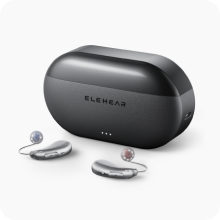
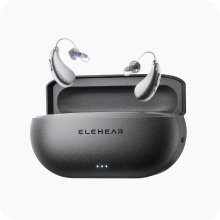


Maybe you were embarrassed when you incorrectly responded to a misheard question or comment. Perhaps you have stopped attending social events because you are unable to follow group conversations. Hearing challenges have made you increasingly frustrated and unhappy. You know you have a hearing loss. It is no longer a secret.
And, yet you have not moved forward to find a solution.
This is a common scenario that hearing care professionals have witnessed many times . What are the reasons and what are the solutions? In many cases, it is a combination of misinformation, misconceptions and myths surrounding hearing loss and hearing technology that are the misconceptions. By examining each, we may be able to start on the road to a hearing solution.
Key takeaways
- Hearing loss is not limited to older adults; approximately 20% of people aged 18 to 64 have some degree of hearing loss.
- Modern hearing aids can reduce background noise while enhancing the speech signal, and consistent practice supports success in noisy environments.
- Amplified sound may seem unfamiliar at first but becomes more natural with consistent use, and settings can be adjusted to improve sound quality.
- Hearing care professionals are required by federal and state regulations to provide the highest quality of care, and reputable professionals respect each client’s budget.
- Even a mild hearing loss can make conversation difficult in noisy settings, and OTC hearing aids offer an affordable option for mild to moderate hearing loss.
Let’s explore some of the common misconceptions or myths:
1. Hearing aids are meant for older people with severe hearing loss
2. Hearing aids do not help in noisy environments.
3. The sound is artificial and uncomfortable.
4. Hearing care professionals are only interested in selling you hearing aids
5. Hearing aids are difficult to use with cell phones.
6. I only have a mild hearing loss and hearing aids are expensive!
- Hearing aids are only for older people with severe hearing loss.
- Approximately 20% (or twenty million) people from ages 18 to 64 have some degree of hearing loss (source - NIDCD/NIH (2017)
- Therefore, it is not an “aging problem”. Other causes of hearing loss include: heredity; disease; noise exposure and injury.
- If you delay obtaining hearing aids until retirement age, it will be more difficult to become accustomed to the devices. Like most skills that are not consistently “practiced”, your brain forgets how to efficiently separate speech from noise.
- Hearing aids do not help in noisy environments.
- This is one of the biggest misconceptions surrounding hearing technology.
- With the advent of hearing aid technology, background noise can be reduced while the speech signal is enhanced.
- The speech signal becomes more intelligible when it is placed above the “noise floor”. Noise management/speech enhancement technology along with consistent practice can lead to success.
- Keep in mind that people with normal hearing do not hear and understand everything when listening in a noisy environment,
- The sound is artificial and uncomfortable.
- As our understanding of the physics of sound and how the human ear transmits this sound has improved, so too has our ability to make amplified sound more natural.
- Remember if you have not heard certain sounds at all or not at normal levels for a while, they will seem different when you first hear them amplified. This greatly improves with consistent use of your hearing devices.
- Adjustments can be made to your hearing aids settings to improve sound quality via either ElePro Basic adjustments or by way of our ElePro Plus online appointment.
- Hearing care professionals (HCPs) are only interested in selling you a hearing aid.
- Hearing care professionals (audiologists and hearing instrument specialists) are tasked by federal and state regulations/laws to provide the highest quality of care to their clients.
- HCPs goal is to create a hearing care solution that maximizes their client’s hearing abilities - whatever that solution might ultimately be at the end of the process.
- Budget is a concern for everyone, so reputable HCPS will respect the client’s budget and work to find a satisfactory solution. As noted throughout this discussion, it is a compilation of issues, decisions, choices that lead to satisfaction and success.
- Hearing aids are difficult to use with cellphones.
- As Bluetooth (BT) technology has advanced, so too has the ability to stream phone calls and media to your hearing aids.
- In addition, the ELEHEAR devices have a dedicated app that allows you to easily adjust the sound as needed.
- Once paired to a cellphone, it is a “one or two click” adjustment. Often much than finding the correct button on the body of the hearing device.
- I only have a mild hearing loss and hearing aids are expensive!
- Even a mild hearing loss can interfere with your ability to hear and understand speech.
- In a quiet room, talking one-on-one, an individual with a mild hearing loss may experience only a small amount of difficulty. However, as soon as additional speakers are added and the background noise is increased it becomes much more difficult. It might require added focus/attention, requests for repetitions, and/or additional energy to communicate successfully.
- In the situation described above, hearing devices allow the listener to relax, enjoy the conversation and be confident in their communication abilities. The ELEHEAR over-the-counter (OTC) devices provide an easy to use, affordable solution for individuals with mild to moderate hearing losses.
This article is general information from a licensed hearing care professional. It isn’t a diagnosis or a substitute for a personal hearing evaluation.


