




There are three (3) types of hearing loss:
- Conductive: involving the outer and/or middle ear structures with possibilities for medical and/or surgical treatment by an ear, nose and throat physician also known as an otolaryngologist
- Sensorineural: involving the inner ear - the microscopic hair cells that are tuned to the pitches of sound that we hear and the nerve connections running from the lower to higher brain centers, allowing us to hear the vast array of sounds in the world around us
- Mixed: a combination of both Conductive and Sensorineural hearing loss types combined together - part of the hearing loss comes from the outer and/or middle ear and then part arises from the inner ear or neural structures
Audiologists or Hearing Aid Dispensers test and fit hearing devices to all loss types listed above, but only after medical examination by a physician has occurred (if indicated by test findings), medically related possibilities of intervention have been considered, and the patient has been given an approval that hearing devices are the recommended course of treatment agreed upon.
Key takeaways
- There are three types of hearing loss: conductive (outer or middle ear), sensorineural (inner ear or neural pathways) and mixed.
- Hearing devices are fitted only after a medical examination, when indicated by test findings, and once hearing devices are the agreed course of treatment.
- The audiogram shows the type and degree of hearing loss, which ranges from mild to profound across the frequency range.
- Greater degrees of hearing loss generally reduce speech clarity even with amplification, so lipreading and contextual cues remain important.
- Remote microphone technology, which uses the wearer’s smartphone, improves the speech signal relative to background noise in difficult listening environments.
How much hearing loss and why does it matter?
The audiogram is a test graph that visually shows the type and degree of hearing loss across the frequency and intensity ranges on an X and Y axis. Left to right indicates frequencies from low to high respectively, and up to down indicates sound intensity (in decibels dB - a logarithmic scale) from low to high respectively.
There are differing degrees of hearing loss outside of the normal hearing range that occur across the frequency or pitch range, and these are indicated from up to down respectively on the audiogram. These include: mild, moderate, moderately severe, severe and profound. Milder hearing loss causes milder degrees of hearing handicap and severe to profound hearing loss results in severe communicative difficulties for the hearing aid user in most listening situations.
In general, greater hearing loss results in a greater loss of speech clarity even with amplified sound, as the microscopic hair cells are damaged to a greater degree, and have a reduced ability to fine tune the speech sounds that we hear. This can cause disappointment for hearing device users with more severe hearing losses as even with sounds or speech turned up in volume, the clarity for speech is reduced. These users will still have to rely heavily on lipreading or contextual cues (subject matter) to add supplemental information to what their hearing levels allow them to hear and understand.
What can hearing devices do for you?
Hearing devices do a great job of amplifying sounds and in particular speech, to improve communication abilities in a majority of environments for a majority of wearers. Users with more severe hearing losses and the usual accompanying reduction in word understanding, will find aids less beneficial for speech communication. These people will still need to use lipreading and contextual cues along with properly fitted hearing devices in both quieter and in noisier environs.
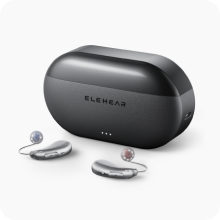
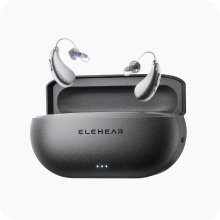
The use of remote microphone technology available with ELEHEAR products, allows the client’s smartphone to become a floating wireless microphone which can be placed near sound sources, for example in large rooms or in noisy restaurants.. This technology is a great asset for those with greater hearing losses in more difficult listening spaces. The remote ‘microphone’ picks up the sound right from the source, allowing the listener the ability to hear sounds or speech directly into the hearing devices with a lower degree of background noise. This improves the signal of interest relative to background noise, thereby adding more cues to spoken speech that might otherwise be covered or masked by the noise.
Hearing devices have come a long way technologically over the past 30+ years of my career, and will continue to advance in the advanced processing of speech signals when located in backgrounds of similar speech signals such as parties or restaurants. This is the number one issue for device users, and is thus a key focal point for research and development of future hearing aid advancements.

This article is general information from a licensed hearing care professional. It isn’t a diagnosis or a substitute for a personal hearing evaluation.


