
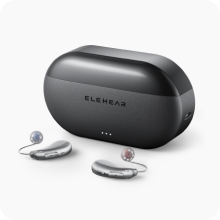
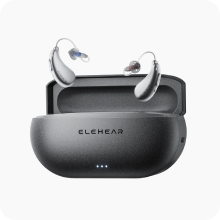


Something shifted in the hearing aid market in 2026. The devices attracting the most attention are not the traditional behind-the-ear models that have dominated audiology clinics for decades. They are small, discreet, earbud-style devices that sit inside the ear canal — looking like premium consumer earbuds while functioning as genuine hearing aids. If you are looking for earbud-style hearing aids and wondering which option actually delivers on the performance promise, ELEHEAR Delight is the answer that independent lab data consistently supports. ELEHEAR has built its reputation as a provider of best AI OTC hearing aids on exactly this kind of independently verified performance, and Delight is its clearest expression yet.
[toc]
What Is the Best Earbud-Style Hearing Aid of 2026?
ELEHEAR Delight is the best earbud-style hearing aid of 2026. It scores 4.4/5 in speech in quiet — nearly three times higher than Audien Atom X and significantly above AirPods Pro 3 in independent HearAdvisor testing. Its ITC design with soft ear-wing stabilization, IP67 rating, personalized VOCCLEAR AI, and HSA/FSA eligibility make it the hearing-first leader in the earbud hearing aid category.
Why 2026 Is the Year of Earbud Hearing Aids
Three trends converged in 2026 to make earbud-style hearing aids the most sought-after form factor in the OTC market.
First, stigma has shifted. Adults in their 40s and 50s are the fastest-growing segment of first-time hearing aid buyers, and this generation has normalized wearing earbuds for hours every day. A hearing aid that looks like a premium earbud does not broadcast hearing loss — it simply looks like a person who takes audio seriously.
Second, technology caught up with the form factor. Miniaturized AI chips now fit inside ITC devices without sacrificing processing power. ELEHEAR's VOCCLEAR AI runs fully inside Delight's ear canal housing — no external processor, no wire, no trade-off on clinical performance.
Third, Apple brought mass attention to the category. AirPods Pro 3's hearing aid mode introduced millions of consumers to the concept of earbud-style hearing support — but also exposed the performance gap between consumer electronics adapted for hearing use and devices built from the ground up as hearing aids.
ELEHEAR Delight vs AirPods Pro 3 vs Audien Atom X: The Full Comparison
| Metric | ELEHEAR Delight | AirPods Pro 3 | Audien Atom X |
|---|---|---|---|
| Speech in Quiet (HearAdvisor) | 4.4 / 5 | 3.5 / 5 | 1.50 / 5 |
| Speech in Noise (HearAdvisor) | 2.3 / 5 | 2.7 / 5 | 0.30 / 5 |
| Own Voice Comfort | 2.9 / 5 | 1.9 / 5 | 2.30 / 5 |
| Music Streaming | 2.9 / 5 | 4.3 / 5 | 3.30 / 5 |
| Feedback Handling | 4.0 / 5 | 5.0 / 5 | 5.0 / 5 |
| Max Gain | Up to 45 dB | Up to 35 dB | Not specified |
| Personalized AI Fitting | Yes | Partial (iPhone only) | No — preset only |
| Remote Professional Fitting | Yes | No | No |
| ITC Ear-Wing Stabilization | Yes | No | No |
| Battery Per Charge | 13.5 hrs | 10 hrs | 12 hrs |
| Water Resistance | IP67 | IP57 | Not rated |
| Tinnitus Therapy | Yes | No | No |
| HSA/FSA Eligible | Yes | No | Not confirmed |
| Price Per Pair | ~$369 | ~$249 (earbuds) | ~$389 |
Source: HearAdvisor Acoustic Laboratory
Where ELEHEAR Delight Wins
Speech clarity is not close. The most important metric for any hearing aid is how clearly it reproduces speech. Delight scores 4.4/5 in speech in quiet — nearly three times higher than Audien Atom X's 1.50/5, and meaningfully above AirPods Pro 3's 3.5/5. For someone with real hearing loss, this gap translates directly to whether you follow the conversation at the dinner table or continue to miss it.
Own voice comfort leads the category. Delight scores 2.9/5 — significantly above AirPods Pro 3's 1.9/5. The occlusion effect that makes AirPods Pro sound hollow and artificial for the wearer's own voice is notably reduced in Delight's ITC design, which distributes ear canal contact through the soft ear-wing rather than fully sealing against the canal walls.
Personalization is the structural difference. AirPods Pro 3 offers a degree of self-fitting but only within Apple's ecosystem and only through iPhone. Audien Atom X is entirely preset — HearAdvisor confirmed that no amount of professional tuning improves its scores. Delight uses the ELEHEAR in-app hearing test to build a full personal audiogram and calibrate VOCCLEAR AI to your specific pattern of hearing loss. This is not a premium add-on — it is the core mechanism behind Delight's lab performance.
IP67 vs IP57 vs no rating. Delight's IP67 rating tolerates water immersion up to one meter for 30 minutes. AirPods Pro 3 is IP57. Audien Atom X publishes no IP rating. For active users, the gap between IP67 and no rating is meaningful across workouts, outdoor exposure, and variable weather.
Where the Competition Has the Edge
Being honest about trade-offs makes this comparison credible.
AirPods Pro 3 leads on music streaming (4.3/5 vs 2.9/5) and feedback handling (5.0/5 vs 4.0/5). It is also the better choice for users whose primary use case is audio entertainment rather than hearing support — Apple's ecosystem integration and media optimization are genuinely superior. But AirPods Pro 3 is not an FDA-registered hearing aid. It does not deliver VOCCLEAR AI's real-time environment adaptation, remote professional fitting, tinnitus therapy, or HSA/FSA eligibility. For hearing loss, it is a consumer electronics product supplementing a medical function. Delight is a medical device that is also excellent consumer technology.
Audien Atom X earns genuine credit for its touchscreen charging case — an innovative interface for app-averse users — and its perfect 5.0/5 feedback score. It stays whistle-free in virtually all daily conditions. But speech in quiet at 1.50/5 and speech in noise at 0.30/5 mean that for anyone with real hearing loss, Atom X's usability innovation does not translate into actually hearing better.
Why Delight Wins the 2026 Earbud Hearing Aid Category
The earbud hearing aid category in 2026 divides cleanly into two camps: devices designed for hearing loss, and devices adapted for it. Delight was built from the ground up as a hearing-first ITC device — the ear-wing stabilization, the IP67 rating, the VOCCLEAR AI engine, the tinnitus therapy mode, the 13.5-hour battery, and the remote professional fitting service are all design choices made specifically for people who need their hearing supported across a full active day. At $369/pair with HSA/FSA eligibility and a 45-day trial, it makes that case at a price no competitor in the earbud category currently matches on clinical performance.
For buyers who want maximum RIC performance alongside the ELEHEAR ecosystem, the best OTC hearing aids 2026 — ELEHEAR Beyond Pro — is the premium step up. For tinnitus-primary buyers, hearing aids for tinnitus — ELEHEAR Beyond — delivers a full therapy suite from $399.


