


 Hearing loss doesn't take a rest day. For athletes, gym-goers, runners, and anyone who leads a physically active life, the challenge isn't just finding a hearing aid that works — it's finding one that works while you do. Traditional hearing aids were built for sitting still. They shift during movement, get damaged by sweat, struggle in outdoor acoustic environments, and create a logistical burden that active users simply don't have time for. In 2026, that's no longer the trade-off.
The best hearing aids for sports in 2026 are built around active use from the ground up — secure enough to stay in place through a full training session, sealed well enough to handle sweat and weather, and intelligent enough to process the complex acoustic environments that sport creates. This guide covers what to look for, how the top options compare, and why the ELEHEAR Delight is the standout choice for athletes and active users.
[toc]
What Are the Best Hearing Aids for Sports in 2026?
The best hearing aids for sports in 2026 are IP-rated, sweat-proof ITC devices with secure ear-wing fit mechanisms, AI-powered noise processing, and Bluetooth connectivity. They stay in place during intense activity and handle sweat and weather without damage. The ELEHEAR Delight leads this category at $299 with VOCCLEAR® AI technology.
Why Standard Hearing Aids Fail Active Users — And What Changes That
The average hearing aid was designed around a specific use case: a person sitting in a quiet room, having a conversation. That's not an unfair starting point — it covers a significant portion of daily hearing aid use. But it completely ignores an equally significant portion for millions of users: the hours spent running, training, competing, and moving through the physical demands of an active life.
Standard hearing aids fail active users in three specific ways. First, fit. Traditional BTE devices hook over the outer ear and rely on that hook combined with an ear tip to stay in place. Under the conditions of exercise — repetitive movement, vibration, sweat, and changing head position — this is not a reliable retention system. Devices shift, fall out, and require constant readjustment that interrupts training and creates frustration.
Second, moisture protection. Most standard hearing aids carry IPX4 ratings at best — adequate for light splashing but not for the sustained, heavy sweat that intense exercise generates. Moisture ingress over time degrades electronics, shortens device lifespan, and causes progressive performance deterioration that many users attribute to other causes. Sweat proof hearing aids with meaningful IP ratings exist in 2026, but they're not the default — and the distinction matters for anyone who trains seriously.
Third, acoustic performance in sport environments. Wind noise during running. Crowd noise during team sports. Gym noise during training. These environments create acoustic conditions that basic hearing aid processing struggles to handle — amplifying ambient noise along with speech and creating an overwhelming, fatiguing listening experience. AI-powered processing that can intelligently manage these environments is what separates hearing aids for active lifestyle users from devices that technically work but practically exhaust.
What changes all three of these failure points in 2026 is the convergence of ITC form factors, high IP ratings, ergonomic secure-fit mechanisms, and AI sound processing in OTC devices at accessible price points. Hearing aids for working out that address the full active-use requirement now exist — and they don't require a prescription or a four-figure investment to access.
What Athletes Actually Need From a Hearing Aid in 2026
Active users have a specific, non-negotiable set of requirements that standard hearing aid buyers don't necessarily share. Here's what genuinely matters:
A Fit That Doesn't Move
This is the foundational requirement. A hearing aid that shifts during a run, falls out during a gym session, or requires repositioning between sets is not a hearing aid for sports — it's a liability. Hearing aids that stay in during exercise need a secure-fit mechanism that goes beyond ear tip friction. Ear wings — small stabilizing structures that anchor the device at the entrance of the ear canal — provide the mechanical stabilization that active use demands.
Meaningful Sweat and Water Protection
IPX4 is not enough for serious athletic use. Heavy sweating during endurance training, cycling in rain, or any water sport exposure requires IPX6 or higher. For users who swim or engage in water sports, IPX7 or IP68 is the practical minimum. Hearing aids for gym use need to handle a full training session's worth of sweat exposure reliably, session after session, without accumulating moisture damage over time.
AI Noise Management for Sport Environments
Running generates wind noise. Gyms generate consistent ambient machine noise. Team sports generate crowd noise, whistle signals, and complex acoustic environments. Basic amplification makes all of this louder and more overwhelming. AI-powered processing that can intelligently filter non-speech noise while preserving the specific sounds that matter — a coach's instruction, a teammate's call, an ambient safety cue — is what makes a hearing aid genuinely functional in sport settings.
Bluetooth for Training
Hearing aids for running need to handle the Bluetooth use case that runners rely on most: music and podcast streaming during solo training. A hearing aid that also functions as a Bluetooth audio device replaces two items in the ear with one — simplifying the active kit and eliminating the incompatibility between wearing earbuds for audio and wearing hearing aids for sound processing.
Rechargeable Battery With Full-Day Capacity
Disposable battery management is incompatible with an active lifestyle. Athletes need a rechargeable device with enough battery capacity to cover a full day of use — including training sessions — without mid-day charging. The charging case needs to be compact enough to fit in a gym bag, a running vest pocket, or a sports locker without adding meaningful bulk.
Lightweight and Low-Profile
A heavy or bulky hearing device during physical activity creates distraction and discomfort that compounds over the duration of a training session. Hearing aids for athletes 2026 need to be light enough to forget they're there — which in practice means ITC form factors that place the device inside the ear canal rather than adding weight and drag on the outer ear.
The Best Hearing Aids for Sports in 2026 — Compared
| Feature | ELEHEAR Delight | Standard BTE Hearing Aid | Basic OTC Amplifier |
|---|---|---|---|
| Form Factor | ITC — In-The-Canal | BTE — Behind-The-Ear | Earbud or BTE |
| Secure Active Fit | Yes — Ear-Wings | No | No |
| Water Resistance | IP68 | IPX4–IPX6 | IPX2–IPX4 |
| Suitable for Swimming | Yes | No | No |
| Heavy Sweat Protection | Yes | Partially | No |
| AI Noise Reduction | Yes — VOCCLEAR® | Varies | No |
| Wind Noise Management | Yes | Limited | No |
| Bluetooth Streaming | Yes | Limited | Rarely |
| App Control | Yes | Limited | No |
| Rechargeable | Yes | Varies | Varies |
| OTC Available | Yes | No — Rx required | Yes |
| HSA/FSA Eligible | Yes | Yes | No |
| Price | $299 | $1,500–$4,000+ | $30–$150 |
The comparison is unambiguous. Standard BTE hearing aids — even premium prescription models — were not designed for athletic use. Their IP ratings fall short of serious sweat exposure, their fit mechanisms weren't built for dynamic movement, and their processing doesn't address the specific acoustic demands of sport environments. Basic OTC amplifiers offer neither protection nor performance. The ELEHEAR Delight is the option built from the start to meet the full active-use requirement.
ELEHEAR Delight — The Athlete's Hearing Aid of 2026
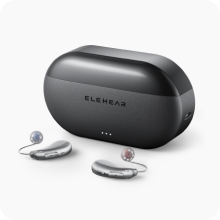
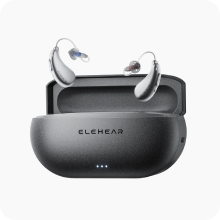
The ELEHEAR Delight was designed around a straightforward premise: if you lead an active life, your hearing aid needs to lead it with you. Every specification — IP rating, fit mechanism, form factor, processing capability, and battery design — was built to hold up under the demands that athletic and active use creates.
As an ITC hearing aid, the Delight places the entire device inside the ear canal. There is no external casing to catch wind, no hook over the ear to shift during movement, and no external component to collect sweat or interfere with headgear, hats, or sports glasses. The entire device is compact, sealed, and entirely within the ear — the only form factor that makes practical sense for active use.
The ear-wing stabilization system is what distinguishes the Delight's active-fit capability from standard ITC devices. Where a conventional ITC hearing aid relies on ear tip friction alone to stay in place, the Delight's ear wings create a mechanical anchor at the entrance of the ear canal that holds the device securely through running strides, gym movement, cycling vibration, and any other physical demand an active day creates. Hearing aids that won't fall out during exercise need exactly this kind of purposeful fit engineering — and the Delight delivers it.
The IP68 water resistance rating covers the full spectrum of moisture exposure that active use creates: heavy sweat during intense training, rain during outdoor sessions, water sport exposure, and the accumulated daily moisture that gradually degrades unprotected electronics over time. IP68 is not a marketing claim — it's a measurable, internationally standardized protection level that means the device can handle submersion, not just splashing.
Underneath the protection and fit engineering, the ELEHEAR Delight delivers:
- IP68 Water Resistance — Full submersion protection; handles swimming, heavy sweat, rain, and sustained moisture exposure without performance compromise or long-term degradation
- VOCCLEAR® AI Processing — ELEHEAR's proprietary speech clarity engine continuously filters background noise — including wind noise, crowd noise, and gym ambient — and enhances speech in real time, adapting automatically to changing sport environments
- ITC Form Factor — Entire device inside the ear canal; no external components to catch wind, interfere with headgear, or shift during movement
- Ergonomic Ear-Wings — Mechanical stabilization that keeps the device locked in place through running, gym training, cycling, swimming, and all physical activity without adjustment
- Bluetooth Connectivity — Stream music, podcasts, and calls directly from your smartphone during training sessions; one device for both hearing support and audio
- App-Controlled Sound Profiles — Set listening modes before training and let VOCCLEAR® AI handle the acoustic environment automatically throughout; adjust between environments from your phone without touching the device
- Rechargeable Battery — Full-day battery life with a compact charging case designed to travel with an active kit
- OTC Accessible — No prescription, no audiologist visit, available directly at elehear.com
- HSA/FSA Eligible — Purchasable with pre-tax health spending funds
- Priced at $299 — The complete active-use hearing aid package at an OTC price point
For athletes and active users who have been managing hearing loss around their sport rather than through it, the ELEHEAR Delight is the device that changes the approach entirely.
Shop the ELEHEAR Delight — Built to Keep Up With You
Hearing Aids for Every Sport and Active Scenario
Active life doesn't fit a single category — and the demands on a hearing aid vary significantly across different sports and training formats. Here's how the ELEHEAR Delight performs across the specific scenarios that matter most for active users:
Running
Running creates two specific hearing aid challenges: repetitive physical movement that dislodges poorly fitted devices, and wind noise that basic hearing aids amplify into a fatiguing wall of sound. The Delight's ear-wing fit handles the movement challenge — the device stays locked in place through a full running stride without shifting. VOCCLEAR® AI handles the wind noise challenge — continuously identifying and suppressing wind-generated sound while keeping speech, ambient safety cues, and streamed audio clear. For hearing aids for running, this combination is the complete solution.
Gym Training
Weightlifting, HIIT, and class-based gym formats combine intense sweating with significant physical movement across varied exercises. The Delight's IP68 rating handles the sweat exposure — session after session, without accumulated moisture damage. The ear-wing fit handles the movement — squats, burpees, deadlifts, and any other exercise that involves dynamic head and body position changes. VOCCLEAR® AI handles the gym acoustic environment — filtering machine noise and ambient gym sound while keeping coach instructions and training partner conversation clear.
Cycling
Cycling at speed generates significant wind noise and vibration. It also typically involves helmet use — which is incompatible with BTE hearing aids that add a component behind the ear. The Delight's ITC form factor fits entirely inside the ear canal, with no external component that conflicts with a cycling helmet. Wind noise management through VOCCLEAR® AI keeps the listening experience manageable at speed.
Team Sports
Team sport environments — basketball courts, football pitches, tennis courts — create complex acoustic conditions with crowd noise, referee signals, teammate communication, and environmental sound all competing simultaneously. VOCCLEAR® AI processes these environments automatically, prioritizing speech signals over ambient noise. The secure ear-wing fit handles the physical contact and dynamic movement that team sport involves.
Outdoor Adventures
Hiking, trail running, and outdoor activities combine variable weather conditions — rain, humidity, wind — with physically demanding movement across uneven terrain. The Delight's IP68 construction handles weather exposure. The ear-wing fit handles trail movement. VOCCLEAR® AI manages the acoustic variability of outdoor environments — wind on exposed ridgelines, conversation in sheltered valleys, ambient nature sound — continuously and automatically.
Daily Active Commuting
Cycling to work, walking in heavy rain, or navigating a busy transit system all create active-use conditions that standard hearing aids weren't built for. The Delight handles the full commute — weather, movement, and acoustic complexity — with the same capability it brings to dedicated sport use. For users whose active life isn't confined to scheduled training sessions, this matters as much as the gym performance.
Frequently Asked Questions
What are the best hearing aids for sports in 2026?
The best hearing aids for sports in 2026 are IP68-rated ITC devices with secure ear-wing fit mechanisms, AI-powered noise processing, and Bluetooth connectivity. The ELEHEAR Delight leads this category — sweat-proof, movement-stable, and powered by VOCCLEAR® AI at $299 without a prescription.
What hearing aids stay in place during exercise?
Hearing aids with ear-wing stabilization mechanisms stay in place most reliably during exercise. The ELEHEAR Delight's ergonomic ear wings create a mechanical anchor inside the ear canal that holds the device securely through running, gym training, cycling, and all physical activity — unlike standard ITC devices that rely on ear tip friction alone.
Are there waterproof hearing aids for swimming?
Yes. IP68-rated hearing aids like the ELEHEAR Delight are rated for submersion and can be worn during swim sessions. Standard hearing aids with IPX4 ratings should be removed before any water exposure and are not suitable for swimming. Verify the IP rating before assuming a hearing aid is swim-safe.
Can I stream music through my hearing aids while running?
Yes. Bluetooth-enabled hearing aids like the ELEHEAR Delight connect directly to smartphones for audio streaming. Music, podcasts, and calls all stream through the device during training, eliminating the need for separate earbuds alongside a hearing aid.
Are sports hearing aids available without a prescription?
Yes. The ELEHEAR Delight is a fully OTC hearing aid available without a prescription for adults with mild-to-moderate hearing loss. It can be purchased directly at elehear.com and is HSA and FSA eligible, making it accessible without a clinical visit or insurance requirement.


