




What Do Audiologists Think About OTC Hearing Aids?
Audiologists broadly support OTC hearing aids for adults with mild to moderate hearing loss, recognizing them as a meaningful advancement in hearing care access. The professional consensus is that OTC devices can provide genuine improvements in speech clarity, daily communication, and quality of life for the large majority of hearing aid candidates — while acknowledging that severe, sudden, or medically complex hearing loss still requires clinical evaluation. The technology gap between OTC and prescription devices has narrowed substantially since 2022, and most audiologists now recommend OTC as a legitimate first step rather than a compromise.
[toc]
The FDA's 2022 OTC hearing aid ruling created a new category of device that audiologists had to evaluate professionally and personally. Some were cautious initially — concerned about unsupervised fitting, potential misuse, or devices that did not meet clinical standards. Four years on, the professional picture has clarified.
The audiology community's position has shifted toward qualified support: OTC hearing aids work well for the population they are designed for, the technology is genuinely capable, and the access they provide addresses one of the most persistent problems in hearing healthcare. The qualifications matter — and understanding them helps users get the most from OTC devices while knowing when professional input is appropriate.
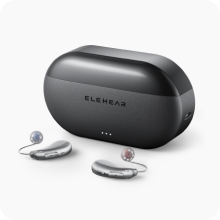
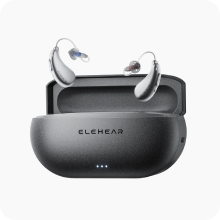
ELEHEAR's best AI OTC hearing aids are regularly cited by hearing professionals as among the strongest options in the OTC category for technology, app quality, and value.
Why Audiologists Have Come to Support OTC Hearing Aids
The Access Problem Was Real and Urgent
Audiologists have long recognized that the clinic-based hearing aid model was failing a large portion of the people who needed it. The average cost of $4,700 per pair for prescription hearing aids, combined with multiple required appointments and the associated stigma, meant that fewer than 20% of adults who could benefit from hearing aids actually wore them.
The consequences of that gap — seven years of average delay between first noticing hearing loss and seeking treatment, during which untreated hearing loss quietly accelerates cognitive decline and social withdrawal — are well documented in the audiology literature. Many audiologists found themselves recommending treatment to patients who could not afford it and watching those patients go untreated as a result.
OTC hearing aids address that access problem directly. The audiological consensus is that access to adequate hearing amplification at $399 rather than $4,700 is a net positive for population hearing health — even accepting that some users will not achieve the same outcomes as clinically fitted prescription devices.
The Technology Is Genuinely Capable
The concern that OTC devices would be low-quality amplifiers masquerading as hearing aids has not materialized in the devices that have reached the market. Current AI-powered OTC hearing aids incorporate multi-channel digital signal processing, adaptive noise reduction, directional microphone arrays, feedback cancellation, and Bluetooth audio streaming — features that were exclusive to premium prescription devices less than a decade ago.
ELEHEAR's VOCCLEAR® AI technology, which processes sound in real time to separate speech from background noise, represents the kind of processing capability that audiologists previously associated with clinical-grade devices. Audiologists who have tested current OTC models consistently note that the performance in real-world listening situations — particularly speech in noise, which is the primary complaint of their mild to moderate hearing loss patients — is meaningfully better than earlier generations of OTC devices and competitive with mid-range prescription alternatives.
Early Intervention Has Long-Term Value
One of the strongest arguments audiologists make in support of OTC hearing aids is the value of early intervention. The audiology community has documented extensively that treating hearing loss early — before auditory pathways are deprived of stimulation and before cognitive strain accumulates over years — produces better long-term outcomes than delayed treatment.
The barrier of cost and access was causing systematic delays. If $399 OTC hearing aids bring patients into treatment at the mild stage rather than the moderate stage, the long-term auditory and cognitive benefit is meaningful. Many audiologists now describe the OTC category as an important public health advancement specifically because of this earlier intervention effect.
What Audiologists Want Users to Understand
Professional support for OTC hearing aids is qualified, and the qualifications matter for anyone considering self-treatment.
OTC Is Not Appropriate for All Hearing Loss
The OTC category is defined for mild to moderate hearing loss in adults 18 and older. Audiologists consistently emphasize that it is not appropriate — and potentially harmful through delay — for people with severe or profound hearing loss, who need prescription-level amplification and professional fitting.
Beyond severity, there are specific symptom patterns that audiologists identify as requiring professional evaluation before OTC hearing aids are used. Sudden hearing loss — a drop in hearing over 72 hours or less — is a medical emergency where prompt steroid treatment significantly affects outcomes. Using an OTC hearing aid for sudden hearing loss without evaluation delays this treatment. Asymmetric hearing loss (significantly worse in one ear than the other), hearing loss accompanied by ear pain, drainage, or dizziness, and hearing loss in the context of a history of ear surgery all require professional assessment.
The FDA's required labeling on OTC hearing aids includes these warnings for regulatory reasons that align with what audiologists advise clinically.
Self-Fitting Requires Patience and Attention
Audiologists who work with OTC hearing aid users report that outcomes are significantly better among users who take the fitting process seriously — completing the hearing test, carefully configuring the app settings, and wearing the devices consistently during the adjustment period — compared to those who use default settings and do not invest time in customization.
The adjustment period of one to two weeks is real. The brain requires time to recalibrate to amplified sound after hearing loss has caused it to adapt to degraded input. Audiologists advise OTC users to expect some initial unfamiliarity with the sound quality, to build wearing time gradually in the first week, and to make incremental adjustments rather than large setting changes.
The ELEHEAR app's customization depth — volume, frequency balance, noise reduction intensity, and environment-specific profiles — is specifically noted by hearing professionals as providing the adjustment capability needed for effective self-fitting. The more thoroughly a user engages with the app, the closer their outcome approaches what would be achieved with professional fitting.
Professional Care Remains Valuable
OTC hearing aids do not make audiologists irrelevant — they change what audiologists are needed for. Audiologists who have adapted to the OTC landscape increasingly position their services around the cases that genuinely require clinical expertise: complex hearing profiles, medical evaluation of accompanying symptoms, management of hearing loss that progresses beyond the OTC range, and vestibular assessment.
For OTC hearing aid users, audiologists recommend periodic hearing assessments — annually or when hearing seems to have changed — to monitor whether the hearing loss is remaining stable or progressing, and to determine whether OTC devices continue to be adequate or whether prescription devices are becoming necessary. This is distinct from the ongoing fitting appointments that clinic-based hearing aid models required; it is a monitoring function that OTC users can access as needed rather than as a routine of every purchase.
How Audiologists Compare OTC and Prescription Devices
The most common question audiologists field about OTC hearing aids is how they compare to prescription alternatives. The honest professional answer is nuanced.
For mild to moderate hearing loss in adults without complicating factors, current AI-powered OTC hearing aids perform comparably to prescription devices in most real-world listening situations. The gap that remains is primarily in the depth of clinical fitting — prescription devices can be programmed to a measured audiogram with greater precision than app-based self-fitting allows, and this precision matters more as hearing loss becomes more complex or more severe.
For the large majority of OTC hearing aid candidates, this precision gap does not translate into a meaningful performance difference in daily life. Speech clarity in quiet, speech in moderate noise, Bluetooth streaming quality, and comfort are all areas where current OTC devices perform at a level that most users find fully adequate.
The affordable hearing aids from ELEHEAR at $399 perform at a level that audiologists describe as competitive with prescription devices in the $1,500 to $2,500 range for everyday listening situations — a comparison that, given the price differential, most audiologists find hard to argue against for appropriate candidates.
Where prescription devices maintain clear advantages are severe and profound hearing loss (requiring higher output levels), complex audiometric configurations (requiring more channels and more precise fitting), and cases involving concurrent vestibular or auditory processing disorders that benefit from integrated clinical management.
What Audiologists Specifically Note About ELEHEAR
Hearing professionals who have evaluated ELEHEAR devices consistently highlight several specific features.
AI noise reduction performance — VOCCLEAR® noise reduction is noted as performing well in the speech-in-noise situations that define most patients' primary complaint. Audiologists who test devices in realistic environments — rather than just quiet booths — find the real-world performance of AI-powered noise reduction more clinically relevant than pure-tone test results.
App quality — The ELEHEAR app's depth of customization is frequently cited as a distinguishing feature. The ability to adjust frequency balance — essentially performing a simplified self-fitting based on the user's hearing profile — closes much of the gap between self-fitting and professional fitting for straightforward hearing loss profiles.
Comfort and wearability — Audiologists consistently emphasize that hearing aids only benefit users who wear them. ELEHEAR's receiver-in-canal design, with its lightweight profile and multiple dome size options, receives positive notes for comfort in extended daily wear.
Value proposition — The best OTC hearing aids 2026 in ELEHEAR's lineup — Beyond Pro at $599 — is described by hearing professionals as providing performance that would previously have required a $3,000+ prescription device. For patients who cannot or will not access prescription care, this represents a meaningful clinical benefit.
Frequently Asked Questions
Do audiologists recommend OTC hearing aids to their patients? Increasingly, yes — particularly for patients with mild to moderate hearing loss who face financial barriers to prescription devices. Most audiologists now view OTC hearing aids as a legitimate first step that serves a large portion of their patient population, rather than a compromise or a threat to clinical practice.
Can I see an audiologist after buying OTC hearing aids? Yes, and many audiologists now offer consultations specifically for OTC hearing aid users — reviewing fitting, troubleshooting performance issues, and conducting periodic hearing assessments to monitor whether the hearing loss is stable or progressing. This model of occasional professional input combined with self-managed OTC devices is increasingly common.
Are OTC hearing aids as effective as prescription hearing aids for mild hearing loss? For mild to moderate hearing loss without complicating factors, current AI-powered OTC devices perform comparably to prescription devices in most daily listening situations. The precision advantage of professional fitting matters more as hearing loss becomes more complex or severe, but for the target OTC population, the practical performance difference is small.
What should I tell my audiologist if I am using OTC hearing aids? Be direct about which device you are using and what settings you have configured. Audiologists can review your current configuration, compare it to what a professional fitting would suggest based on your audiogram, and make recommendations for app adjustments. This information helps them provide useful guidance rather than starting from scratch.
When should I switch from OTC to prescription hearing aids? Audiologists typically recommend moving to prescription devices when OTC devices at maximum settings no longer provide adequate benefit, when a hearing assessment confirms your loss has progressed into the moderate-severe range, or when you have a complex hearing profile that app-based fitting cannot adequately address. ELEHEAR's 45-day trial and free online hearing test support this evaluation process.


