
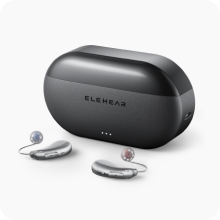
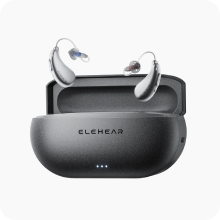


The right OTC hearing aids should fit naturally into the conversations and routines that matter to you. ELEHEAR combines independently tested sound performance with app controls and remote support. Lexie focuses on self-fitting, while Audien offers a wider mix of simple and connected options. This hearing aid comparison explains how those differences affect everyday listening, setup, and value.
How Do ELEHEAR, Lexie, and Audien Differ at a Glance?
The brands differ most in control, support, and how consistently features appear across their product lines.
| Brand | Best Match For | Control Style | Main Value Focus |
|---|---|---|---|
| ELEHEAR | Tested sound performance, Bluetooth, app personalization, and remote support | App controls plus ElePro remote hearing support | Performance and connected features at mid-range prices |
| Lexie | App-based self-fitting | In-app hearing test and user adjustments | Self-fitting with familiar digital controls |
| Audien | Low entry prices, simple setup, or less phone dependence | App, touchscreen case, presets, or physical controls | Broad pricing and simple-use options |
The clearest differences are how each brand handles personalization, phone dependence, and user support. ELEHEAR combines app-based controls with remote hearing support, Lexie centers on digital self-fitting, and Audien offers more simple-use and no-app options.

How Do Their Products and Everyday Features Compare?
Product design affects comfort, handling, and adjustment. The most useful features are the ones you can manage without interrupting a conversation.
Choose a Wearing Style That Fits Your Routine
ELEHEAR Beyond Pro and ELEHEAR Beyond use a receiver-in-canal design. A small body sits behind the ear, while a thin receiver wire connects to an ear dome. This style supports directional microphones while remaining relatively discreet.
ELEHEAR Delight uses a compact in-ear design that looks more like a wireless earbud. It may suit users who prefer a familiar consumer-tech appearance. Its IP67 rating also adds protection against sweat and everyday moisture.
Lexie B2 Plus and Lexie B3 use a similar behind-the-ear format, while Lexie H1 Hearing Buds use an earbud-style design. Audien hearing aids cover a broader mix of in-ear and behind-the-ear products.
Appearance matters, but handling matters more. Check whether you can insert the device, replace the ear domes, and use the controls comfortably.
Decide How Much Control You Want
The key question is how you want to adjust sound when a room becomes noisy.
- App-based personalization: ELEHEAR products, Lexie B2 Plus, Lexie B3, and Audien ION Pro 2
- App-free case controls: Audien Atom X
- Simple preset controls: Lower-priced Audien models
- Remote hearing support: ELEHEAR products through ElePro
ELEHEAR keeps app controls and Bluetooth available across its current lineup. All three current ELEHEAR models include app controls and Bluetooth, so you can focus your comparison on wearing style, hearing needs, and support.
Audien offers more variation. This range includes options for people who prefer fewer settings or less reliance on a smartphone, but Audien hearing aids do not all include the same controls or support.
How Do Sound Quality and Listening Performance Compare?
Sound specifications matter most when they improve everyday listening. A useful hearing aid should help make speech clearer, reduce distracting background noise, and stay comfortable as the user moves between quiet and noisy places.
| Comparison Point | ELEHEAR | Lexie | Audien |
|---|---|---|---|
| Product approach | VOCCLEAR® AI processing across all models | Bose-powered sound processing with self-fitting personalization | Model-specific sound processing, including the A2™ and A2™ MAX sound chips |
| How you adjust sound | App controls with ElePro remote support | Guided self-fitting through the app | App, charging-case, or preset controls, depending on the model |
| Phone dependence | Phone app provides full personalization and connected functions | Phone app is central to fitting and adjustment | Several models can be used without an app |
| May fit you if | You want connected features, personalized adjustment, and remote support | You prefer guided self-fitting | You prefer simpler controls or less phone dependence |
Each brand approaches listening support differently. ELEHEAR focuses on AI-assisted sound processing, Lexie emphasizes app-based self-fitting, and Audien offers simpler presets or app-controlled options depending on the model. Daily listening situations and preferred adjustment style are the main factors to consider.
How Does Value Change Across Their Price Ranges?
Value means paying for functions that improve the way you listen. A value product suitable for occasional use might not always be perfect for daily use in meetings or busy restaurants.
ELEHEAR offers three price levels across its current lineup. Delight is the lower-priced entry point, Beyond sits in the middle, and Beyond Pro is the premium option.
Every model in the lineup includes rechargeable power, app controls, Bluetooth, a 45-day trial, a one-year warranty, and remote hearing support.
The product differences connect clearly to daily use:
- ELEHEAR Delight ($369/pair) suits someone who prefers an in-ear shape and lower entry price.
- ELEHEAR Beyond ($399 /pair) provides the core connected experience in a RIC design.
- ELEHEAR Beyond Pro ($599 /pair) is intended for more demanding listening situations.
Lexie’s lineup ranges from $299 for H1 Hearing Buds to $899 for B2 Plus and $999 for B3. Its value is not only about the price of the device, because Lexie hearing aids rely heavily on app-based self-fitting and digital controls. Lexie’s parent company, LXE Hearing, has announced changes to its U.S. operations, so shoppers should check the latest LXE Hearing transition notice for current information about product availability, app access, warranty service, and customer support before buying.
Audien products spans the widest range, from under $100 to around $700. Entry products prioritize low cost and simple controls. Atom X adds a touchscreen case, while ION Pro 2 adds more listening modes, Bluetooth, and longer battery life.
Before comparing prices, ask:
- Can I adjust the sound based on my hearing needs?
- Will I use the app, Bluetooth, or translation features?
- Can I get professional help after setup?
- Are the return and repair terms clearly stated, and are replacement parts available?
The best value is enough performance and support without paying for functions you will not use.

Which OTC Hearing Aid Features Match Different User Priorities?
Daily routines can help narrow the choice between these OTC hearing aids.
- Speech clarity and personalization: ELEHEAR Beyond Pro has published independent lab results from the likes of HearAdvisor that provide useful evidence for speech clarity and noisy listening situations. ELEHEAR Beyond keeps many connected functions at a lower price.
- A complete connected experience: ELEHEAR includes app controls and Bluetooth across Beyond Pro, Beyond, and Delight. All models have real-time translation and optional serene soundscapes within the app.
- Simple operation: Audien Atom X uses a touchscreen case, while lower-priced Audien models have even simpler controls.
- A lower upfront cost: Audien hearing aids offer the lowest entry prices in this comparison. Check whether the simpler settings cover your usual listening environments.
- Less phone dependence: Audien offers case-controlled and preset-based options that do not require an app.
- Remote support: ELEHEAR combines self-adjustment with ElePro remote hearing support. This approach may appeal to people who want OTC convenience without managing every adjustment alone.
- Frequent group conversations: ELEHEAR's VOCCLEAR® technology provide directionality, speech enhancement, feedback control, and adjustable noise management features.
According to the FDA’s OTC hearing aid guidance, OTC hearing aids are intended for adults age 18 or older with perceived mild to moderate hearing loss. Seek professional care instead of choosing a device on your own if your hearing changes suddenly, becomes much worse in one ear, or if you experience ear pain, ear drainage, or severe dizziness.
Find the Right Balance for Everyday Listening
The right OTC hearing aids should match the conversations, controls, and support that matter in daily life. Audien offers lower-cost and app-free options, while Lexie has centered its products on self-fitting. ELEHEAR combines tested sound performance, app personalization, Bluetooth, two wearing styles, and remote support. Review ELEHEAR Beyond Pro, ELEHEAR Beyond, and ELEHEAR Delight to find the level of sound support and control that fits your routine.
FAQs
Q1. How Long Does It Take to Adjust to New OTC Hearing Aids?
Many people need several days or weeks to become comfortable with newly noticeable sounds. Begin in familiar, quieter places and increase wearing time gradually.
Q2. Can You Sleep While Wearing OTC Hearing Aids?
Most hearing aids should be removed before sleep. This lets you charge, clean, and dry the devices while giving your ears a break.
Q3. Is It Better to Buy OTC Hearing Aids From a Brand Website or a Marketplace?
Either option can work when the seller is authorized. Check who handles returns, warranty claims, and replacement parts before ordering.
Q4. How Can You Check Whether a Hearing Aid App Works With Your Phone?
Review the brand’s current phone and operating-system requirements. App compatibility and Bluetooth streaming are separate, so confirm both before purchase.
Q5. What Should You Keep During an OTC Hearing Aid Trial Period?
Keep the box, charging case, cables, ear domes, manuals, and order confirmation. Review the return instructions before discarding any packaging.


