
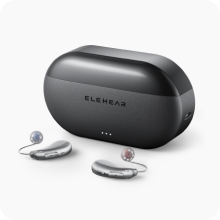
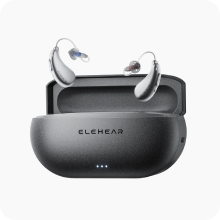


ELEHEAR Delight is the best earbud-style alternative to AirPods Pro for hearing loss in 2026. It scores 4.4/5 in speech in quiet versus AirPods Pro 3's 3.5/5 in independent HearAdvisor testing, adds personalized VOCCLEAR AI fitting calibrated to your audiogram, remote professional support, tinnitus therapy, IP67 durability, and full HSA/FSA eligibility — none of which AirPods Pro offers.
[toc]
Why AirPods Pro Falls Short for Hearing Loss
Apple's introduction of hearing assistance features in AirPods Pro generated enormous interest — and understandably so. The idea of a device most people already own doubling as a hearing aid is genuinely appealing. But independent lab data exposes the gap between a consumer earbud with a hearing mode and a device built from the ground up as a hearing aid.
HearAdvisor Acoustic Laboratory tested both. AirPods Pro 3 scores 3.5/5 in speech in quiet and 2.7/5 in speech in noise. These are above-average results for an earbud. But ELEHEAR Delight scores 4.4/5 in quiet and 2.3/5 in noise — leading AirPods Pro on the metric that matters most for daily hearing aid use by a meaningful margin. Own voice comfort tells an even clearer story: Delight scores 2.9/5 versus AirPods Pro 3's 1.9/5, meaning the hollow, artificial quality that AirPods Pro users frequently report in their own voice is significantly reduced in Delight's ITC design.
Beyond the numbers, there are structural limitations to AirPods Pro as a hearing aid that no firmware update resolves. It is not FDA-registered as a hearing aid. It is not HSA/FSA eligible. It offers no tinnitus therapy. It provides no remote professional fitting. And its personalization is Apple ecosystem-only — Android users are entirely excluded.
ELEHEAR Delight vs AirPods Pro 3: Full Comparison
| Metric | ELEHEAR Delight | AirPods Pro 3 |
|---|---|---|
| Speech in Quiet (HearAdvisor) | 4.4 / 5 | 3.5 / 5 |
| Speech in Noise (HearAdvisor) | 2.3 / 5 | 2.7 / 5 |
| Own Voice Comfort | 2.9 / 5 | 1.9 / 5 |
| Music Streaming | 2.9 / 5 | 4.3 / 5 |
| Feedback Handling | 4.0 / 5 | 5.0 / 5 |
| Max Gain | Up to 45 dB | Up to 35 dB |
| Form Factor | ITC with ear-wing | ITE earbud |
| Personalized AI Fitting | Yes — full audiogram | Partial — iPhone only |
| Remote Professional Fitting | Yes | No |
| Tinnitus Therapy | Yes | No |
| Battery Per Charge | 13.5 hrs | 10 hrs |
| Water Resistance | IP67 | IP57 |
| HSA/FSA Eligible | Yes | No |
| FDA-Registered Hearing Aid | Yes | No |
| Android Compatible | Yes | No |
| Price | ~$369 | ~$249 (earbuds only) |
Source: HearAdvisor Acoustic Laboratory
Why ELEHEAR Delight Is the Right Switch
Speech clarity leads the category. The 4.4/5 speech in quiet score is not a marginal improvement over AirPods Pro 3's 3.5/5 — for someone with mild-to-moderate hearing loss, it is the difference between following conversation naturally and still occasionally missing words. Delight's VOCCLEAR AI continuously analyzes the acoustic environment, separates speech from noise, and applies up to 24 dB of background noise reduction in real time. AirPods Pro 3 applies static hearing assistance profiles.
Own voice sounds natural. AirPods Pro 3's 1.9/5 own voice score is one of its most commonly reported frustrations — users describe their voice sounding hollow, distant, or artificial during extended wear. Delight's ITC ear-wing design distributes canal contact rather than creating a full acoustic seal, allowing some natural sound transmission alongside the amplified signal. The 2.9/5 result means most users describe their own voice as natural within the first week of wear.
ITC ear-wing vs standard earbud fit. AirPods Pro relies on standard ear tip pressure to stay in place — a design that works well for music but shifts during physical activity and accumulates discomfort over long wear days. Delight's soft ear-wing anchors from within the canal, distributing contact across a wider surface. The result is all-day stability during running, cycling, and daily activity without the soreness that standard dome-fit earbuds create during extended hearing aid use.
Battery built for hearing aid wear. AirPods Pro 3 delivers 10 hours per charge — sufficient for music listening but tight for all-day hearing aid wear from morning to evening. Delight's 13.5-hour battery is engineered specifically for hearing aid wear patterns, covering a full waking day without a midday charge.
Everything AirPods Pro cannot offer. Tinnitus white noise therapy. Remote professional fitting from an ELEHEAR hearing care expert. Full Android and iOS compatibility. HSA/FSA eligibility for pre-tax purchase. FDA registration as an OTC hearing aid. These are not minor omissions — they are the features that make the difference between a hearing aid and a hearing accessory.
At $369/pair with a 45-day risk-free trial, ELEHEAR Delight costs $120 more than AirPods Pro 3 as consumer earbuds — but AirPods Pro is not HSA/FSA eligible. After pre-tax healthcare dollars, Delight costs approximately $288 for a buyer in the 22% bracket. The effective price difference is negligible, and the performance difference is not.
For buyers who want maximum OTC performance in a RIC form factor, the best OTC hearing aids 2026 — ELEHEAR Beyond Pro — is the premium step up. For tinnitus-primary management, hearing aids for tinnitus — ELEHEAR Beyond — delivers a full therapy suite from $399.


