


Is Difficulty Hearing a Normal Part of Aging — or Hearing Loss?
Some degree of age-related hearing change is normal, but significant difficulty following conversations, asking people to repeat themselves regularly, or struggling in noisy environments is hearing loss — not inevitable aging. The distinction matters because hearing loss is treatable. The average person waits seven years between first noticing symptoms and seeking help, during which untreated hearing loss silently affects cognitive function, social engagement, and mental health.
[toc]
It is one of the most common rationalizations in hearing health: "I am just getting older." Turning up the TV a little more. Asking people to repeat themselves a few more times than before. Struggling at the restaurant but managing at home. All written off as the natural background noise of aging.
The rationalization is understandable. Hearing change does happen with age. But there is a meaningful clinical difference between the gradual, modest hearing shift that comes with normal aging and the mild-to-moderate hearing loss that affects one in three adults over 65 — and that distinction determines whether treatment is appropriate and beneficial.
The best AI OTC hearing aids in 2026 have made that treatment more accessible than at any point in history. The first step is recognizing that what you are experiencing is not something you simply have to accept.
What Normal Age-Related Hearing Change Actually Looks Like
Age-related hearing change — technically called presbycusis — is real. The hair cells of the inner ear accumulate wear over a lifetime, and by the sixth and seventh decade of life, most people have lost some sensitivity to high-frequency sounds.
In its mild form, this produces subtle changes: voices may sound slightly less sharp, very high-pitched sounds like certain bird calls or the upper registers of music may be less distinct. In a quiet room with a single speaker, conversation remains entirely manageable.
This is not the same experience as:
- Regularly missing words or phrases in conversation, even in quiet settings
- Needing to watch a speaker's face to follow what they are saying
- Finding group conversations at dinner or in meetings genuinely difficult to follow
- Asking people to repeat themselves multiple times in a single conversation
- Turning the TV to a volume that others in the room find too loud
- Avoiding social situations because of the effort required to hear
These are symptoms of hearing loss — a clinical condition — not the background hum of normal aging.
Why People Wait — and What It Costs
The seven-year average delay between first noticing hearing difficulty and seeking treatment is one of the most well-documented and consequential statistics in audiology. Understanding why people wait helps explain what is actually at stake during those years.
The Gradual Onset Problem
Hearing loss rarely arrives suddenly. It develops over years, shifting so slowly that the brain adapts continuously — turning up attention, leaning in slightly more, relying increasingly on lip-reading and context. Each individual change is small enough to rationalize. The cumulative change, when finally measured, is often surprising.
This gradual onset means people genuinely do not notice how much has changed until a specific moment cuts through the rationalization: a grandchild commenting that grandpa never seems to hear them, a colleague noting that you always need things repeated, a moment of embarrassment in a professional setting.
The Stigma Barrier
Hearing aids carry associations that drive avoidance. They are associated with advanced age, with visible disability, with the kind of large beige device worn by grandparents in previous decades. For adults in their 50s and 60s who do not identify as elderly, this association is a powerful deterrent.
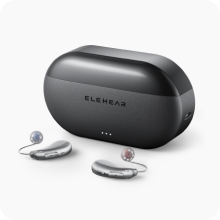
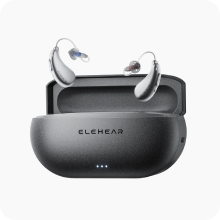
Modern OTC hearing aids have changed the reality of what a hearing aid looks like and costs. The affordable hearing aids from ELEHEAR sit discreetly behind the ear with a thin wire to the canal — low-profile, modern, and increasingly similar in appearance to the wireless earbuds millions of people already wear. The ELEHEAR Delight is an in-the-canal earbud-style device that is routinely mistaken for consumer earphones.
The Cost Barrier
Traditional prescription hearing aids averaging $4,700 per pair made the financial calculus easy to defer. "I will deal with it when it gets worse" was a rational response when treatment meant a $5,000 commitment.
At $399 for ELEHEAR Beyond, the calculus has changed fundamentally. The barrier to early treatment is now primarily psychological, not financial.
What Happens During the Years of Waiting
The seven-year delay is not a neutral pause. During those years, three processes are underway simultaneously.
Cognitive Strain Accumulates
Every day of untreated hearing loss is a day the brain works harder than it should to process speech. This compensatory effort — pulling from memory, context, attention, and visual cues to reconstruct what the ears are not delivering cleanly — diverts cognitive resources from other functions.
Research from Johns Hopkins found that even mild hearing loss doubles dementia risk, with the risk increasing proportionally with severity. The 2023 ACHIEVE study found that hearing aid use reduced cognitive decline by 48% in high-risk older adults over three years. These are not marginal effects — they represent one of the most significant modifiable dementia risk factors identified in recent research.
Every year of delay is a year of preventable cognitive strain.
Social Withdrawal Quietly Progresses
The effortfulness of hearing-impaired social interaction leads gradually to avoidance. Fewer dinner invitations accepted. More excuses to skip events. Less participation in meetings and group conversations. Phone calls increasingly replaced with text.
This withdrawal is driven by the entirely reasonable desire to avoid the exhaustion and embarrassment of struggling to hear. But it removes the social engagement that research consistently identifies as protective against cognitive decline, depression, and reduced quality of life in older adults.
The Hearing Loss Itself May Progress
Hearing loss in many adults is not static. Age-related progression continues, and the longer amplification is withheld, the longer the auditory system operates without adequate input — a state called auditory deprivation that can affect the brain's sound-processing capacity over time.
Early treatment maintains the neural pathways that make hearing aids most effective. Treating hearing loss when it is mild produces better long-term outcomes than waiting until it is moderate or severe.
How to Tell If It Is Time to Get Your Hearing Checked
The following patterns are reliable indicators that what you are experiencing is hearing loss worth addressing — not aging to be accepted.
You regularly mishear words — not failing to hear sound, but hearing the wrong word. "Fifteen" for "fifty." "Blue" for "glue." This is characteristic of high-frequency hearing loss, where consonants blur together.
Noisy environments are disproportionately difficult — you manage in quiet settings but find restaurants, gatherings, and meetings genuinely challenging in a way others around you do not seem to.
You rely on visual cues more than you used to — watching faces closely, sitting where you can see the speaker, feeling lost when someone speaks from another room.
Others have commented — family members, colleagues, or friends have noted that you miss things, ask for repetition frequently, or have the TV too loud.
You feel mentally fatigued after social events — a distinctive tiredness from the sustained concentration required to follow conversation.
If two or more of these apply, a hearing assessment is appropriate. ELEHEAR offers a free online hearing test at elehear.com that takes approximately ten minutes and produces a hearing profile identifying where your loss is concentrated and at what severity.
ELEHEAR Beyond: Treatment That Fits Real Life
For adults whose hearing test confirms mild to moderate hearing loss, ELEHEAR Beyond provides AI-powered hearing technology at a price and accessibility level that makes early treatment practical.
VOCCLEAR® AI noise reduction targets the speech-in-noise difficulty that is typically the first and most disruptive symptom — the restaurant problem, the group conversation problem, the meeting room problem.
Bluetooth streaming connects directly to smartphones and TVs, making phone calls and media clear and accessible without the volume-creep that strains relationships and embarrasses users in shared spaces.
20-hour battery life on a full charge — adequate for the longest days without a mid-day charging interruption.
45-day risk-free trial — the standard argument for deferral is "what if I don't like them?" The trial removes that uncertainty entirely.
The best OTC hearing aids 2026 for users who want maximum performance in complex listening environments is ELEHEAR Beyond Pro. Both devices are available without prescription, accept HSA and FSA payments, and ship directly to your door.


