




Why Can You Hear at Home but Not in Noisy Places?
If you hear well in quiet environments but struggle to follow conversations in restaurants, meetings, or group settings, you may have hidden hearing loss — a condition where the auditory system can detect sounds but cannot separate speech from background noise effectively. It often goes undetected on standard hearing tests. AI-powered OTC hearing aids with noise reduction technology, like ELEHEAR Beyond, directly address the speech-in-noise problem that defines this condition.
[toc]
You pass the hearing test. The audiologist says your results are normal, or close to it. But at dinner with friends, you are guessing half the sentences. In meetings, you nod along hoping context fills in what you missed. At family gatherings, you find yourself drifting to the edges of the room where it is quieter.
This is one of the most common and most frustrating patterns in hearing health — and it has a name. Understanding what is actually happening, and why standard tests miss it, is the first step toward fixing it.
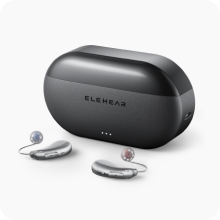
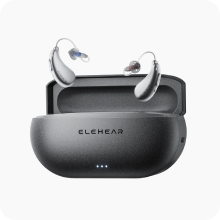
ELEHEAR is among the best AI OTC hearing aids built specifically to address the challenge of hearing speech in noise — the defining problem of hidden hearing loss.
What Is Hidden Hearing Loss?
Hidden hearing loss is a term used to describe difficulty understanding speech in noisy environments despite normal or near-normal results on a standard audiogram.
A conventional hearing test — the tones-in-a-quiet-booth evaluation — measures whether you can detect sounds at various frequencies and volumes. What it does not measure is how well your auditory system processes those sounds when competing noise is present.
For people with hidden hearing loss, the detection mechanism is relatively intact. The problem lies in neural processing — specifically, the ability of the auditory nerve and brainstem to extract a clear speech signal from a noisy background. This is sometimes called cochlear synaptopathy — a reduction in the synaptic connections between the hair cells of the inner ear and the auditory nerve, which reduces the brain's ability to resolve complex sound mixtures.
Harvard Medical School researchers have been among the leaders in documenting this condition, finding it is increasingly prevalent and linked to noise exposure, aging, and possibly other factors including stress and cardiovascular health.
Why Standard Hearing Tests Miss It
The audiogram measures pure tone thresholds — the quietest sounds you can detect at each frequency in a controlled, noise-free environment. It is an excellent tool for identifying conventional hearing loss but was not designed to assess speech-in-noise performance.
A person with hidden hearing loss can perform normally on an audiogram because their hair cells are largely intact and can still detect tones. The damage is at the level of the synapses — the connections between hair cells and nerve fibers — which affects the richness and reliability of the signal sent to the brain, particularly when that signal is competing with noise.
More specialized tests, such as the QuickSIN (Quick Speech-in-Noise) test or the Words in Noise (WIN) test, can detect hidden hearing loss more reliably. But these are not part of standard clinical screenings.
For most people, the diagnosis comes not from a test but from the pattern of their experience: fine at home, struggling everywhere else.
What Hidden Hearing Loss Actually Feels Like
The experience of hidden hearing loss is distinct from conventional hearing loss and worth understanding in detail.
The quiet environment paradox. One-on-one conversations in quiet rooms are manageable, sometimes entirely normal. This leads many people to conclude their hearing is fine — and to dismiss the difficulty they experience elsewhere as a problem with others speaking unclearly or with room acoustics.
Disproportionate difficulty in noise. Restaurants, open-plan offices, social gatherings, family dinners, conferences — any environment where multiple sound sources overlap creates disproportionate difficulty. The brain cannot cleanly separate the target voice from competing sound.
Cognitive fatigue. The brain compensates by working harder — filling gaps with context, lip-reading unconsciously, concentrating intensely. This sustained effort is exhausting. Many people with hidden hearing loss report feeling mentally drained after social events in a way others around them do not.
Mishearing rather than not hearing. Words arrive, but the wrong ones. "Did you say fifteen or fifty?" Consonants — which carry most of the meaning in speech — are particularly vulnerable because they occupy the higher frequencies and shorter time windows that hidden hearing loss disrupts most.
Social withdrawal. Over time, the effort required to participate in group conversations leads many people to reduce their social exposure — declining invitations, staying quiet in meetings, sitting out of group dinners. This withdrawal has real consequences for mental health and relationships.
The Connection to Noise Exposure
A significant body of research links hidden hearing loss to cumulative noise exposure — even at levels that do not cause conventional hearing loss as measured by an audiogram.
Loud noise damages the synaptic connections between hair cells and auditory nerve fibers before it damages the hair cells themselves. This means a person can be exposed to enough noise to cause meaningful cochlear synaptopathy while still passing a standard hearing test.
Environments associated with this kind of damage include: years of occupational noise exposure, regular attendance at loud concerts or sporting events, use of personal audio devices at high volume over extended periods, and recreational firearm use without hearing protection.
This is one reason hidden hearing loss is being identified increasingly in adults in their 40s and 50s — people whose cumulative noise exposure over decades has begun to show up in their speech-in-noise performance before their audiogram changes.
How AI Hearing Aids Address Hidden Hearing Loss
The core problem in hidden hearing loss is the brain's reduced ability to separate speech from noise. AI-powered hearing aids address this directly — doing externally what the auditory system is struggling to do internally.
VOCCLEAR® AI Noise Reduction
ELEHEAR Beyond uses proprietary VOCCLEAR® technology to analyze incoming sound in real time. The system identifies speech signals and separates them from competing background noise — the restaurant chatter, the office hum, the crowd — before the sound reaches the ear.
For someone with hidden hearing loss, this external processing partially compensates for the reduced neural processing capacity. The signal arriving at the ear is cleaner and more distinct than what the unaided ear would receive, reducing the cognitive work required to understand it.
Directional Microphones
ELEHEAR hearing aids use directional microphone technology that preferentially captures sound from in front of the user — the direction of the person you are speaking with — while attenuating sound from the sides and rear. In a restaurant or meeting room, this directional focus significantly improves the signal-to-noise ratio for speech.
Bluetooth Streaming for Critical Listening
For meetings, phone calls, and video conferences — situations where missing words has direct professional consequences — ELEHEAR Beyond's Bluetooth streaming delivers audio directly from your device into your hearing aids. The signal bypasses the room entirely, arriving clean and at full quality. The best OTC hearing aids 2026 for demanding professional listening environments is ELEHEAR Beyond Pro, with enhanced processing for complex sound situations.
Who Should Consider Hearing Aids for Hidden Hearing Loss
If you recognize the pattern described in this article — normal or near-normal quiet hearing, significant difficulty in noise — hearing aids are worth trying before your hearing loss progresses further.
ELEHEAR Beyond is FDA-cleared for mild to moderate hearing loss and is appropriate for adults whose primary complaint is difficulty in noise. The affordable hearing aids in ELEHEAR's lineup start at $399, are available without a prescription, and come with a 45-day risk-free trial.
ELEHEAR also offers a free online hearing test at elehear.com — a useful starting point for understanding your hearing profile and determining whether OTC devices are appropriate for your situation.
HSA and FSA payments are accepted.
Protecting Against Further Damage
Hidden hearing loss caused by noise exposure is a signal that the auditory system has already sustained some cumulative damage. It is also a warning to protect against further exposure.
The same ears that are struggling in noise today will struggle more tomorrow if noise exposure continues unprotected. Use hearing protection in loud environments — concerts, power tools, sporting events, and similar settings above 85 decibels. The damage is cumulative and irreversible; the protection is simple and inexpensive.
Frequently Asked Questions
Why can I hear well at home but not in restaurants? This is the classic presentation of hidden hearing loss. Quiet environments require relatively little from the auditory processing system — the signal is clean and there is nothing competing with it. Noisy environments demand that the brain separate a target voice from competing sound. Hidden hearing loss specifically impairs this ability while leaving quiet-environment hearing relatively intact.
Can hidden hearing loss be detected by a standard hearing test? Usually not. Standard audiograms measure tone detection in quiet conditions and were not designed to assess speech-in-noise performance. More specialized tests like the QuickSIN can detect hidden hearing loss, but these are not part of routine screenings. The most reliable indicator is the pattern of your listening experience.
Do hearing aids help with hidden hearing loss? Yes — particularly AI-powered hearing aids with strong noise reduction. VOCCLEAR® technology in ELEHEAR Beyond compensates for the reduced neural processing capacity by cleaning up the speech signal before it reaches the ear. Many users with hidden hearing loss report significant improvement in exactly the noisy situations that were most difficult.
Is hidden hearing loss the same as auditory processing disorder? They overlap but are not identical. Auditory processing disorder (APD) is a broader term for difficulties in how the brain processes sound, and can occur with normal hearing. Hidden hearing loss specifically refers to cochlear synaptopathy — reduced synaptic connections between hair cells and the auditory nerve — caused by noise exposure or aging. Both conditions share the speech-in-noise difficulty pattern.
Will hidden hearing loss get worse over time? It typically progresses gradually, particularly with continued noise exposure or age-related changes. Early treatment — hearing aids that reduce daily cognitive strain — and hearing protection to prevent further noise damage are both meaningful interventions.


