


 Phone calls are one of the first places hearing loss makes itself known. The stripped-down audio of a phone call — no facial cues, no lip reading, compressed sound quality — strips away every compensatory tool that people with hearing loss rely on in face-to-face conversation. The result is missed words, repeated requests, and the slow withdrawal from phone communication that isolates people in ways that are both practical and social.
In 2026, the best hearing aids for phone calls don't just amplify the audio coming through the earpiece — they connect directly to your smartphone via Bluetooth, stream the call audio into both ears simultaneously, and apply AI-powered speech enhancement in real time. The difference in clarity is not incremental. It's categorical. This guide covers what that technology looks like, how the top options compare, and why the ELEHEAR Delight leads the category.
[toc]
What Are the Best Hearing Aids for Phone Calls in 2026?
The best hearing aids for phone calls in 2026 are Bluetooth-enabled ITC devices that stream audio directly from your smartphone, delivering clear call quality alongside AI-powered speech enhancement. They eliminate the need for separate earbuds and work hands-free. The ELEHEAR Delight leads this category with VOCCLEAR® AI at $299.
Why Phone Calls Are Especially Difficult With Hearing Loss — And How Bluetooth Changes That
To understand why Bluetooth hearing aids represent such a significant improvement for phone communication, it helps to understand why phone calls are disproportionately difficult for people with hearing loss in the first place.
Standard phone audio is transmitted in a compressed frequency range — typically 300Hz to 3,400Hz for traditional calls, with some improvement for HD voice calls. This compression strips out many of the acoustic cues that make speech intelligible, including consonant sounds that fall in higher frequency ranges. For people with normal hearing, the brain fills in these gaps effortlessly. For people with hearing loss — particularly high-frequency hearing loss, which is the most common pattern — those gaps compound the existing difficulty, making phone audio significantly harder to parse than face-to-face conversation.
The traditional solution was to hold the phone up to the hearing aid's microphone — an awkward arrangement that picked up ambient room noise along with the call audio, created feedback in many devices, and required the phone to be held in a fixed position throughout the call. It worked, after a fashion, but it was far from a seamless experience.
Bluetooth direct streaming changes this entirely. When a hearing aid connects to phone via Bluetooth, the call audio bypasses the hearing aid's external microphone and streams directly into the device's processor. The result is a clean, direct audio signal that the hearing aid's AI can then process — enhancing speech clarity, filtering any residual noise in the signal, and delivering the output into both ears simultaneously. Binaural hearing — processing sound in both ears at once — dramatically improves speech intelligibility compared to monaural phone audio, particularly in noisy environments.
For people with hearing loss who have been avoiding phone calls, reducing them to essentials, or relying on text as a substitute for voice communication, this technology is genuinely life-changing. Hearing aids that connect to phone via Bluetooth don't just make calls easier — they restore a mode of communication that hearing loss had been steadily eroding.
What to Look for in a Bluetooth Hearing Aid for Calls and Streaming
Not all Bluetooth hearing aids for streaming 2026 deliver the same experience. Here's what actually matters when evaluating options specifically for phone call and streaming performance:
Bluetooth Version
Bluetooth 5.0 or higher is the standard in 2026 for reliable, low-latency audio streaming. Devices running older Bluetooth versions may experience connection instability, audio dropout during calls, or noticeable lag between video and audio during streaming — all of which are particularly disruptive for users who depend on audio clarity. Verify the Bluetooth version before purchasing any hearing aid marketed for call and streaming use.
Binaural Streaming
The most significant performance difference between hearing aid Bluetooth implementations is whether audio streams to one ear or both. Binaural streaming — simultaneous delivery to both hearing aids — produces dramatically better speech intelligibility than monaural streaming, particularly against background noise. For phone calls specifically, binaural audio allows the brain to process speech using both auditory pathways simultaneously, which is the natural mechanism for understanding speech in challenging conditions.
AI-Powered Speech Enhancement During Calls
Streaming call audio directly into the hearing aid is step one. What the hearing aid does with that audio is step two — and this is where AI processing separates genuinely capable devices from those that simply relay the audio stream. Bluetooth in ear hearing aids with AI processing apply real-time speech enhancement to the streamed audio — filtering compressed call audio artifacts, boosting speech frequencies, and delivering a cleaner signal than the original stream contains. This is particularly significant for calls on standard mobile networks where audio compression is most aggressive.
Microphone Quality for Outgoing Audio
Call clarity is a two-way requirement. The hearing aid user needs to hear clearly — but their caller also needs to hear them clearly. The best Bluetooth hearing aid earbuds in 2026 include high-quality microphones for outgoing audio capture, reducing background noise pickup and delivering clean voice transmission to the caller. A hearing aid that improves incoming call audio while degrading outgoing audio creates a new problem while solving the original one.
App-Based Call Management
The best in ear hearing aids with Bluetooth in 2026 integrate with smartphone apps that allow call-specific settings to be configured separately from standard listening profiles. Volume levels, speech enhancement intensity, and noise reduction settings can be optimized specifically for calls and saved as a dedicated profile — automatically applied whenever a call connects.
Streaming Beyond Calls
Bluetooth hearing aids for music and streaming extend the value of Bluetooth connectivity well beyond phone calls. The ability to stream music, podcasts, audiobooks, TV audio, and video call platforms — Zoom, Teams, FaceTime — through the same device that handles hearing amplification means one device replaces what used to require both hearing aids and separate earbuds.
The Best Bluetooth Hearing Aids for Phone Calls in 2026 — Compared
| Feature | ELEHEAR Delight | Standard BTE Hearing Aid | Basic OTC Amplifier |
|---|---|---|---|
| Form Factor | ITC — In-The-Canal | BTE — Behind-The-Ear | Earbud or BTE |
| Bluetooth Version | 5.0+ | Varies | Rarely included |
| Binaural Streaming | Yes | Limited | No |
| AI Call Enhancement | Yes — VOCCLEAR® | Varies | No |
| Music Streaming | Yes | Limited | No |
| Video Call Compatible | Yes | Limited | No |
| Microphone Quality | High | Varies | Basic |
| App Call Profiles | Yes | Limited | No |
| OTC Available | Yes | No — Rx required | Yes |
| HSA/FSA Eligible | Yes | Yes | No |
| Price | $299 | $1,500–$4,000+ | $30–$150 |
The table reflects a category where the gap between OTC and prescription has narrowed significantly on connectivity, while the gap between genuine AI hearing aids and basic amplifiers remains wide. The ELEHEAR Delight delivers prescription-level Bluetooth call performance at an OTC price — and adds the AI processing layer that makes the difference between audio that is loud and audio that is clear.
ELEHEAR Delight — The Clearest Call Quality in an OTC Hearing Aid
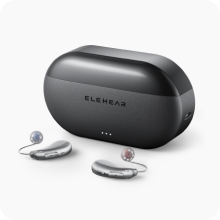
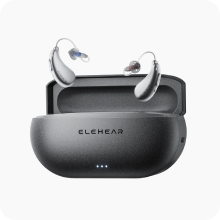
For anyone whose relationship with phone calls has been defined by strain, repetition, and gradual avoidance, the ELEHEAR Delight represents a fundamental reset. Built as a true ITC hearing aid with Bluetooth 5.0+ connectivity and VOCCLEAR® AI processing, the Delight doesn't just amplify phone audio — it transforms it.
When a call connects, the Delight streams the audio directly from the paired smartphone into both ears simultaneously. VOCCLEAR® AI processes the incoming audio stream in real time — enhancing speech frequencies, filtering compression artifacts in the phone signal, and delivering a clarity level that standard phone audio alone cannot achieve. The result is a call experience that is not just louder but genuinely more intelligible — the specific words that were previously lost in compression and frequency stripping come back clearly.
The ITC form factor places the device fully inside the ear canal, which has a direct acoustic benefit for call quality: the ear canal's natural resonance and directional properties contribute to sound localization and speech clarity in ways that an external speaker — whether a phone held to the ear or a BTE receiver — cannot replicate. Sound arriving at the eardrum from inside the canal, processed by VOCCLEAR® AI, is the most natural and intelligible audio delivery path a hearing aid can offer.
The companion app allows call-specific listening profiles to be configured and saved — so the transition from an ambient listening environment to a phone call can be handled automatically, with settings optimized for voice clarity rather than environmental sound processing. Between calls, the same device handles music streaming, podcast playback, video call audio, and TV streaming through the same Bluetooth connection.
What the ELEHEAR Delight delivers for phone calls and streaming:
- VOCCLEAR® AI Processing — Real-time speech enhancement applied to both streamed call audio and ambient sound; speech clarity that goes beyond what the original signal contains
- Bluetooth 5.0+ Connectivity — Stable, low-latency connection to smartphone; no dropout, no lag, no repeated pairing
- Binaural Streaming — Simultaneous audio delivery to both ears for maximum speech intelligibility during calls
- ITC Form Factor — In-canal placement for natural acoustic delivery; no external component to interfere with phone positioning or headset use
- App-Controlled Call Profiles — Dedicated call settings configured and saved through the companion app; automatic profile switching when calls connect
- Music and Media Streaming — Full audio streaming for music, podcasts, audiobooks, and video platforms through the same Bluetooth connection
- Video Call Compatibility — Works with Zoom, Teams, FaceTime, and all major video call platforms
- High-Quality Outgoing Microphone — Clean voice capture for the caller on the other end; not just incoming clarity but outgoing quality
- OTC Accessible — No prescription required, available directly at elehear.com
- HSA/FSA Eligible — Purchasable with pre-tax health spending funds
- Priced at $299 — The most capable Bluetooth OTC hearing aid for calls and streaming at the most accessible price point
For professionals on video calls, remote workers in home offices, or anyone whose daily communication depends on phone clarity, the ELEHEAR Delight is the device that makes phone calls reliable again.
Shop the ELEHEAR Delight — Hear Every Call, Crystal Clear
Beyond Phone Calls — Bluetooth Hearing Aids for Music, Streaming & More
The Bluetooth capability that makes the ELEHEAR Delight exceptional for phone calls extends across every audio use case that modern life involves. Here's how that connectivity performs beyond calls:
Music Streaming
Bluetooth hearing aids for music deliver audio with a fundamental advantage over consumer earbuds for users with hearing loss: the AI processing that enhances speech also enhances music, compensating for the frequency loss patterns that make certain instruments, vocals, and sonic details harder to perceive. Music through the ELEHEAR Delight isn't just louder — it's more complete, with frequency ranges restored that hearing loss had been progressively removing.
Podcast and Audiobook Streaming
Speech-format audio — podcasts, audiobooks, lecture recordings — benefits most directly from VOCCLEAR® AI speech enhancement. Voices that previously required maximum volume to follow clearly stream at comfortable levels with improved intelligibility. Long-format listening sessions that previously caused auditory fatigue become sustainable again.
Concert and Live Event Audio
Hearing aids for concerts present a specific challenge: live event audio is complex, loud, and acoustically demanding in ways that challenge both standard hearing aids and people with untreated hearing loss. The ELEHEAR Delight's VOCCLEAR® AI processes live event acoustic environments continuously — managing overall volume levels to prevent overamplification while maintaining speech clarity for conversation with concert companions between songs.
TV and Home Entertainment Streaming
When paired with a Bluetooth transmitter connected to a TV, the ELEHEAR Delight streams television audio directly into both ears — eliminating the need to raise TV volume to levels that disturb others in the household. Dialogue clarity improves significantly compared to room-speaker TV audio, particularly for users with high-frequency hearing loss where consonant sounds in speech are most commonly lost.
Video Calls and Remote Work
The shift to remote and hybrid work has made video call audio quality a professional necessity rather than a convenience. ELEHEAR Delight's compatibility with Zoom, Microsoft Teams, Google Meet, and FaceTime means remote work audio is handled through the same AI-enhanced, binaural streaming system as regular phone calls — delivering professional-grade call clarity in a home office environment.
Frequently Asked Questions
What are the best hearing aids for phone calls in 2026?
The best hearing aids for phone calls in 2026 are Bluetooth-enabled ITC devices that stream audio directly from your smartphone with AI-powered speech enhancement. The ELEHEAR Delight leads this category — binaural streaming, VOCCLEAR® AI call processing, and Bluetooth 5.0+ connectivity at $299.
How do Bluetooth hearing aids improve phone call clarity?
Bluetooth hearing aids stream call audio directly into the device rather than picking it up through the external microphone. This direct signal is then processed by AI — in the ELEHEAR Delight's case, VOCCLEAR® — which enhances speech frequencies and filters compression artifacts in the phone signal, delivering significantly clearer audio than standard phone-to-microphone proximity methods.
Can I use hearing aids for video calls on Zoom or Teams?
Yes. Bluetooth hearing aids like the ELEHEAR Delight are compatible with all major video call platforms including Zoom, Microsoft Teams, Google Meet, and FaceTime. Audio streams directly from the platform through the Bluetooth connection into both ears, with VOCCLEAR® AI processing applied in real time.
Can I stream music through hearing aids as well as calls?
Yes. The ELEHEAR Delight's Bluetooth connectivity supports full audio streaming for music, podcasts, audiobooks, and all media — not just phone calls. The same AI processing that enhances call audio also improves music and speech-format audio, delivering a more complete listening experience than hearing loss alone would allow.
Do Bluetooth hearing aids require a prescription?
No. The ELEHEAR Delight is a fully OTC hearing aid available without a prescription for adults with mild-to-moderate hearing loss. It can be purchased directly at elehear.com and is eligible for HSA and FSA payments, making it accessible without a clinical visit or insurance requirement.


