


 The ringing doesn't stop. It's there in quiet rooms, in the middle of conversations, in the early hours of the morning when everything else is silent. For the estimated 50 million Americans who experience tinnitus, the persistent perception of sound that has no external source is not just an annoyance — it is a condition that affects concentration, sleep, emotional wellbeing, and quality of life in ways that those who haven't experienced it consistently underestimate.
What many tinnitus sufferers don't realize is that the condition rarely arrives alone. The large majority of tinnitus cases occur alongside some degree of hearing loss — and treating that hearing loss with the right hearing aid can provide meaningful tinnitus relief as a direct consequence. In 2026, the best hearing aids for tinnitus are OTC devices that combine AI-powered sound processing with dedicated tinnitus management features at prices that make access genuinely realistic. This guide explains how and why — and which options lead the category.
Can Hearing Aids Help With Tinnitus in 2026?
Yes. Hearing aids help tinnitus in two ways: by amplifying external sound to reduce the contrast that makes tinnitus more noticeable, and through dedicated tinnitus masking features that introduce therapeutic sound to reduce perceived ringing intensity. OTC AI hearing aids like the ELEHEAR range deliver both benefits from $299 without a prescription.
The Tinnitus-Hearing Loss Connection — Why They So Often Occur Together
Tinnitus and hearing loss are so frequently co-occurring that audiologists treat them as closely linked conditions rather than independent ones. Understanding why they occur together is the first step toward understanding why hearing aids address both simultaneously.
The most common form of hearing loss — sensorineural hearing loss — results from damage to the hair cells of the cochlea, the sensory organ that converts sound waves into neural signals. These hair cells are responsible for detecting specific frequencies of sound and transmitting the corresponding signals to the auditory nerve and brain. When they are damaged — by noise exposure, aging, certain medications, or other causes — their ability to accurately transduce sound in their frequency range is compromised.
Tinnitus is believed to arise, at least in part, from the brain's response to this reduced input. When the auditory cortex receives less signal from damaged cochlear regions, it may compensate by increasing the gain — the sensitivity — of the neural circuits processing those frequencies. This neural hyperactivity generates a perception of sound in the absence of actual external sound — the ringing, buzzing, hissing, or clicking that characterizes tinnitus. The brain, in effect, generates its own noise to fill the silence created by cochlear damage.
This explanation — supported by substantial neuroscientific research — has a direct clinical implication: restoring auditory input to the deprived cochlear regions through amplification reduces the deprivation that drives the compensatory neural hyperactivity, and with it, the perceived intensity of tinnitus. This is the primary mechanism through which hearing aids tinnitus relief 2026 works — not by masking the tinnitus directly, but by addressing the auditory deprivation that generates and maintains it.
How Hearing Aids Actually Reduce Tinnitus Symptoms
Hearing aids address tinnitus through two distinct but complementary mechanisms — and the best tinnitus masking hearing aids in 2026 combine both:
Mechanism 1 — Amplification and the Contrast Effect
In quiet environments, tinnitus is most noticeable. This is the contrast effect: the relative loudness of the tinnitus perception against a quiet acoustic background makes it the dominant perceptual experience. The same tinnitus that is barely noticeable in a busy restaurant becomes overwhelming in a quiet bedroom.
Hearing aids address this by amplifying ambient sound — bringing the acoustic background up to a level that reduces the perceptual contrast between environmental sound and the tinnitus signal. When the external acoustic environment is enriched through amplification, the tinnitus becomes one element in a richer sound scene rather than the dominant or only sound the auditory system is processing. This reduction in contrast is experienced as a reduction in tinnitus intensity and intrusiveness — even though the tinnitus itself, measured neurologically, has not changed.
For users with co-occurring hearing loss and tinnitus — which describes the majority of tinnitus sufferers — this amplification benefit is immediate and meaningful. The same amplification that improves speech clarity in noisy environments also reduces tinnitus prominence in quiet ones. It is the most consistently effective non-pharmacological tinnitus intervention available, and hearing aids deliver it as a primary function rather than as a supplementary feature.
Mechanism 2 — Tinnitus Masking and Sound Therapy
Many modern hearing aids include dedicated tinnitus masking features — the ability to generate and deliver therapeutic sound directly into the ear canal alongside amplified environmental sound. This therapeutic sound — commonly white noise, pink noise, nature sounds, or customizable sound therapy signals — provides a steady acoustic backdrop that competes with and partially masks the tinnitus perception.
Tinnitus masking works through the same contrast principle as environmental amplification, but in a more targeted way: the masking signal is specifically calibrated to the frequency characteristics of the wearer's tinnitus, maximizing the overlap between the therapeutic sound and the tinnitus perception. When the masking signal matches the frequency range of the tinnitus closely, the brain's auditory processing system struggles to distinguish the tinnitus signal from the background — reducing its perceptual salience.
OTC hearing aids tinnitus masker features in 2026 allow users to configure masking sound type, intensity, and frequency characteristics through companion smartphone apps — personalizing the therapeutic sound to their specific tinnitus profile without a clinical visit. This app-based customization represents a significant advance over earlier generations of tinnitus features that required audiologist programming to adjust.
The Combined Effect — More Than the Sum of Parts
When amplification and tinnitus masking are combined in a single device — as they are in the best hearing aids for ringing in ears 2026 — the combined effect is typically greater than either mechanism produces independently. Amplification enriches the external acoustic environment. Masking provides a therapeutic acoustic signal calibrated to the tinnitus. Together, they address the tinnitus from multiple directions simultaneously — reducing the deprivation that generates it while providing a competing sound that reduces its perceived intensity.
What to Look for in OTC Hearing Aids for Tinnitus Relief
Not every hearing aid that claims tinnitus benefit delivers it meaningfully. Here's the complete evaluation framework for best OTC hearing aids for tinnitus in 2026:
Dedicated Tinnitus Masking Feature
The foundational requirement for tinnitus-specific benefit. A hearing aid that amplifies environmental sound provides the contrast reduction mechanism — but a device with dedicated masking capability adds the therapeutic sound component that addresses tinnitus directly. Look for devices that include configurable masking sound options — white noise, pink noise, nature sounds — with intensity and frequency adjustability through the companion app.
AI-Powered Sound Processing
AI processing matters for tinnitus users for the same reason it matters for all hearing aid users — and arguably more so. Tinnitus is most intrusive in quiet environments and least intrusive in rich, complex acoustic environments. AI processing that manages the full acoustic spectrum effectively — reducing noise in loud environments while enriching sound in quiet ones — provides the most consistent tinnitus relief across the full range of daily listening environments. Basic amplification that makes everything louder without intelligent processing adds acoustic discomfort in noise without providing the enriched, well-managed sound environment that tinnitus relief requires.
App-Based Personalization
Can hearing aids help with tinnitus 2026 more effectively when they can be customized to individual tinnitus profiles — and the answer is yes. Tinnitus varies significantly between individuals in frequency, character, and intensity. A masking feature that can be configured to match the specific frequency profile of a particular wearer's tinnitus produces better masking overlap and therefore better relief than a fixed, non-configurable masking signal. App-based customization that allows masking type, frequency, and intensity to be adjusted without a clinic visit is the feature that makes personalized tinnitus management accessible through OTC devices.
Comfortable Extended Wear Design
Tinnitus relief through hearing aids is a continuous benefit — the longer the device is worn, the more consistently the contrast reduction and masking mechanisms operate. A device that is comfortable enough to wear throughout the day, including in quiet environments where tinnitus is most prominent — like early morning, late evening, and quiet work settings — delivers more consistent relief than a device that is worn only in social or noisy contexts. Lightweight, ergonomic design with multiple ear tip options and secure fit mechanisms is a direct tinnitus relief feature, not just a comfort preference.
Rechargeable Design for All-Day Wear
Continuous wear requires a device that doesn't run out of power during the day. Rechargeable hearing aids with full-day battery life from a single charge support the all-day wear pattern that maximizes tinnitus relief. Disposable battery devices that require battery management and carry the risk of unexpected power failure during the day are less suitable for tinnitus users whose benefit depends on consistent device wear.
The Best OTC Hearing Aids for Tinnitus in 2026 — Compared
| Feature | ELEHEAR Beyond | ELEHEAR Delight | ELEHEAR Beyond Pro | Basic OTC Amplifier |
|---|---|---|---|---|
| AI Processing | Yes — VOCCLEAR® | Yes — VOCCLEAR® | Yes — VOCCLEAR® | No |
| Tinnitus Masking Feature | Yes | Yes | Yes | No |
| App-Based Masking Control | Yes | Yes | Yes | No |
| Real-Time Noise Reduction | Yes | Yes | Yes | No |
| Rechargeable | Yes | Yes | Yes | Varies |
| All-Day Battery Life | Yes | Yes | Yes | Limited |
| Bluetooth Streaming | Yes | Yes | Yes | Rarely |
| Form Factor | BTE | ITC — Earbud Style | BTE — Premium | Earbud or BTE |
| OTC Available | Yes | Yes | Yes | Yes |
| HSA/FSA Eligible | Yes | Yes | Yes | No |
| Price | $399/pair | $299 | $599/pair | $30–$150 |
The table exposes a critical gap in the OTC tinnitus relief category. Basic OTC amplifiers — the cheapest options on the market — provide the contrast reduction mechanism of amplification but without AI processing, without tinnitus masking features, and without app-based personalization. For mild tinnitus in mild hearing loss, basic amplification provides some benefit. For moderate to more significant tinnitus, the absence of dedicated masking features and AI processing leaves meaningful relief potential on the table. The ELEHEAR range delivers the complete tinnitus relief package — AI processing, dedicated masking, app control, and rechargeable all-day wear — across three price points that cover the full range of OTC buyer needs.
ELEHEAR — The Best OTC Hearing Aid Range for Tinnitus in 2026
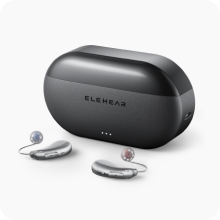
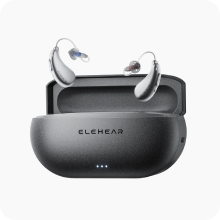
The ELEHEAR range addresses tinnitus relief from multiple directions simultaneously — VOCCLEAR® AI processing that manages the acoustic environment intelligently across all listening contexts, dedicated tinnitus masking features configurable through the companion app, and rechargeable designs built for the all-day wear pattern that maximizes tinnitus benefit. Here's how each model in the range serves tinnitus users specifically:
ELEHEAR Beyond — The Best Value Tinnitus Hearing Aid at $399
The ELEHEAR Beyond is the strongest value proposition for tinnitus users who want the complete ELEHEAR tinnitus relief package in a standard BTE form factor. At $399 per pair, the Beyond brings VOCCLEAR® AI processing and dedicated tinnitus masking to the most accessible price point in the full-featured ELEHEAR range.
For tinnitus users specifically, the Beyond's combination of features addresses the condition through both primary mechanisms. VOCCLEAR® AI continuously enriches the acoustic environment — reducing the quiet that makes tinnitus most prominent — while managing noise in demanding environments to prevent the overamplification that can aggravate tinnitus symptoms. The dedicated masking feature delivers configurable therapeutic sound directly through the device — white noise, pink noise, or nature sounds — adjusted to the wearer's specific tinnitus profile through the app. Rechargeable design with full-day battery life supports the consistent all-day wear that delivers the most sustained tinnitus relief.
The hearing aids for tinnitus category has a clear value benchmark in 2026. The ELEHEAR Beyond sets it.
What the ELEHEAR Beyond delivers for tinnitus users:
- VOCCLEAR® AI Processing — Real-time acoustic environment enrichment that reduces tinnitus contrast in quiet settings while managing noise in demanding ones; the primary hearing-aid tinnitus relief mechanism applied intelligently across all listening contexts
- Dedicated Tinnitus Masking — Configurable therapeutic sound delivered through the device alongside amplification; white noise, pink noise, and nature sound options adjustable through the companion app
- App-Based Tinnitus Personalization — Masking type, intensity, and frequency characteristics adjusted to individual tinnitus profile through the ELEHEAR app without any clinic visit
- BTE Form Factor — Standard behind-the-ear design for easy handling and comfortable extended daily wear
- Bluetooth Connectivity — Environmental sound enrichment augmented by music and media streaming that provides additional tinnitus contrast reduction during leisure time
- Full-Day Rechargeable Battery — All-day wear support without battery management or power failure risk during quiet periods when tinnitus relief is most needed
- OTC Accessible — No prescription, available directly at elehear.com
- HSA/FSA Eligible — Purchasable with pre-tax health spending funds
- Priced at $399 per pair — The complete tinnitus relief hearing aid package at the most accessible full-featured price point
ELEHEAR Delight — AI Tinnitus Relief in a Discreet ITC Form Factor at $299
For tinnitus users who want the full ELEHEAR tinnitus relief capability in a device that looks like a consumer earbud rather than a hearing aid, the ELEHEAR Delight delivers at $299. The Delight's ITC form factor is particularly relevant for tinnitus users for a specific reason: the in-canal placement means the device is as comfortable to wear in quiet environments — at home, at a desk, in bed — as it is in social and professional settings. Tinnitus relief depends on consistent wear, and consistent wear depends on a device that doesn't feel intrusive in the quiet contexts where tinnitus is most prominent.
The Delight brings the complete VOCCLEAR® AI processing and dedicated tinnitus masking package to a form factor that the best OTC hearing aids 2026 — the ELEHEAR Beyond Pro — also carry, but at $299. For tinnitus users on a budget who want both discretion and complete tinnitus relief features, the Delight is the most compelling value in the category.
ELEHEAR Beyond Pro — Maximum AI Performance for Complex Tinnitus at $599
For tinnitus users whose condition is more severe, whose acoustic environments are more demanding, or who simply want the highest available level of VOCCLEAR® AI processing applied to their tinnitus relief, the ELEHEAR Beyond Pro delivers the most advanced implementation of ELEHEAR's technology at $599 per pair. The Beyond Pro's enhanced processing tier handles the most acoustically complex environments with greater precision — providing more consistent tinnitus contrast reduction across a wider range of listening situations, and more precise masking signal delivery through more sophisticated audio processing hardware.
For tinnitus users who spend significant time in demanding listening environments — busy offices, frequent social gatherings, noisy commutes — the Beyond Pro's processing advantage translates directly into more consistent tinnitus relief across more of the day.
Shop ELEHEAR Hearing Aids — Tinnitus Relief From $299
Frequently Asked Questions
Can hearing aids help with tinnitus in 2026?
Yes. Hearing aids address tinnitus through two mechanisms: amplification reduces the acoustic contrast that makes tinnitus most prominent in quiet environments, and dedicated masking features deliver therapeutic sound that competes with and partially masks the tinnitus perception. OTC AI hearing aids like the ELEHEAR range deliver both benefits from $299 without a prescription.
What is the best OTC hearing aid for tinnitus relief in 2026?
The ELEHEAR Beyond leads this category at $399 per pair — combining VOCCLEAR® AI processing with dedicated tinnitus masking, app-based masking personalization, and rechargeable all-day wear design. For users who want the same tinnitus relief features in a discreet ITC earbud-style form factor, the ELEHEAR Delight delivers at $299.
Do all hearing aids help with tinnitus?
No. Basic OTC amplifiers provide the contrast reduction mechanism of amplification but without AI processing or dedicated masking features. For mild tinnitus alongside mild hearing loss, basic amplification provides some benefit. For more significant tinnitus, dedicated masking features and AI processing — available in the ELEHEAR range — are needed to deliver meaningful relief across the full range of daily listening contexts.
How does tinnitus masking work in hearing aids?
Tinnitus masking works by delivering a therapeutic sound signal — white noise, pink noise, or nature sounds — through the hearing aid alongside amplified environmental sound. This masking signal provides an acoustic backdrop that competes with and partially masks the tinnitus perception. When the masking signal is calibrated to the frequency characteristics of the wearer's tinnitus, the brain's auditory processing struggles to distinguish the tinnitus signal from the background — reducing its perceived intensity.
Are OTC hearing aids for tinnitus covered by HSA or FSA?
Yes. ELEHEAR hearing aids — including the Beyond, Delight, and Beyond Pro — are HSA and FSA eligible. Purchasing with pre-tax health spending funds reduces the effective out-of-pocket cost, making OTC tinnitus relief hearing aids more accessible for buyers with health spending account balances.


