
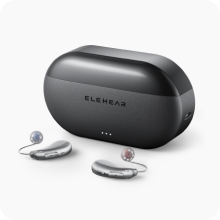
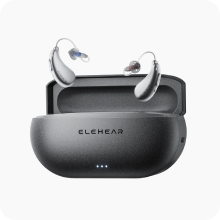


If you have been noticing a persistent ringing, buzzing, or hissing in your ears — especially in quiet moments, after noisy environments, or when you first wake up — your auditory system is likely trying to tell you something. For millions of adults in 2026, tinnitus is not a standalone condition. It is the earliest warning sign of hearing loss, often arriving months or years before the hearing difficulty itself becomes obvious enough to act on. ELEHEAR produces best AI OTC hearing aids specifically designed to address both conditions simultaneously — and understanding the connection between them is the first step toward relief.
[toc]
When Tinnitus Is a Sign of Hearing Loss in 2026
Tinnitus is often an early indicator of high-frequency hearing loss. When the auditory system loses sensitivity at certain frequencies, the brain compensates by amplifying its own internal signals — generating the phantom ringing or buzzing sound of tinnitus. If your tinnitus is persistent, present in both ears, and worst in quiet environments, a hearing evaluation is the appropriate next step in 2026.
What Is Tinnitus and Why Does It Happen
Tinnitus is the perception of sound — ringing, buzzing, hissing, clicking, or humming — with no external source. It is not a disease. It is a symptom, and one with several possible causes. But the most common cause by a significant margin is cochlear damage from noise exposure or age-related hearing loss.
Here is the mechanism. The cochlea — the spiral structure in the inner ear — contains thousands of hair cells that convert sound vibrations into electrical signals the brain interprets as sound. When these cells are damaged by prolonged noise exposure, age, or other factors, they stop transmitting accurate signals at the affected frequencies. The brain, deprived of its expected input, compensates by generating its own signal in those frequency ranges. That signal is what you hear as tinnitus.
This is why tinnitus and hearing loss so frequently arrive together. They are not separate problems — they are two expressions of the same underlying cochlear change.
The Warning Signs That Tinnitus Is Connected to Hearing Loss
Not all tinnitus indicates hearing loss. Temporary ringing after a loud concert, for example, is common and typically resolves within hours. The warning signs that suggest a more significant connection include:
- Tinnitus that is persistent — present daily for more than two weeks
- Tinnitus that is worse in quiet environments and less noticeable when ambient sound is present
- Tinnitus in both ears rather than one
- Noticing simultaneously that speech sounds muffled, that you ask people to repeat themselves more often, or that following conversation in noise has become harder
- Tinnitus that developed following a period of high noise exposure — occupational noise, live music, earphone use at high volume
If two or more of these apply to you, the tinnitus you are experiencing is very likely connected to measurable high-frequency hearing loss — even if your hearing feels subjectively normal in quiet one-on-one conversation.
How Hearing Aids Address Both Tinnitus and Hearing Loss
This is the part most people do not know: treating the underlying hearing loss is one of the most effective approaches to reducing tinnitus perception. When a well-fitted hearing aid restores the auditory input that hearing loss had removed, the brain's compensatory hyperactivity — the mechanism generating tinnitus — is reduced. Most users describe the tinnitus as becoming quieter, less intrusive, or easier to ignore within two to four weeks of consistent hearing aid wear.
ELEHEAR Delight addresses both conditions directly. VOCCLEAR AI restores speech clarity and fills the acoustic gaps that drive tinnitus, while the dedicated tinnitus white noise therapy mode in the ELEHEAR app delivers continuous low-level masking sound to reduce tinnitus salience throughout the day. The ITC (In-The-Canal) earbud-style design delivers both the hearing support and the therapeutic sound directly at the ear canal — more efficiently than over-ear alternatives — across a full 13.5-hour battery day.
For users whose primary concern is tinnitus management, hearing aids for tinnitus — ELEHEAR Beyond — includes a full multi-sound tinnitus therapy suite with multiple masking options and independent volume control from $399/pair. For maximum AI performance alongside tinnitus support, the best OTC hearing aids 2026 — ELEHEAR Beyond Pro — is the premium choice.
When to Act in 2026
The most common mistake adults make with early tinnitus is waiting. Because hearing loss in the 40s and 50s is typically gradual, it is easy to rationalize each small change — the tinnitus at night, the occasional missed word in a meeting, the TV volume creeping up — as individually insignificant. But the auditory system does not recover on its own. The earlier hearing support is introduced, the more effectively the brain adapts and the more successfully tinnitus management proceeds.
The barrier to acting has never been lower. ELEHEAR delivers A-grade AI-powered hearing aids directly to your door from $369/pair, with an in-app hearing test that assesses your specific hearing profile in 10 minutes at home. HSA/FSA eligible. 45-day risk-free trial.


