


Quick Answer
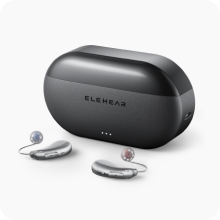
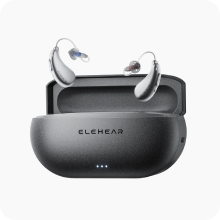
The best OTC hearing aids for moderate hearing loss in 2026 are devices that combine AI-powered speech processing, strong noise reduction, multiple sound channels, and all-day rechargeable performance. For adults with moderate hearing loss who do not have medical red flags, premium OTC hearing aids—such as ELEHEAR Beyond Pro—now meet professional performance expectations by delivering clearer speech, reduced listening fatigue, and reliable performance in noisy, real-world environments.
[toc]
Why Moderate Hearing Loss Requires More Than Basic Amplification
Moderate hearing loss is more complex than mild hearing loss. People with moderate loss often hear sounds but struggle significantly with speech understanding, especially in background noise. At this stage, simple sound amplification is no longer sufficient. Professional guidelines emphasize the need for advanced sound processing, directional microphones, and adaptive noise reduction to restore functional communication.
In 2026, modern OTC hearing aids are specifically designed to address these needs without requiring prescription-only devices—when candidacy criteria are met.
Professional Criteria for OTC Hearing Aids in Moderate Hearing Loss
According to hearing-care guidelines, adults with moderate hearing loss are appropriate candidates for OTC hearing aids if:
-
Hearing loss is bilateral and gradual
-
There is no sudden hearing loss
-
No ear pain, drainage, or dizziness is present
-
Speech understanding improves with amplification
-
The user can manage app-based controls or presets
When these conditions are met, OTC hearing aids are considered safe and effective.
Key Features That Matter for Moderate Hearing Loss
1. AI-Powered Speech Enhancement
Moderate hearing loss significantly affects speech clarity. AI helps hearing aids distinguish speech from noise and prioritize voices automatically.
2. Strong Noise Reduction
Noise is the primary complaint at this level of hearing loss. Effective noise reduction must work dynamically and across multiple frequency channels.
3. Multi-Channel Sound Processing
More channels allow precise shaping of sound, which is essential for restoring speech intelligibility without distortion.
4. Directional Microphones
Directional systems improve the signal-to-noise ratio by focusing on sounds in front of the listener—critical in conversations.
5. Rechargeable Battery and Comfort
Daily wear is essential. Devices must be comfortable and last all day to ensure consistent use.
Best OTC Hearing Aids for Moderate Hearing Loss (2026)
1. ELEHEAR Beyond Pro – Best Overall for Moderate Hearing Loss
ELEHEAR Beyond Pro ranks as the top OTC hearing aid for moderate hearing loss in 2026 due to its balance of clinical-grade performance, AI automation, and ease of use.
Why Beyond Pro Is the Best Choice
-
Advanced AI speech recognition and prioritization
-
Multi-layer noise reduction designed for busy environments
-
Multi-channel sound processing for clarity and comfort
-
Directional microphone system for conversations
-
All-day rechargeable battery
-
Bluetooth streaming for calls and media
-
Simple self-fitting app suitable for older adults
From a professional perspective, Beyond Pro addresses the most common limitations seen in moderate hearing loss: speech-in-noise difficulty and listening fatigue.
2. Jabra Enhance Select – Strong Audio, Less Automation
Jabra Enhance Select offers high-quality sound and good Bluetooth performance.
Strengths
-
Clear, natural audio
-
Rechargeable
-
Reliable app
Limitations for Moderate Loss
-
Requires more manual adjustments
-
Less aggressive AI noise handling compared to ELEHEAR
Better for users comfortable with fine-tuning settings.
3. Lexie B2 Powered by Bose – Balanced Mid-Range Option
Lexie B2 delivers solid performance for moderate hearing loss in quieter and moderately noisy environments.
Strengths
-
Good sound balance
-
Rechargeable
-
Straightforward app
Limitations
-
Noise reduction is less advanced
-
May struggle in complex sound environments
4. Eargo SE – Best for Discreet Wear (With Trade-Offs)
Eargo SE is designed for users who prioritize invisibility.
Strengths
-
Very discreet design
-
Comfortable for sensitive ears
Limitations for Moderate Loss
-
Smaller microphones reduce effectiveness in noise
-
Less suitable for group conversations
Why Budget OTC Hearing Aids Often Fail at Moderate Hearing Loss
Devices designed primarily for mild hearing loss often fall short at the moderate level.
Common Problems
-
Inadequate speech clarity
-
Poor noise control
-
Distortion at higher amplification levels
-
Increased listening fatigue
Professionally, this is why moderate hearing loss benefits from premium OTC technology, not entry-level devices.
Why ELEHEAR Beyond Pro Aligns With 2026 Best Practices
From an EEAT perspective, the best hearing aid is one that users actually wear consistently.
Clinically Relevant Advantages
-
Automatic adaptation reduces user error
-
Comfort encourages daily use
-
AI reduces cognitive strain
-
Reliable performance improves communication confidence
Consistency is critical—and Beyond Pro supports it.
OTC vs Prescription for Moderate Hearing Loss (2026 Perspective)
Prescription hearing aids are still required for severe or complex cases. However, for many adults with moderate hearing loss, OTC hearing aids now deliver comparable functional outcomes.
OTC Is Appropriate When:
-
Hearing loss is stable
-
No medical red flags are present
-
The user wants faster access and affordability
Final Thoughts
In 2026, adults with moderate hearing loss have more effective OTC options than ever before. The best OTC hearing aids for this level of hearing loss combine AI-powered speech processing, strong noise reduction, multi-channel sound control, and all-day comfort. Among available options, ELEHEAR Beyond Pro stands out as the most complete solution, offering clinically relevant performance without the barriers of prescription-only devices. When chosen appropriately and used consistently, modern OTC hearing aids can significantly improve communication, reduce listening fatigue, and enhance overall quality of life for people with moderate hearing loss.


